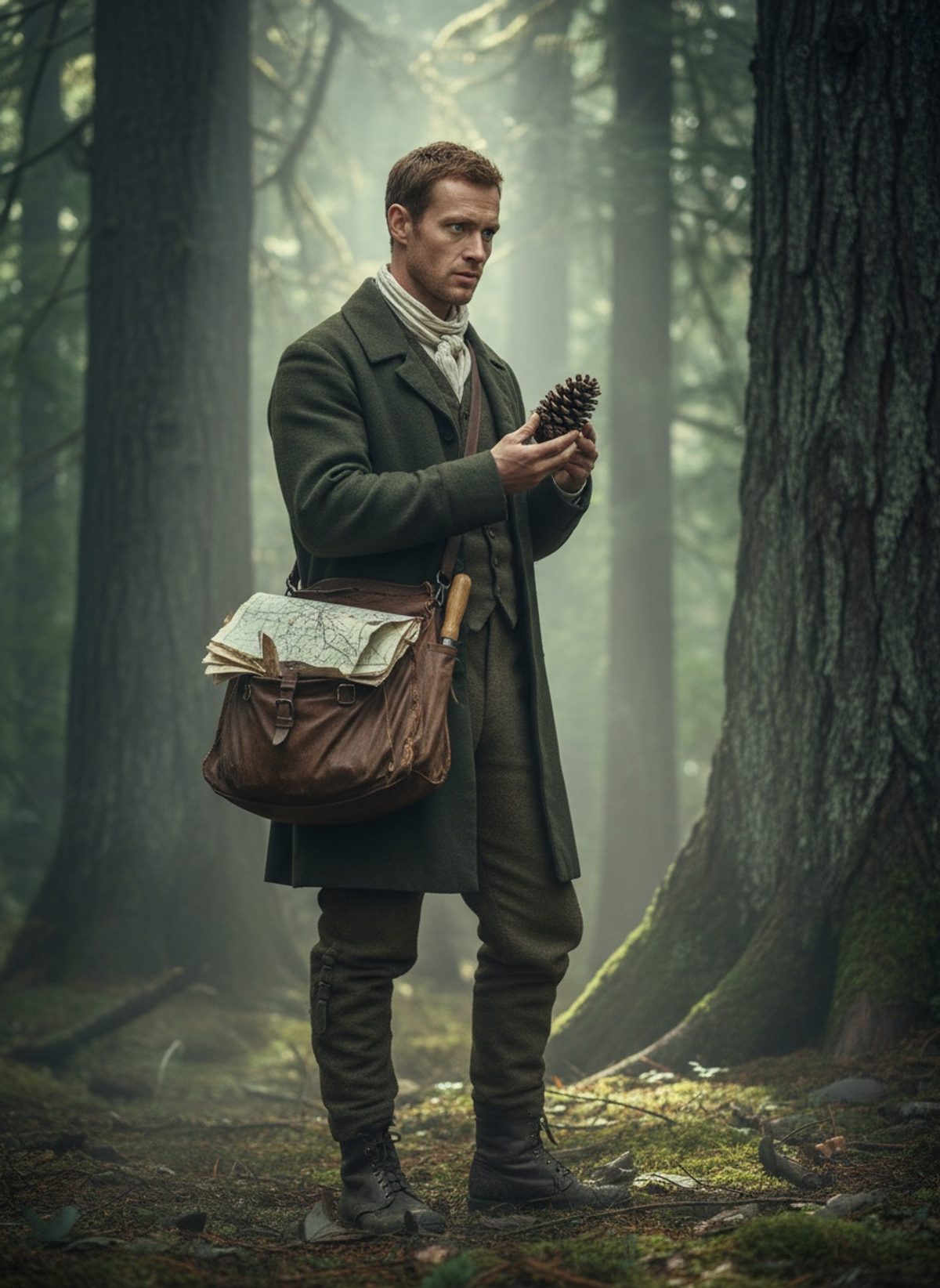
The forest surrounded him like a cathedral, its soaring canopies forming arches of verdant green. The light filtered through the trees in delicate shafts, illuminating the undergrowth with a gentle glow. Below, the air was thick with the scent of pine and moss, infused with the rich, earthy aroma of the soil. Birds called unseen from the treetop perches, their songs weaving an unbroken melody. In this Edenic expanse, one man ventured deeper, with only his grit and curiosity for company. It was 1823, and David Douglas, the gardener's son from Perthshire, was about to embark on an expedition that would change the horticultural landscape of Britain forever.
The Mission He Didn't Refuse
David Douglas was not the typical gentleman adventurer of the Georgian Era. Born in 1799 into a humble Scottish family, his early life was rooted in the very soil that would later define his destiny. He trained as a gardener at the Botanic Gardens in Perth, and his potential did not go unnoticed. Through perseverance, he secured a position at the Royal Botanic Gardens at Kew. This was the gateway to an opportunity that would lead him to the untamed wilderness of the Pacific Northwest.
Commissioned by the Royal Horticultural Society, Douglas was tasked with a seemingly impossible mission: to venture into the uncharted territories of North America and return with exotic plant specimens that could enrich Britain. The stakes were high, as the fledgling Empire was hungry for novelty and beauty to plant in its burgeoning gardens. Douglas readily accepted this challenge and set sail, leaving the comforts of Britain behind.
The Wilderness Beckons
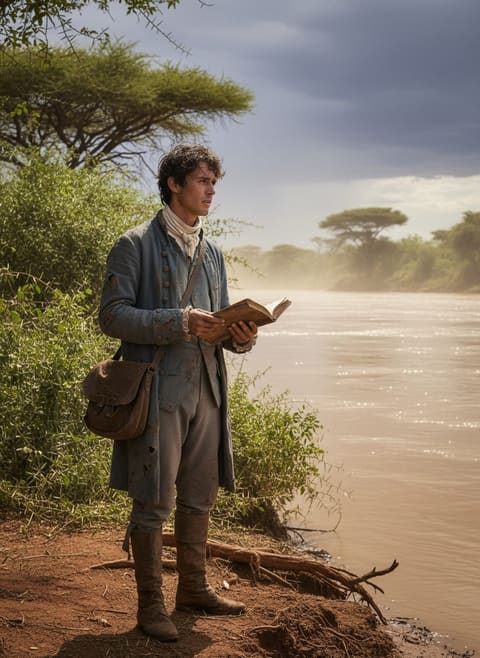
Arriving on the shores of what is now the United States and armed with little more than a satchel containing one crucial plant—a cutting of pinus lambertiana—Douglas faced a path fraught with challenges. No detailed maps existed of the Pacific Northwest, a wild expanse where danger lurked in the form of harsh weather and possibly hostile encounters with native tribes.
Read next: The Day a One-Eyed Captain Sailed Into the Frozen Unknown
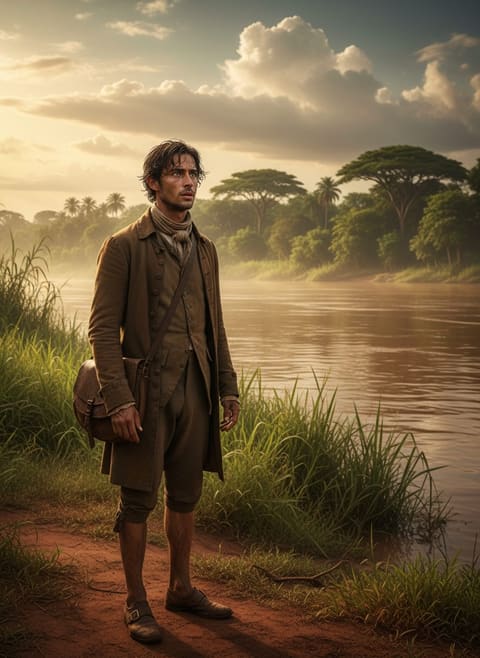
Yet, the botanist pressed on, driven by an unquenchable thirst for discovery. He navigated the dense forest, agile and perceptive, his eyes constantly scanning the landscape. Every river crossing, every mountain pass carried the risk of oblivion. His survival depended not only on his skill but on the goodwill of the land itself, which at times could be harsh and unforgiving. Food was often sparse, reduced to mere sustenance rather than nourishment, as he occasionally subsisted on survival rations.
An Encounter with Giants
In this world of towering evergreens, Douglas met the giants that would etch his name into botanical history: the Douglas firs. These monolithic trees, some reaching unimaginable heights, were a revelation. The grandeur of the Pseudotsuga menziesii would soon make it a cherished staple in British landscapes.
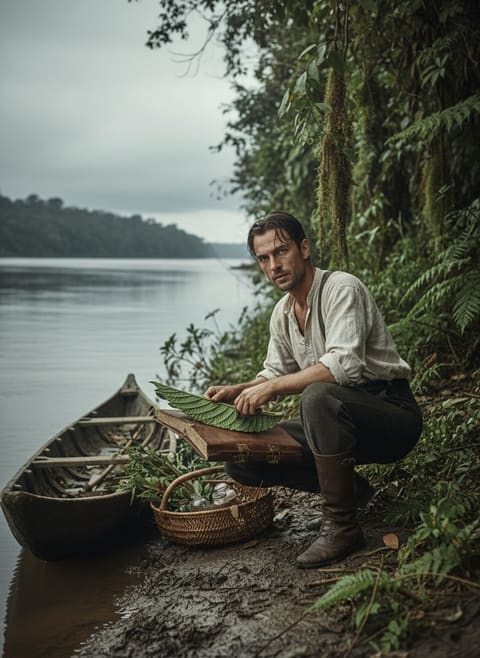
But capturing the essence of such giants was no small feat. Douglas meticulously collected seeds and samples, documenting their unique traits with a fervor that bordered on obsession. He understood the potential impact of his findings—an opportunity to rewrite the horticultural map of his homeland.
Beyond the towering firs, Douglas cataloged an impressive array of other species. The grandeur of the noble firs and the delicate beauty of the Oregon grape were among his finds, each representing a thread in a new tapestry he was weaving—a botanical bridge from the New World to the old.
Read next: The Day a Ship's Cook Claimed a Continent for the Crown
Between Life and an Unfathomable End
Douglas's journey was not just one of flora but of sheer endurance. Reports of his travels tell of an ambush avoided by sheer luck, and other encounters with danger thwarted by his innate survival instincts. His journey along the rivers and through unmarked trails was marked by isolation, every footstep a testament to his determination.
Yet, his return to civilization was marked by tragedy. Years later, in 1834, during another expedition in Hawaii, Douglas's life was mysteriously cut short. He was found dead in a cattle pit, a victim of circumstances that remain murky to this day. However, by then, his legacy was firmly rooted. The specimens he sent back across the Atlantic had taken hold, transforming British landscapes with their robustness and beauty.
The Green Inheritance
David Douglas's contributions spread beyond British gardens; they were seeds of a cultural shift in the appreciation of the natural world. Each tree he introduced represented a part of the new world, and they became staples in the tapestry of Britain’s lush woodlands.
Today, when we wander through a British forest and encounter a Douglas fir, we walk amongst the echoes of one man's relentless exploration—a reminder of the power of nature to transform lives and landscapes. The botanist's legacy, grown from a gardener's roots, encapsulates the spirit of discovery, the perseverance of bringing beauty across oceans. It is a tale left out of many texts, but within every leaf and needle sways a history, waiting to whisper its story to those who listen.