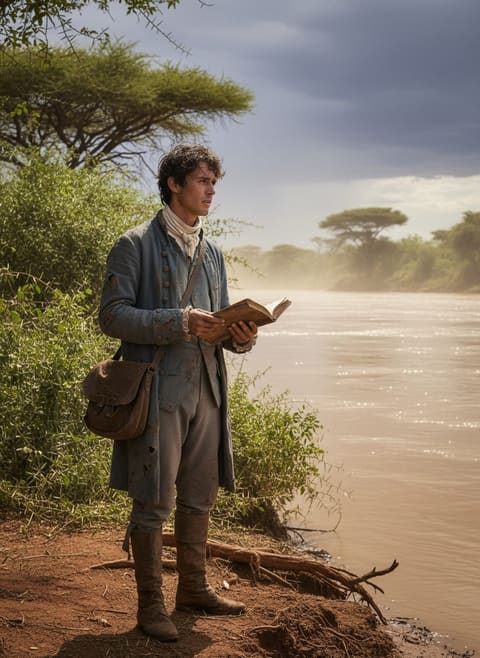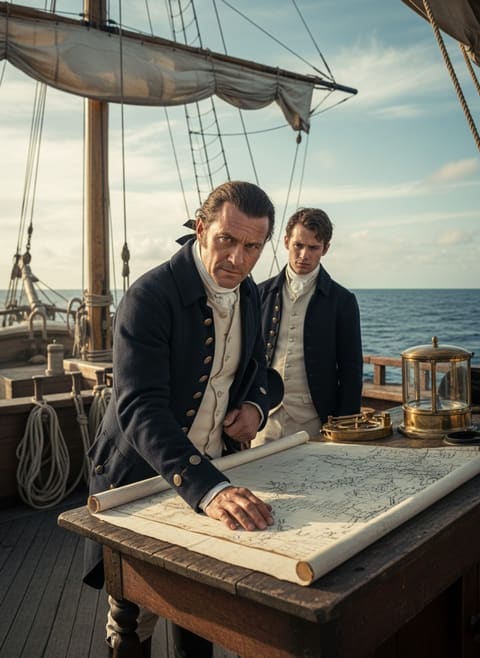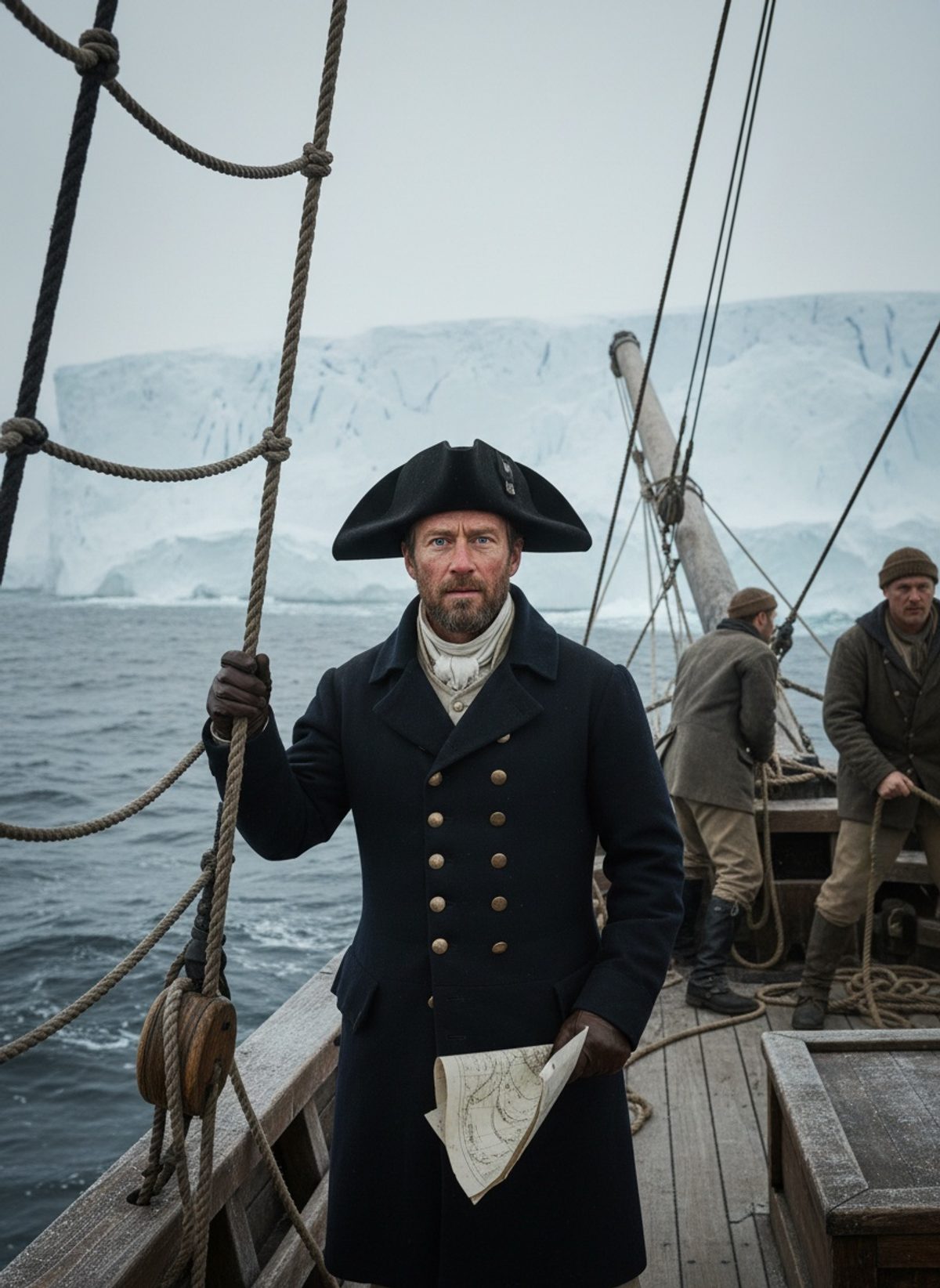
He was a simple seafarer without pretentious ambitions. Yet, Edward Bransfield found himself at the edge of the world, staring into the icy unknown. While the annals of history frequently spotlight those who are noble by birth, it is often the resolute spirit of an ordinary man that lights the beacon of discovery. Such was the case in January 1820 when a seemingly unremarkable Royal Navy surveyor from Cork set sail along the hitherto uncharted fringes of our world. Bransfield, far removed from the officers of higher rank, was entrusted with a monumental task— a task that would ultimately reimagine the scope of our planet's map.
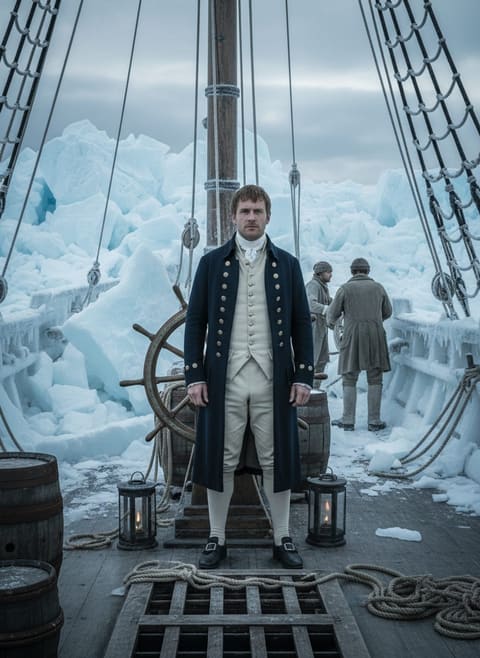
The story begins with the brig, a modest ship slicing through the frigid Antarctic waters, its prow battling the violent embrace of wind and waves. The calendar marked January, but the cold bit with a force beyond any simple winter's chill. This land, or more precisely, this stretch of unyielding ice and rugged outcrops, remained absent from all known charts. The typical map of the era dwindled into an abyss of speculation beyond the converging longitudes of the southern oceans. Here, at the edge of the world, Bransfield's compass guided him not just south, but into the very recesses of uncertainty and human resolve.
Born into a world where the farthest reaches of geography were uncharted, Bransfield's expedition was nothing short of audacious. With each passing mile southward, the realization dawned that what lay before him echoed untold stories of conquest, competition, and colonization that had yet to unfold. Amidst encroaching fog and biting winds, the challenges were as palpable as the glistening frost that clung to every surface. The crew, steeled by the demands of their mission, shared their captain’s silent determination. No living soul had ever gazed upon these icy shores, and yet, there they were, etching them into the world's consciousness.
Throughout antiquity and into the Age of Enlightenment, the idea of a southern continent teased the imaginations of the learned scholars and thrill-seeking adventurers alike. The ancient Greeks alluded to a 'terra incognita', a notion that persisted through centuries yet remained elusive. The early 19th century, interwoven with the spirit of exploration, saw Britain’s maritime ventures push the boundaries of known worlds. Yet it was in the frozen tableau of the South Shetland Islands that Bransfield's painstaking observations and mappings crystallized into reality. These efforts catalyzed global interest and ultimately birthed a new arena in geographical exploration.
Read next: The Day a Devon Captain Sailed Into the Ends of the Earth
Bransfield’s logbooks tell stories not just of land, but of a severe environment, one where survival skills are tested at every moment. The brunt of the elements was relentless, with icebergs drifting silently yet menacingly. Every decision Bransfield made bore the weight of life or death. His calculations needed to be precise; with no competent maps to inform his path, the very skies served as both foe and friend. Using a sextant as his guide, Bransfield sketched lines across blank pages — lines that captured fullness in a world visually defined by emptiness. His observations on that journey reported features on the Antarctic Peninsula, a seminal moment in exploration.
The significance of his achievement was monumental, yet it's a name that often evades grandiosity in history books. Perhaps it is the nature of his quiet impact, for no military victories etched his name in the halls of valour, nor did he trail a legacy of heroics. Rather, it is his success as an observer and record keeper, a cartographer of frigid realms, which paved the way for future explorations. Each measured latitude and longitude, calculated in inhospitable conditions, represents an uncelebrated facet of the grander narrative of discovery. Explorers who followed, inspired by Bransfield's charts, went on to declare new lands, nestle flags, and name points upon which civilizations would anchor tales of adventure and fortune.
Read next: The Day a Welsh Naturalist Walked Into the Unknown Alone
The ramifications of this voyage reverberated through naval and scientific communities. His recordings provided a foundation that others, including sealing and scientific expeditions, would build upon in the pursuit of more systematic studies. The allure of the great unknown gravitated more toward this cold continent, accelerating an era of polar research that lifted the veil on Earth's final frontier. It became clear that Earth's secrets stretched beyond tangible horizons, provoking debates, discussions, and dreams of what lay beneath the icy breath of Antarctica.
Yet, why does this story, that of an austere Norfolk captain whose drawings shaped our understanding of the southern polar realm, matter today? It matters because it speaks to the ingenuity and perseverance inherent in humankind, traits that fuel every leap into the unknown. It demonstrates that discovery is but a canvas painted with the brushstrokes of courage, determination, and, sometimes, the quiet persistence of the unsung hero. In a period where the boundaries of maps expanded with every maritime journey, Bransfield's expedition stands not just as the enshrinement of human exploration, but as a reminder that the drive to move forward and discover what lies beyond remains at the core of our shared human experience.