The humidity clung to him, a suffocating blanket that pressed down on his fever-ridden body as he lay in the bamboo hut. Alfred Russel Wallace’s head spun, each beat of his pulse a relentless throb against the skull. His pen scratched feverishly on paper, the thoughts racing as though fueled by the malarial fire that burned through his veins. He did not know if he would live to see another dawn, but his mind was clearer than ever. Before him lay the solution to a mystery that had tormented him for years — the mechanism of evolution.
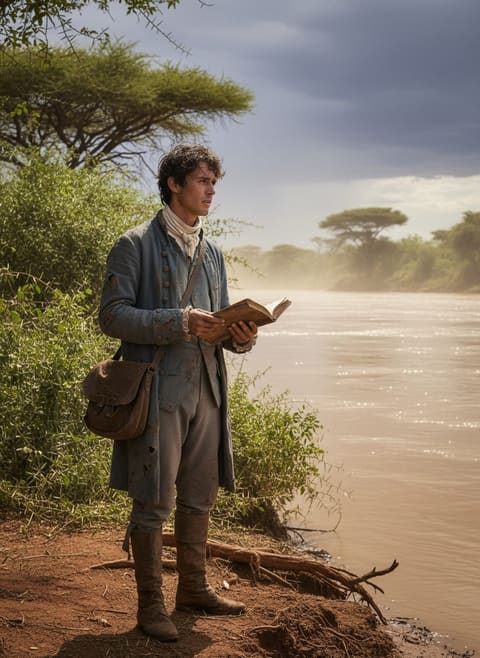
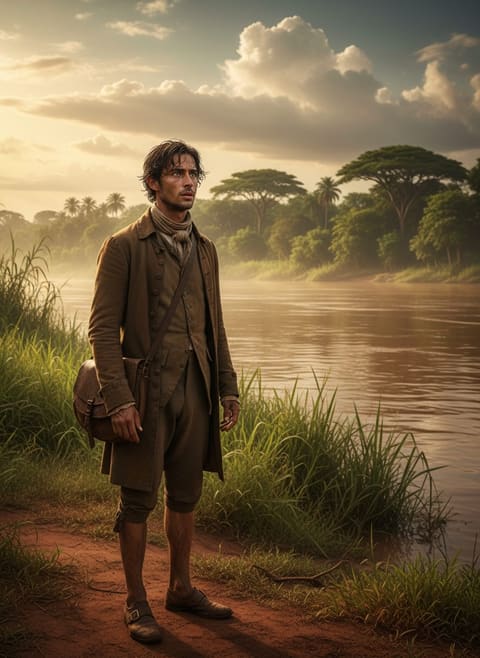
Borneo was a world away from the cobbled streets of Llanbadoc, Wales, where Wallace began his journey far from the academic societies and prestigious circles of Victorian England. Trained as a surveyor and carpenter, he had no formal education or university degrees, but his passion for the natural world pulled him into uncharted territories that most of his contemporaries would never dare to tread. Armed with only his wits, a sturdy constitution, and an insatiable curiosity, Wallace embarked on an expedition that would lead him to the pristine landscapes and dense jungles of the Malay Archipelago.
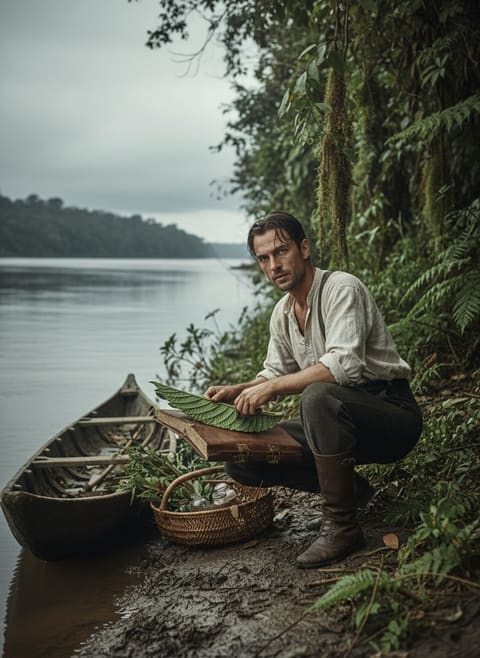
The jungle’s riches were enticing and dangerous. Wallace navigated the verdant maze with the precision of a naturalist, collecting specimens that had never before graced the halls of European museums. The chirps, buzzes, and rustles of exotic creatures accompanied every step as he meticulously recorded his observations, each entry a meticulous step toward understanding the tangled bank of life. It was here, in this primitive laboratory of nature, that the foundations of his revolutionary idea began to crystallize.
Alone and forgotten by the world he left behind, Wallace's health waned under the constant threat of tropical diseases. Feverish fits overtook him regularly, a reminder of the precarious edge between life and death in the jungle. Yet, in the haze of sickness, clarity emerged. The violent sweeps of predators, the untouched isolation of islands, and the endless variety of species sparked a revelation — it wasn't divine whimsy or chance that shaped the natural world; it was the relentless power of nature itself. Natural selection, he realized, was the force that chiseled life into forms best suited for survival, leaving no room for the inadequate or unfit.
Read next: The Day a Welsh Naturalist Walked Into a Burning Jungle Alone
The epiphany struck like a bolt of lightning. Wallace, deliriously ill yet singularly focused, penned down his thoughts with urgency. His fever was his captor, yet it was also his muse, releasing him from the bonds of conventional thinking. Over two intense, sweat-drenched days, the outlines of his theory unfolded, akin to the construction of a cathedral from raw stone. Through the precise language of science, he articulated the principles of evolutionary change: the struggle for existence, variation among individuals, and the survival of the fittest.
Thousands of miles away, Charles Darwin, a name already whispered among scholars for his similar contemplations on nature, was caught off guard. When Wallace’s paper arrived at Darwin’s doorstep, delivered across vast seas with a sense of immediacy that no telegraph could convey, it propelled Darwin into action. Here was an argument uncannily parallel to his own unpublicized thoughts, yet born independently in the heart of the jungle rather than the stone walls of academia. Darwin, often meticulous to a fault, wept at the realization of a shared understanding that could not wait. Wallace's letter shook the very foundations of Darwin's intellectual struggle, becoming the catalyst that finally drove him to publish his own groundbreaking work.
Read next: The Day a One-Eyed Captain Sailed Into the Frozen Unknown
The annals of history and science often celebrate the victors who emerge from the center stage, leaving shadows cast over the quieter, yet equally profound figures. Wallace, the unheralded naturalist, epitomizes the powerful narrative of perseverance and ingenuity. Without a patron’s banner or academic accolade, he explored the frontier of human understanding and reshaped it. His legacy, once potentially destined to remain an obscure footnote, instead became a monumental pillar within the framework of evolutionary biology.
What emerges from Wallace’s journey is not just the tale of a scientific achievement but a testament to the boundless spirit of exploration and discovery. His story is one of an unconventional path that defied the limitations imposed by society, driven by the relentless pursuit of knowledge. In delving into the unknown, Wallace both illuminated the interconnectedness of life and underscored the profound impact of a solitary thinker in shaping the intellectual currents of his era.
For the readers and scholars of today, Wallace’s walk into the unknown challenges us to reconsider the narratives defined by rank and accompaniment. The echoes of his feverish pen strokes resonate beyond the confines of Borneo’s jungles, inviting us to embrace curiosity over convention, and to find courage in the solitary journey of seeking truth. We are reminded that while history may initially overlook the solitary wanderers, it is their footsteps that often carve the most indelible paths.