The Battle of Bannockburn was won by Robert the Bruce on June 23rd, 1314. Yet, it was decided long before a single sword was drawn.
In the dim light of dawn, as the mists crept along the edges of the Scottish encampments, Robert the Bruce stood with determination etched into his features, contemplating the fields that would soon become legend. This was no haphazard stand against an invading force; it was a masterclass in strategy and psychology. Bruce understood better than anyone that the land was his greatest ally. By choosing the ground on which he would face Edward II, he skewed the odds in his favor long before the first clash of steel on steel.
Edward II, the King of England, wasn't short on manpower. His army, one of the largest ever gathered in English history up to that point, was a moving fortress of hardened knights, archers, and infantry. They marched north with a singular purpose: to extinguish the flickering flame of Scottish resistance once and for all. His confidence was as formidable as his forces, yet underestimating the cunning of Robert the Bruce would prove to be his downfall.
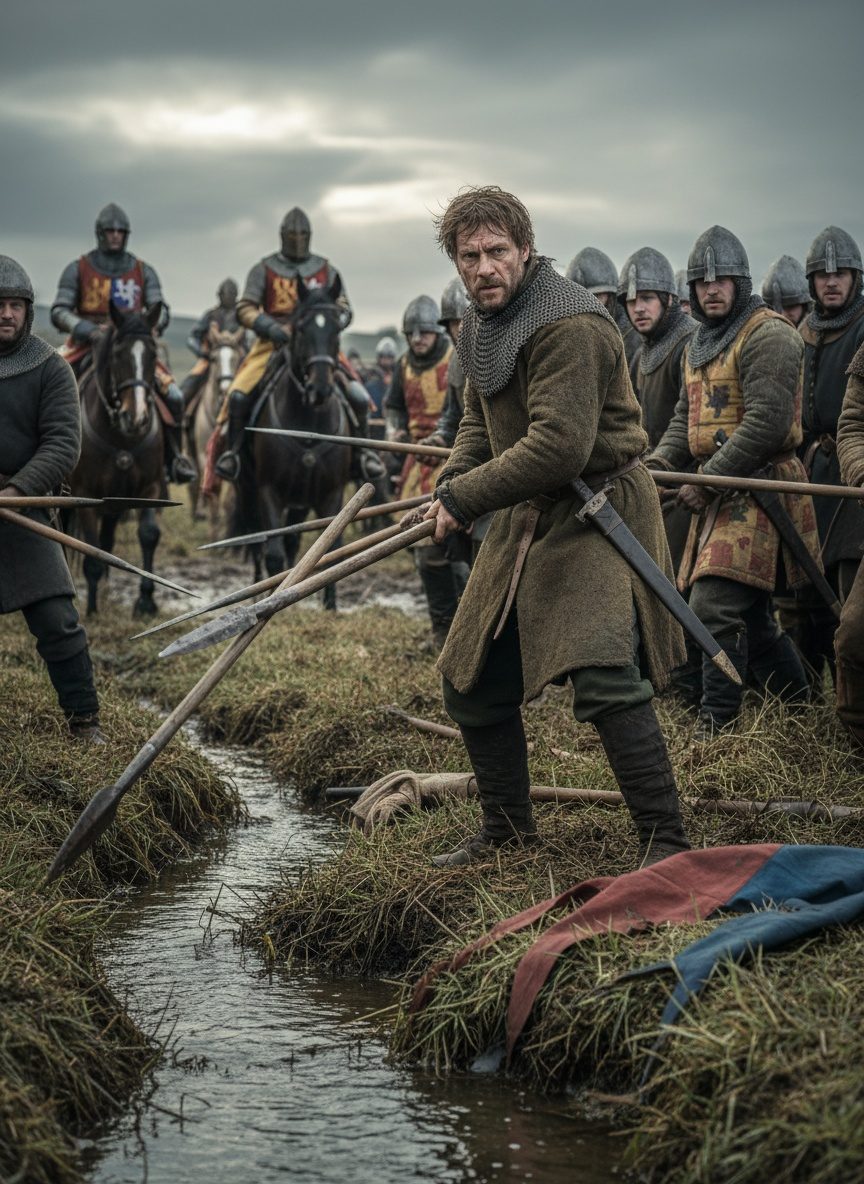
Bannockburn was more than a battlefield; it was a warrior's chessboard with Bruce orchestrating every move. The terrain, a seemingly benign patchwork of undulating plains dotted with woods and marshes, disguised its lethal potential. Bruce saw an opportunity that others might have missed. Confined by the surrounding geography, the vast English army could not effectively deploy its superior numbers. The ground betrayed them, turning minor skirmishes into unmanageable chaos.
Read next: The Day a Scots Weaver's Son Freed the Kirk From a King
On a more personal note, the legendary encounter between Bruce and the English knight, Sir Henry de Bohun, adds a visual flourish to the grittiness of medieval warfare. As the tale is told, de Bohun spotted Bruce, unarmored, riding ahead of his troops. Sensing an opportunity to change the tide with a single strike, de Bohun charged. But it was Bruce who struck the decisive blow, splitting de Bohun's helmet (and skull) with an axe in one mighty swing. This served as both a visceral demonstration to the Scots of their king's strength and as a chilling prophecy for the fate awaiting the English.
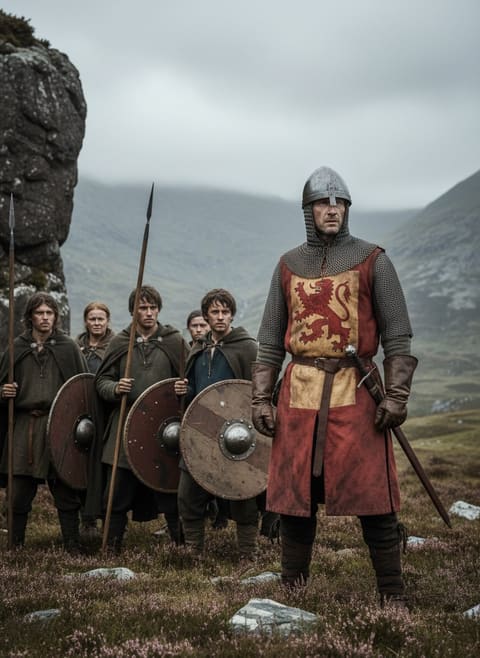
Bruce’s forces, though fewer in number, were compact and agile, hardened by years of guerrilla warfare and loyal to a cause that was as much about survival as sovereignty. The Scottish schiltrons, a formation of tightly packed spearmen, became not just a line of defense but a bastion of resilience against the English cavalry. The ground beneath them, rendered slippery by summer rains and thick mud, further compounded Edward's miscalculation. Horses, made to gallop over flat plains, found little purchase, pitching their riders into the spears of the waiting Scots.
The second day of Bannockburn sealed Edward’s fate. His forces, unable to execute their carefully laid plans, were subjected to an unrelenting wave of Scottish ferocity. The English archers, who might have turned the tide, were neutralized by Bruce's flanking tactics, a diversion orchestrated with surgical precision. As confusion rippled through Edward’s ranks, the realization set in. This was no ordinary battlefield; it was a quagmire swallowing his grand designs alongside his pride. With the retreat began a rout. The mighty army that marched north with such promise now scattered, clamoring to cross the River Forth, leaving behind weapons, armor, and kindred alike.
Read next: The Day a Highland Clan Turned a Massacre Into a Legend
Yet, beyond the tactical and the heroic, there was an indomitable spirit that rose from the Scottish forces. They fought not just with weapons but with an uncontainable resolve, shaped by years of fierce English dominion and cultivated by a yearning for self-determination. Their victory at Bannockburn, rooted in both the tangible and the intangible, wrote the first lines of independence on the mud of the Forth, lines that resounded with a promise of a nation’s enduring survival.
The ripples from Bannockburn spread far and wide. While it did not immediately secure Scottish independence, it irreversibly altered the perception of invincibility that surrounded the English crown. It was a testament to the power of leadership, the wisdom of knowing the land, and the unyielding drive for freedom. Robert the Bruce, through intelligence and bravery, fundamentally shifted the balance, proving to all that sometimes, the mightiest weapon on a battlefield is not the number of swords but the spirit of those who wield them.
And so, the battle at Bannockburn becomes more than a medieval clash; it is a part of Scotland's legendary narrative, where the underdog rises not out of nowhere but from a place of calculated brilliance. It's a story that still resonates today, celebrating a land unbeaten, and a king who understood that the heart of leadership lay not in commands, but in the courage to redefine what seemed possible. Bruce left more than a legacy; he left an undying echo of tenacity and hope, one that would inspire for generations to come.