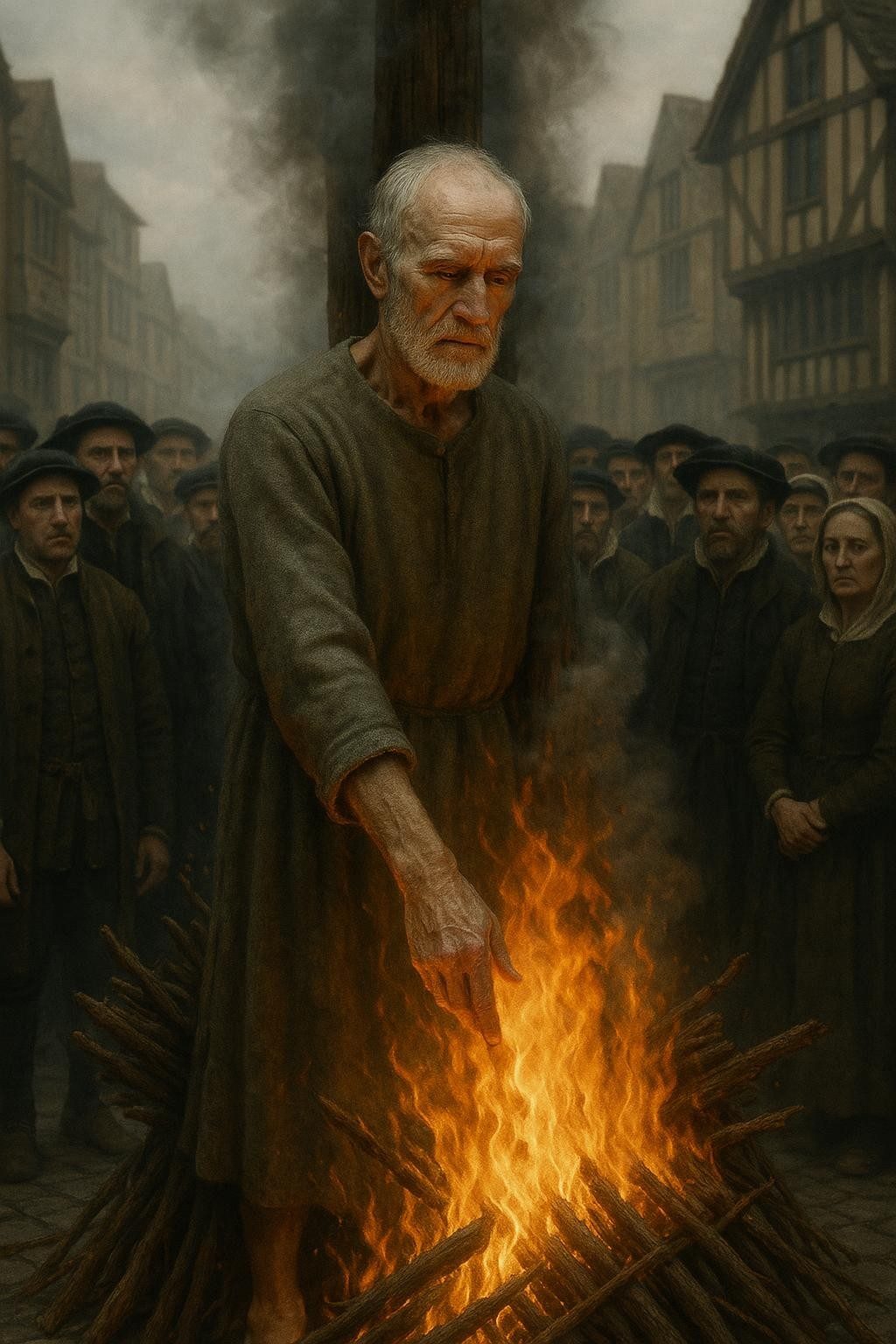
He was a man of letters. He was a man of fire too.
Thomas Cranmer was no stranger to the flames that threatened to consume the reformist ambitions of Tudor England. Over the tumultuous years stretching from Henry VIII's theological defiance to Edward VI's fervent Protestant reforms, Cranmer had been at the heart of England’s spiritual upheaval. The Archbishop of Canterbury, known for his crucial role in the English Reformation, wove the fabric of Anglican liturgy with erudite precision. But as the reign of Mary I, "Bloody Mary," entrenched England into Catholic resurgence, Cranmer, once a king's confidant, became a hunted man.
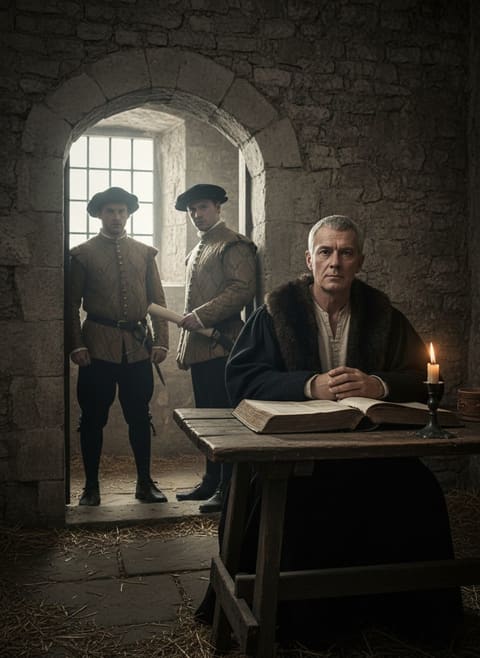
March 1556 in Oxford was not any ordinary month. Cranmer had been imprisoned for over three years, his freedom reduced to the walls of Bocardo prison. The bones of other Protestant martyrs, such as Bishops Latimer and Ridley, had already been scorched on Broad Street. Despite suffering the indignities of imprisonment and inquisition, Cranmer initially recanted his Protestant faith. He had signed his name, ink on parchment, hoping to escape the torch. His enemies saw his signature as a victory, a powerful submission of the Protestant cause.
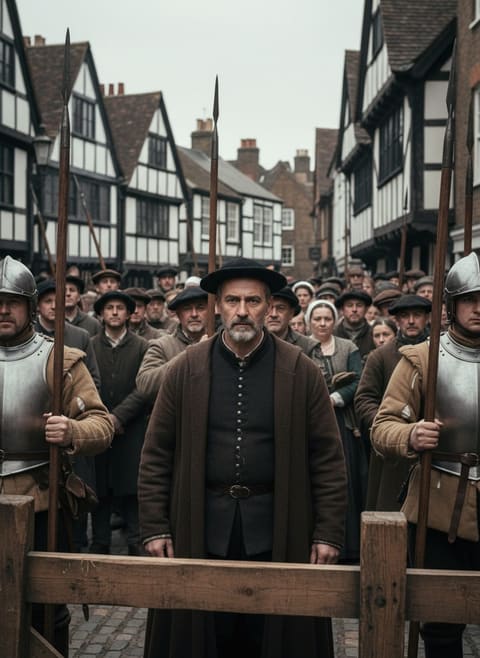
Yet, the drama that unfolded on Broad Street was to defy their expectations. On that March morning, Cranmer was led to University Church for a public sermon. The crowd gathered, eager for the spectacle. Some hoped to see the former archbishop plead for forgiveness; others whispered of unexpected happenings yet to come. Under the imposing shadows of Oxford's spires, there stood Cranmer, a figure embodying internal conflict and external persecution.
Read next: The Day a Tudor Chancellor Chose Death Over a Royal Lie
The sermon, meant to humiliate, instead manifested as a profound declaration of his enduring faith. Cranmer repudiated his recantations, recognizing the gravity of his earlier weakness. He spoke with a booming clarity that rose above the murmurs of the assembly, his presence growing more formidable with every word. As those within earshot strained to capture his confession, Cranmer's voice reverberated with unwavering conviction.
"And forasmuch as my hand offended, writing contrary to my heart, therefore my hand shall first be punished," Cranmer declared, igniting a new flame whose glow transcended physical fire. His statement sent ripples through the assembly, an unrepentant declaration of belief that re-characterized the infamous fire he was about to face—not as a punishment, but as a chosen testament to truth.
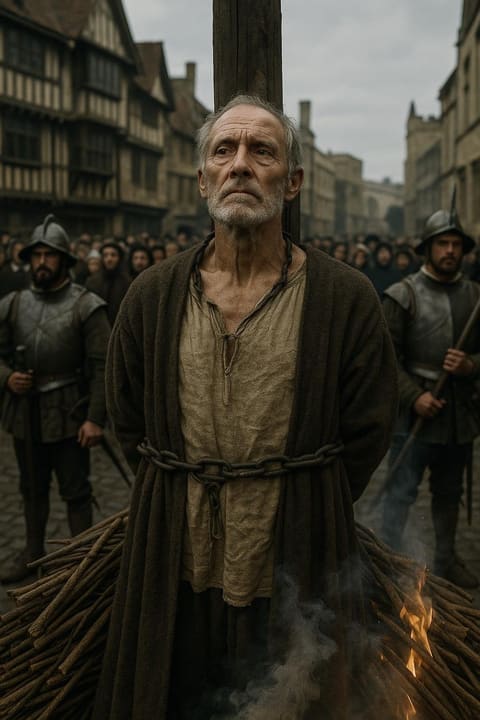
The procession to the stake was somber yet electrifying. The stakes had been set on Broad Street; for Cranmer, they signified both an end and a summative act of faith. Amidst a meticulously orchestrated execution—where flames licked the pyre and chants of prayer punctuated the air—Cranmer thrust his arm into the burgeoning inferno. The hand that signed away his faith was sacrificed first, held steady and unmoving as the licking flames devoured its flesh. "This hand hath offended," his words reverberated, a chilling vow echoing the remorse of his earlier capitulation.
Witnesses of that fateful day retained more than just the memory of a burning figure; they saw a man transformed by fire, turning the stakes into a pulpit of defiance. The searing heat mingled with the smoke cleared the air of doubt—the fire that consumed his physical body could not devour his enduring legacy. For those who gathered, the paradox of Cranmer's resolve—both a personal resolve and a larger statement on religious conviction—etched a vivid images embedded in popular consciousness.
Read next: The Day a Tudor Bishop Refused to Crown a Usurper
The ripples of that day reached beyond the wooden stakes of Oxford. Cranmer's martyrdom invigorated the Protestant cause during a period when religious affiliation was often navigated through a murky web of political expediency and survival. To those who held fast to the nascent faith, his supreme sacrifice was a catalyst, instilling courage and giving testament to the idea that even upon the brink of death, a person's true conviction can triumph over fear.
In the years and centuries that followed, the figure of Cranmer rose as both contentious and revered, depending on the view of history. Nationalism, reformation, and personal resolve found symbolism in his final, tragic hour. It stands as a testament not just of his individual life but acts as a broader commentary on the transformative waves of societal change that arise from conviction, however fraught with peril they may be.
Thomas Cranmer’s journey into the flames showcased a universal narrative — one of courage, belief, and the relentless pursuit of truth. Historians and scholars might debate his motivations or the complexities of his character, but at that moment on Broad Street, encircled by the determined roar of the flames, Cranmer's actions spoke profoundly. Even in our modern context, where the stakes are less deadly but equally significant, Cranmer’s fervor reminds us of the power of holding one’s own hand to the fire, daring to shape history with unwavering resolve.