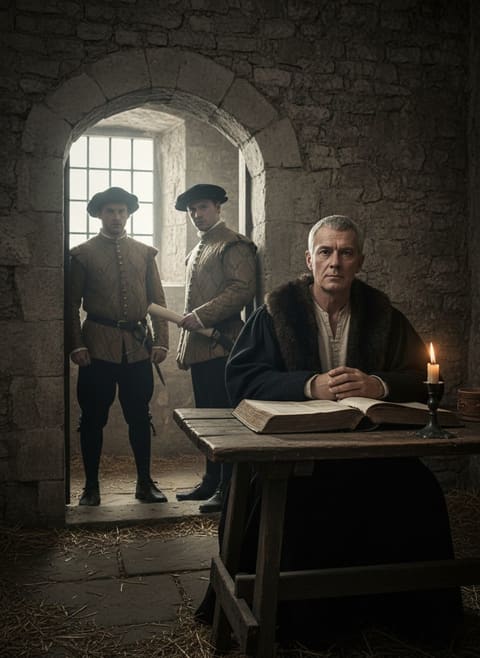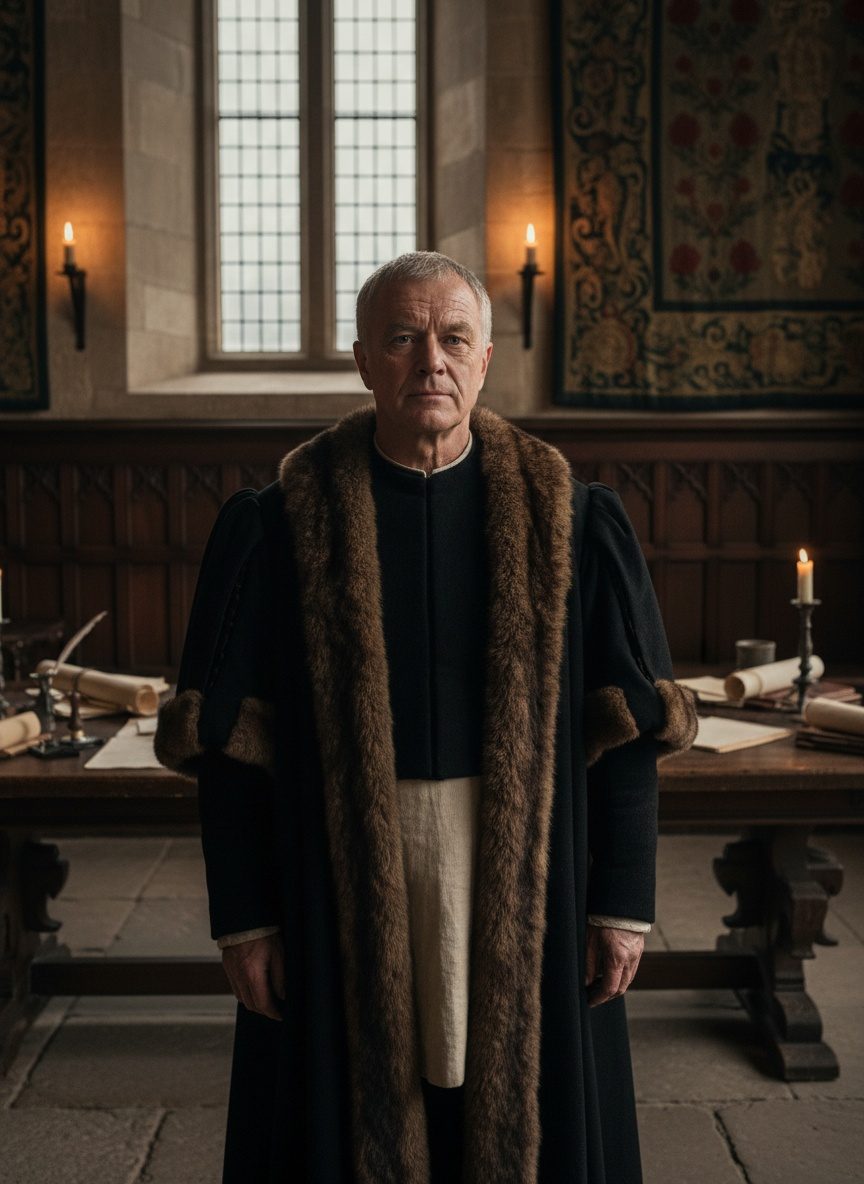
The dull thud of the wooden door closing echoed ominously through the Tower of London’s stone corridor. Sir Thomas More, once Henry VIII’s most cherished advisor, now a prisoner on the brink of fate, did not flinch as the sound reverberated behind him. The modest cell, devoid of comforts, bore witness to the final act of a drama that had been building for years. The air was cold, pricking Thomas’s skin—a sharp contrast to the warmth of the court where he had once thrived. His mind, steadfast with conviction, moved through the events that had brought him here.
The refusal had been deceptively simple, yet it carried with it the weight of an empire's wrath. Henry VIII, insatiable in his pursuit of power and personal desire, demanded that all subjects affirm the Act of Supremacy, acknowledging him as the Supreme Head of the Church of England. He required loyal signatures to confirm an act that defied centuries of religious tradition. More’s quill, however, remained stubbornly still. For to sign the act was to betray the man he fundamentally was—a devout Catholic and ardent defender of the faith. The silence of More's refusal reverberated louder than any impassioned speech ever could.
Thomas More’s journey to this chamber of destiny had been marked by brilliance and contradiction. He was a scholar revered across Europe, a lawyer renowned for his fairness, and a statesman recognized for his loyalty. His ascent to chancellor had been meteoric. Within the splendour of Tudor courts, More had served his monarch with a blend of intellectual wit and principled guidance, yet always bearing the unseen crucifix in his heart. More had advised Henry through numerous policy decisions and diplomatic challenges, often advocating for moderation amidst the tumult of reformations and revolutions occurring within Europe.
Yet More’s allegiance to his conscience was immutable. In their early days, Henry and More had been kindred spirits of a sort—both recognized for their academic prowess and rhetorical enthusiasm. They had exchanged views on philosophy, religion, and governance. But as Henry pursued his own reformation, aiming to satisfy his personal desires under the guise of wider religious change, their paths diverged irreparably. More could not reconcile his service to the king with a surrender of his spiritual integrity.
Read next: The Day a Tudor Chancellor Chose Death Over a Royal Lie
On his knees in the prison cell, More felt the chill of the stone seep into his bones, yet his spirit remained untouched—a fortress of resolve. What went through his mind as he faced his destiny? The memories of a trusted advisor and beloved father, or perhaps the quiet moments spent with ink and parchment during the creation of his humanist masterpiece, *Utopia*? Or was it those solemn hours of prayer, the invocations whispered under his breath for guidance and justification in the face of adversity?
The trial was scarcely a trial by conscience. It was rigged towards a foregone conclusion. It unfolded in Westminster Hall beneath the watchful eyes of courtiers who had once lauded him as a saviour of the realm. More’s defense was deft, his words eloquent, but the verdict, guided by royal will, was inevitable. Treason—a guilt thrust upon him for refusing to acknowledge the king's supremacy over the Church, a supremacy he could not, in good faith, confess.
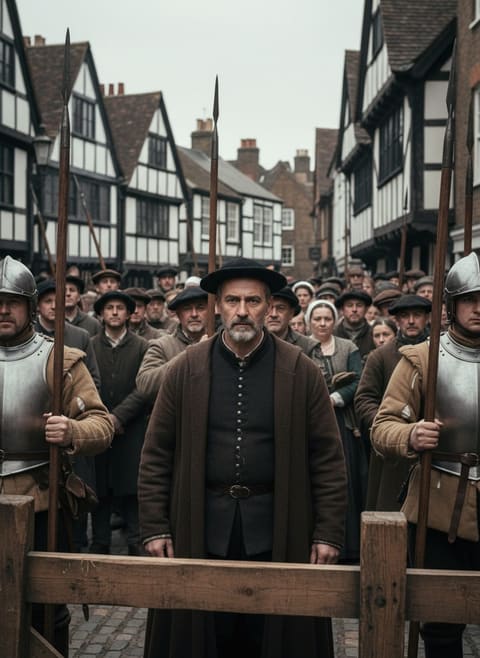
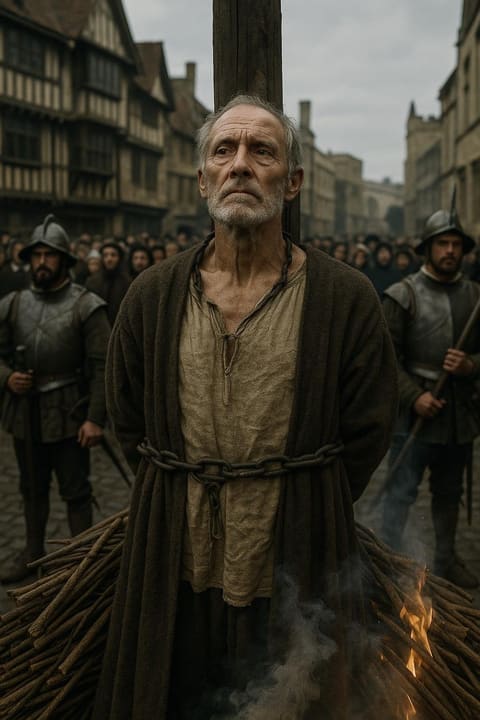
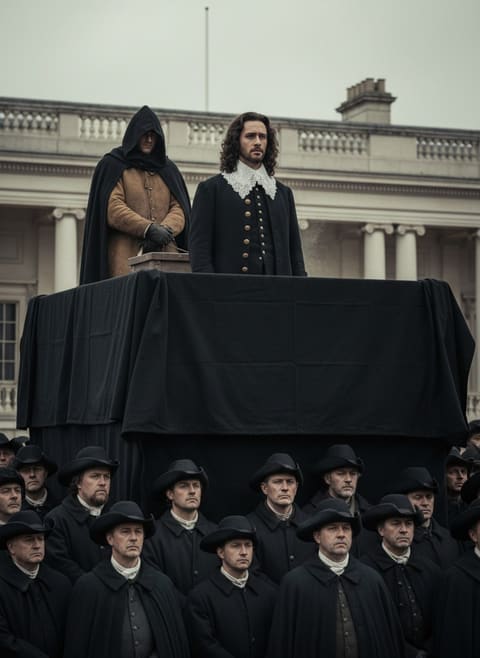
As dawn broke on the day of his execution, More awoke with a serenity that belied the fate awaiting him. The weathered wood of the scaffold stood stark against the morning sky, a silent monument to the unyielding power of belief. He ascended its steps, supported by the arms of guards, but not for the scaffold’s inevitable collapse. He was supported by the conviction that had defined his life. Looking out across the assembled crowd, faces blurred into a single mass—some mournful, others indifferent, and still others triumphant. More, addressing them with a calm belying the moment, declared himself “the king's good servant, but God’s first.”
Read next: The Day a Tudor Bishop Refused to Crown a Usurper
At that moment, the full tragedy of More’s life was laid bare. The intellectual, the statesman, and the family man who had lived amongst Renaissance splendor now stood isolated from all that he had cherished. In yielding his life, he maintained his honor; in sacrificing his ambitions, he safeguarded his soul. Henry VIII would continue to reign, forging his church and reshaping England's identity, unencumbered by a man’s dissent. Yet More's end, far from a solitary event, signified a potent symbol. In a time of corrosive change, those whose convictions challenged the tides revealed a profound moral courage.
As More laid his head upon the block, the masked axeman prepared without malice, as instructed—a mundane action in their trade. The final moment was intimate despite the multitude present—the axeman’s whispered prayer, More’s silent prayer. The execution was swift, ending a life, but igniting a legacy that has transcended centuries. More’s stand—a footnote in the political unravelling between England and Rome—has left an enduring ripple in history’s pond.
The ethics of his choice continue to provoke debate. Was More a martyr or merely an idealist unwilling to bend to pragmatic forces? Yet perhaps the resonance of Thomas More’s narrative lies in its timeless relevance. The story of an individual’s silent refusal to compromise personal faith and integrity remains a cornerstone of moral discourse. In the echo of More’s silence, one uncovers the enduring power of an inner voice, a power greater than the mandates of crowns or the decrees of kingdoms.