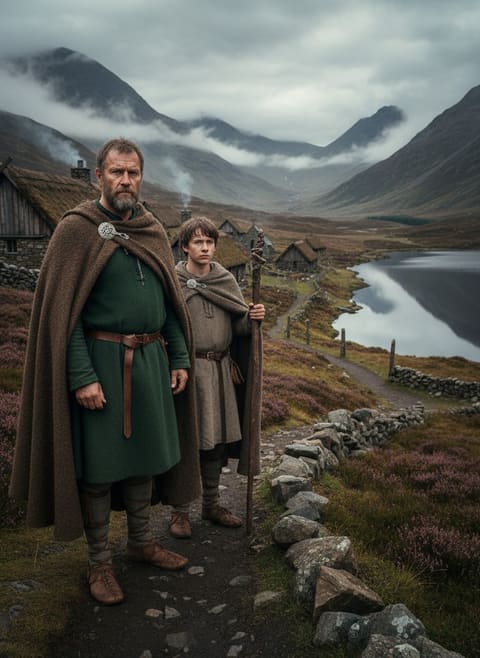
The highland air carries a bite as the sun dips beneath the rolling hills surrounding Glasgow. The narrow footpaths meander through ancient woods, their leaves whispering secrets of past battles lost and won. The sky transforms into a canvas of indigo and burnt orange, weaving a tapestry of impending doom. In these hushed moments of twilight, the weight of history looms large for William Wallace. For eight years, the shade of freedom fluttered in the breeze, pushed by the billowing winds of rebellion he himself set into motion. But on this fateful day in August 1305, in the dense shadows where England's wrath and Scotland's hope met, his vigilant crusade faces its bitter end—not by the honorable clash of swords but by the treacherous whisper of betrayal.
The Man of Legend
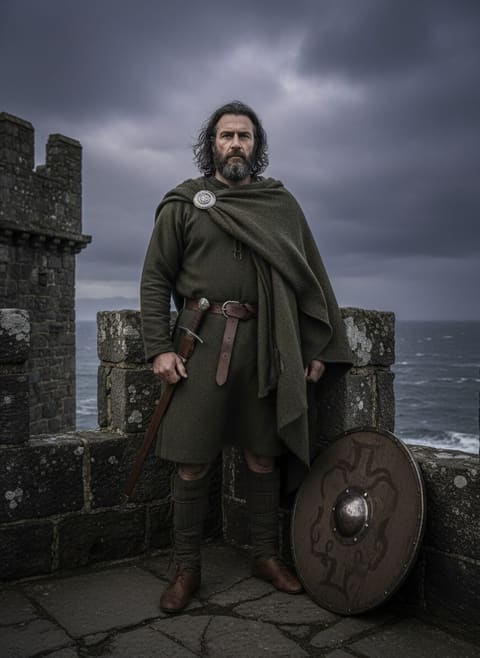
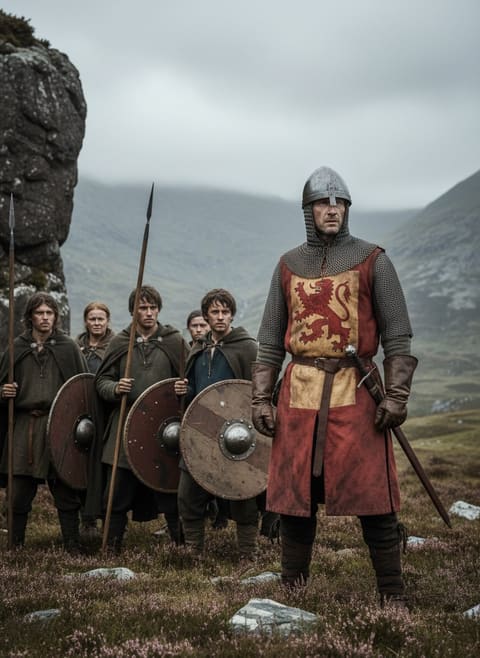
William Wallace, a figure wrapped in the romantic shroud of Scottish lore, emerged from obscurity to challenge the might of England's King Edward I, fittingly dubbed Longshanks for both his stature and ambition. Born into a minor noble family at Elderslie, Wallace's call to arms was a cry against oppression, sparked by personal loss and fortified by a fierce sense of nationalism. His leadership in the Battle of Stirling Bridge in 1297 marked him as a force to be reckoned with, as he led a much smaller, scrappier army of Scots to outwit and overpower the orderly might of the English. Stirling was no mere skirmish—it was both a morale-boosting victory and a spark that ignited further rebellion across Scotland.
Yet, this champion of the common people was never entirely alone nor entirely allied. The Scottish nobility was fractured, and Wallace often found himself in a precarious position, moving stealthily through the fabric of alliances that could unravel at the slightest tug of political expediency. What he represented transcended the battlefield; he was the embodiment of Scotland's yearning to breathe free, a soul unbowed to dominion. For this, Wallace was knighted and appointed Guardian of Scotland, an honor of symbolic importance, even as forces conspired against him.
Betrayed with a Whisper
Despite his formidable reputation bolstered by victories like Stirling, Wallace's task was Sisyphean. The defeat at Falkirk in 1298 clipped the wings of his soaring ambitions. England regrouped and retaliated with a calculated ferocity that drove Wallace to the fringes of his own lands. Methodically dismantled as a military power, his rebellion persisted as a ghost of what it once was. Yet Wallace, with the spirit of the Gaels propelling him forward, refused to remain a vanquished relic; he was ever the wolf at England's gate.
Read next: The Day a Scots Weaver's Son Freed the Kirk From a King
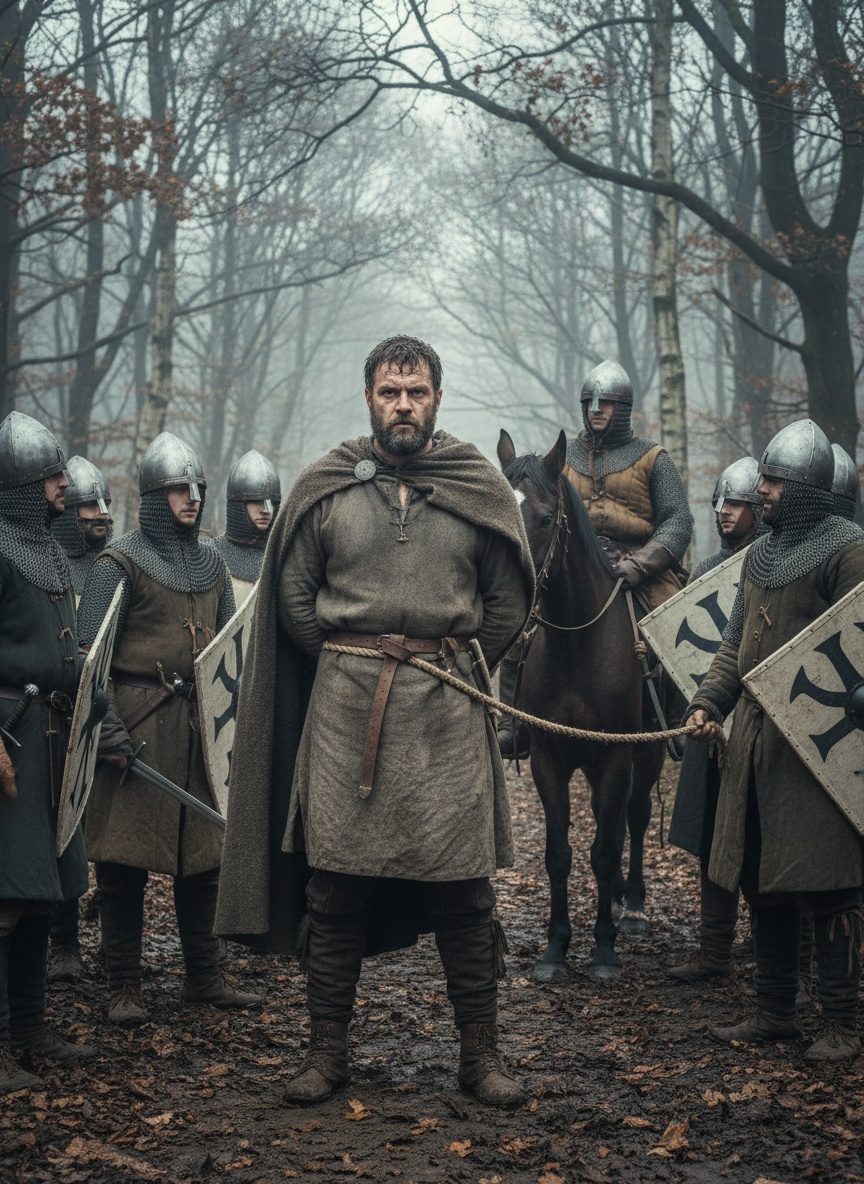
Wallace's capture did not unfold on a field of battle, sword in hand, but was orchestrated by the most insidious of human failings: betrayal. Near Glasgow, he was seized by Scottish knights said to have been complicit with John Menteith, a Scotsman who, lured by rewards, turned informer. It speaks volumes about the nature of his struggle—a protagonist betrayed by his own, in a tale as old as the rocks that punctuate the Scottish wilderness. The act of handover was no clash of titans but a quiet, sinister transaction that underscored the complexities of fealty and treachery that thrived in those turbulent times.
The Road to London
Bound and in chains, the road to London was a degradation crafted to strip Wallace of his dignity. Paraded through English towns, he was jeered and pelted, his stature as a fierce warrior reduced to that of a caged spectacle. Still, there was no yielding in him. No groveling for mercy. Just as he had walked among the hills with the determination carved deep within each step, so too did he march onward to his fate, the steel in his resolve unbroken.
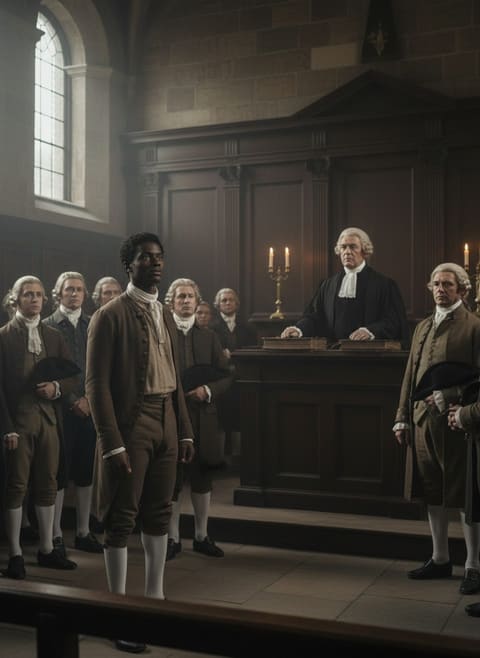
London, the heart of a kingdom he had dared to defy, awaited with a perverse sense of theatrical climax. As he stood trial in Westminster Hall, Wallace faced Chief Justice John de Grey; accused of treason, he retorted with integrity that resonated beyond the stone walls: he could not be a traitor to a king he never swore allegiance to. His trial was a formality, a performance staged to quell rebellion and cement English dominion. On August 23, Wallace's lifeline was senselessly severed amidst the jeers of those who would rewrite history to favor the powerful. Hanged, drawn, and quartered, his punishment was intended as a stark deterrent—a message scrawled in crimson across a restive landscape.
Read next: The Day a Highland Clan Turned a Massacre Into a Legend
A Legacy Fiercer Than Steel
Wallace's martyrdom, however grisly, was not the curtain call for Scotland's fight for independence. With steadfast fidelity to their cause mirroring Wallace's own, it was Robert the Bruce who rallied Scotland to ultimate victory at Bannockburn in 1314, securing a peace which even Edward's colossal machinations could not dismantle. The flame set alight by Wallace, that ignited in Stirling and fought on through betrayal, betrayal that twisted fate against him, would continue to burn, fanned by those he inspired.
The tale of William Wallace is a profound reminder not only of the unyielding pursuit for liberty but also the intricate dance between heroism and human fallibility. Wallace, defiant until the moment he became part of the earth he bled for, is a testament to the nascent spark of rebellion that can alter the course of empires. His echoes still resonate, reminding us that true freedom is hard won, fragile, and ever worth the fight.
Today, Wallace's story—woven into the fabric of Scottish identity—invites reflection on our interpretations of loyalty, the nature of power, and the spirit of resistance. In a world that shifts on the currents of seemingly insurmountable forces, the haunting call to rise, much like Wallace himself, can never truly be silenced.