Most tales from the Anglo-Saxon era have been forgotten by history textbooks. Yet, the story of the monks from Lindisfarne and their saintly charge remains an enigma of dedication and faith.
The Reluctant Exodus
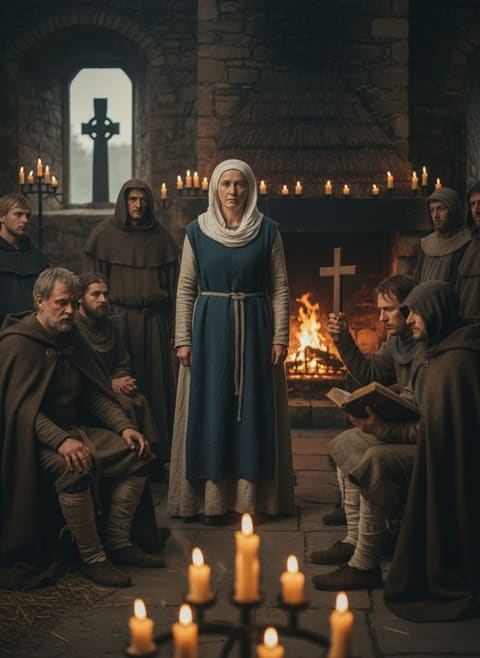
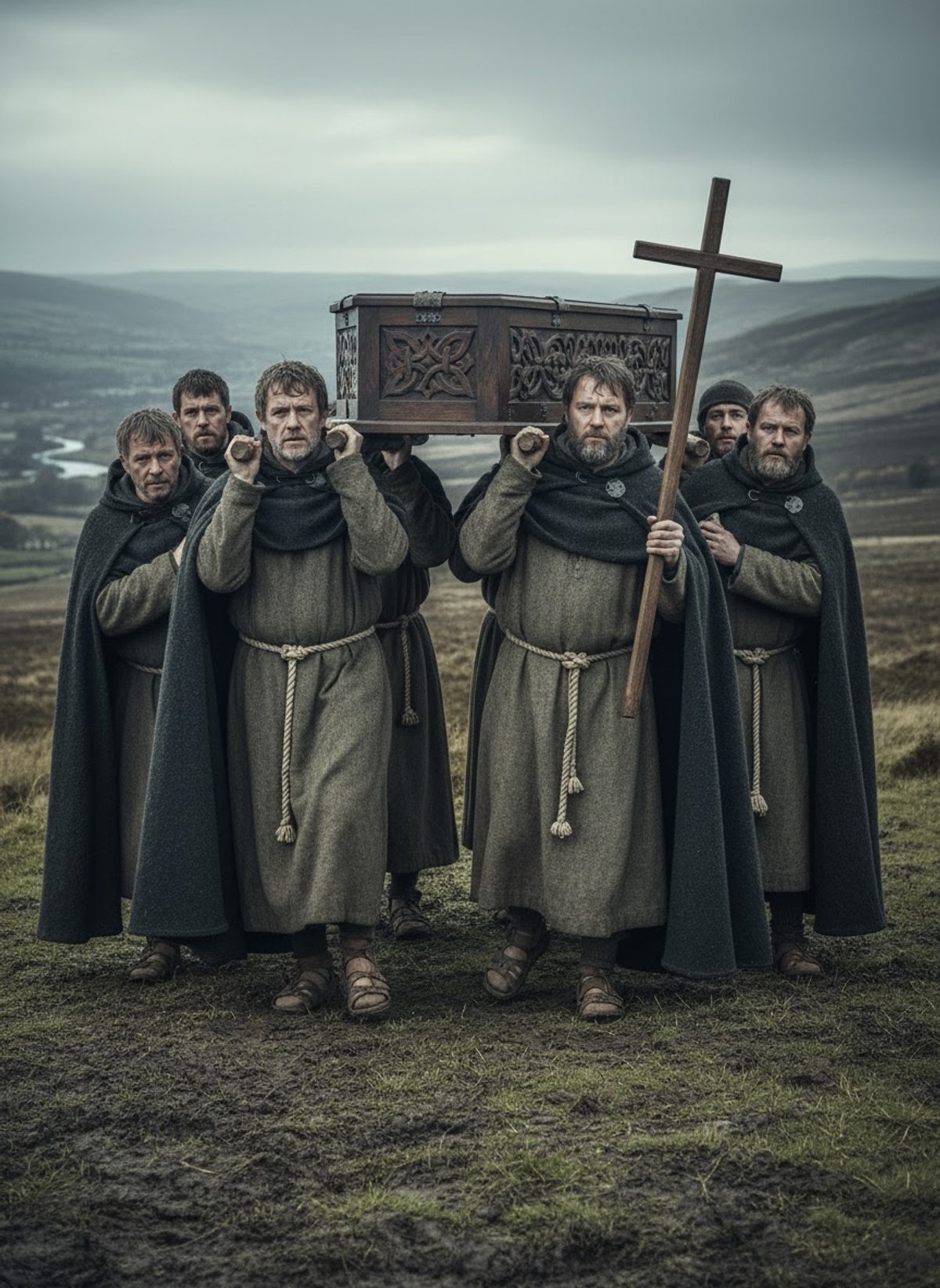
In 875, Viking longships appeared on the horizon like deadly shadows intent on pillaging the sacred isle of Lindisfarne. As the Norsemen loomed, the monks faced a soul-wrenching decision: abandon the holy relics or risk destruction. Guided by devotion, they chose neither. With reverence, they lifted the cedar coffin containing St. Cuthbert's bones and embarked on an odyssey across ancient Britain, a testament to their fidelity.
These monks might have appeared mere wanderers, dragging a coffin across the wild, windswept landscapes of northern England. But in truth, they were custodians of a legacy, warriors of spirit in a world ever on the verge of chaos. In their care were not just remains but a beacon of hope and unity in a time of darkness.
The Geography of Faith
The monks' journey was not one of a simple path. From Lindisfarne, they traveled through the heart of the Anglo-Saxon kingdoms, navigating treacherous terrains and crossing valleys echoing with both natural beauty and danger. Each step took them through towns and fields where the air hung heavy with uncertainty, yet their purpose never faltered.
Read next: The Day King Edmund Refused to Betray His People to the Danes
Though much of their precise route is shrouded in mystery, echoes of their path linger in the placenames and legends whispered in local dialects across the north. This wandering spanned generations, linking monastic communities intricately tied to St. Cuthbert in bonds of admiration and spiritual kinship. The bones of the saint became an itinerant shrine, a moving center of gravity in an unsettled era.
Cuthbert's Call and Durham's Destiny
The wanderings continued for over a century, each footstep deeply embedded in the mud of medieval history. Yet, one tale resonated as the point when their journey came to an end. Tradition holds that as the monks reached a certain wooded rock overlooking the River Wear, a vision, ostensibly St. Cuthbert's, dictated that here they should settle and build anew.
Durham, a site previously unremarked upon in history, thus became hallowed ground. In choosing this location, the monks were drawn by more than just practicality or vision; they felt the weight of providence. The fortress-like rock offered not only security but also a place to inspire and uplift those who followed.
The Secret in the Bones
The relics in the coffin were not mere bones; they were infused with layers of mystical and ecclesiastical significance. Throughout the journey, the sanctity of St. Cuthbert's remains bound the community of believers. These bones carried stories whispered in hushed tones and belief that spoke louder than the clamor of any Danish horde.
Read next: The Day Æthelflæd Rode Out and Took a Viking City Back
During the transport, miracles were attributed to the saint. The monks believed it was his influence protecting them, evidence of divine favor. Their deference to the saint's wishes ensured that their travels avoided disaster, their footsteps guided by an unerring faith underscored by intertwining tales of wonder and survival.
Why It Matters Now
The monks' journey with St. Cuthbert's bones might seem a relic of the past, yet it resonates through time as a testament to the enduring power of belief and community. These monks walked through years of uncertainty and upheaval, yet their unity and determination allowed faith to flourish even on the edge of a blade.
In today's world, their story reminds us of the strength found in conviction and the paths forged by those who refuse to abandon their principles despite formidable odds. Though centuries have passed, the legacy of those wandering monks continues to inspire, encapsulating a timeless narrative of human perseverance beyond history’s margins.