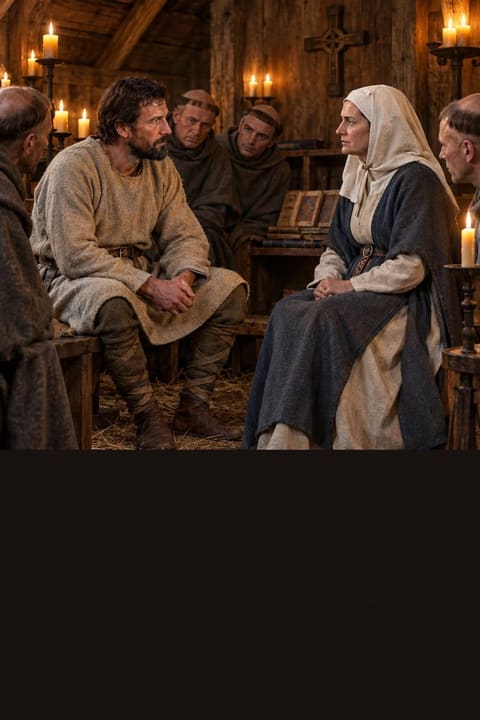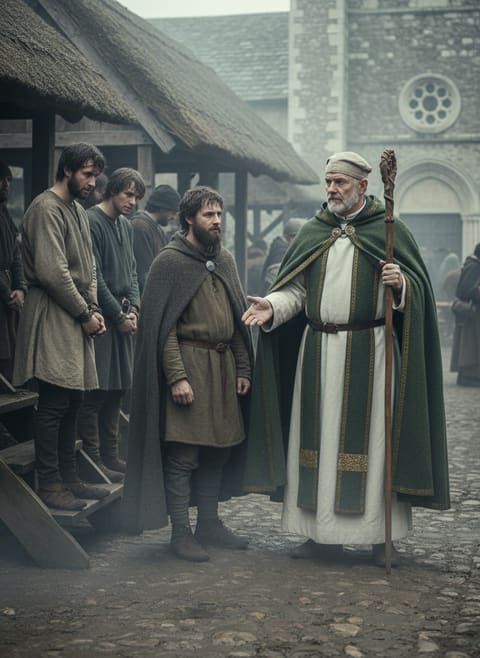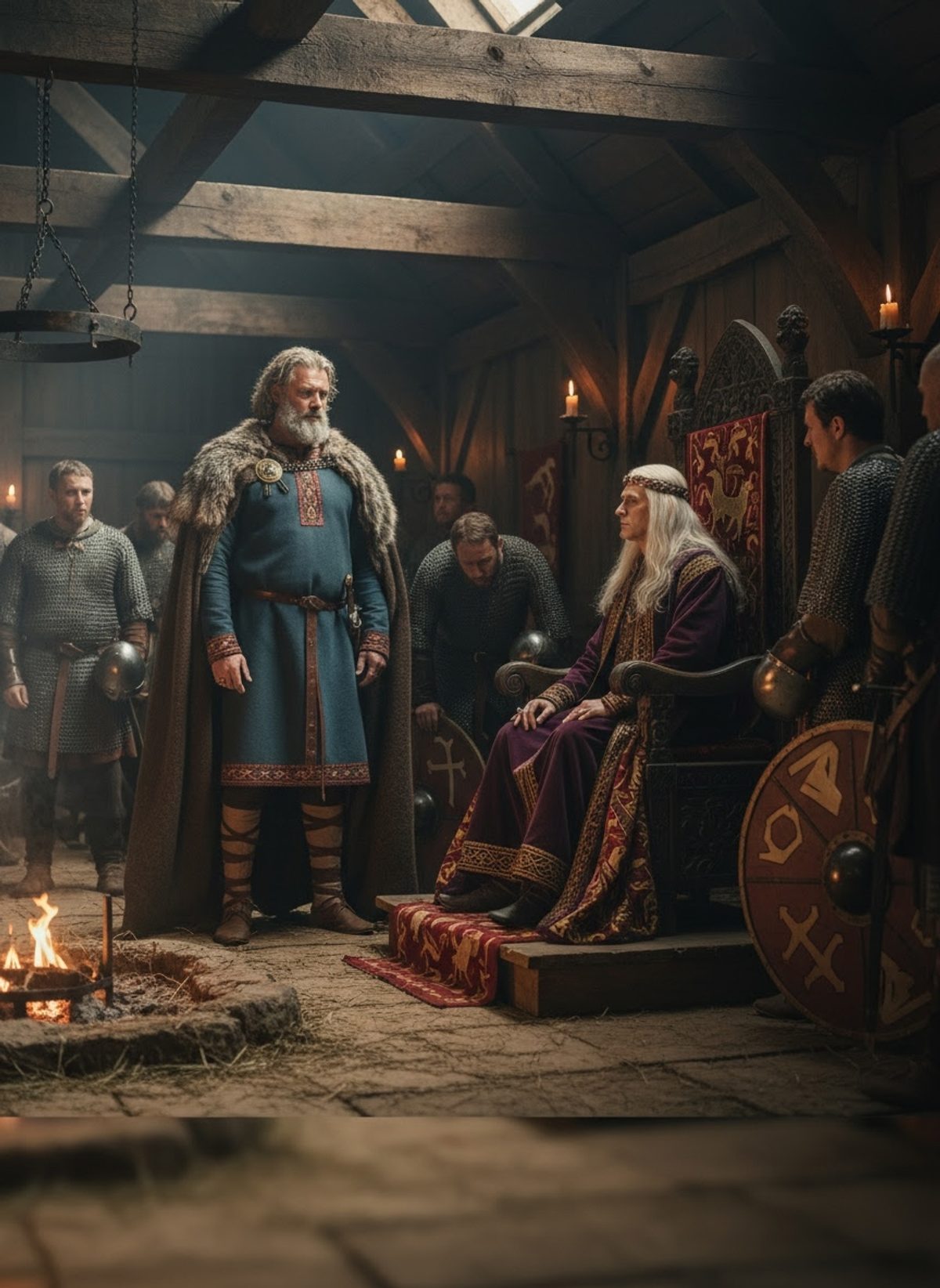
The unrest in the court of Winchester was palpable. The grand hall was dimly lit, with fires flickering in the damp hearths, sending shadows flitting across the stone walls. A chill hung in the air, the kind that precedes a mighty storm.
All eyes were on Earl Godwine of Wessex, who stood with the quiet strength of a hundred battles behind him as he faced King Edward the Confessor. As tension filled the room like the low hum before a charge, it was clear that England stood at a precipice. What would be decided here was not mere conflict between noblemen, but the heart and soul of a nation.
The Seeds of Defiance
The year was 1051, and England was a patchwork of restless provinces and loyalties. In the midst of this delicate balance of power, Earl Godwine of Wessex emerged as a force both feared and respected across the land.
He was a man who understood the intricacies of political maneuvers and the raw strength required to wield true influence. Yet, standing accused before an aloof King Edward, Godwine refused to bow to royal whim. The charge was grave: a grave dispute had erupted in Dover, his own dominion, and the king demanded justice for his Norman guests.
Read next: The Day Æthelflæd Rode Out and Took a Viking City Back
King Edward, known for his pious demeanor and subtle favoritism towards Norman influence, was unwavering in his demand for Godwine’s submission. This conflict of wills laid bare the simmering tensions beneath the surface of Edward's reign — the growing resentment towards the increasing presence of Normans at court and the gradual erosion of traditionally held Saxon power. It was more than personal defiance; Godwine’s resistance was a stand against foreign encroachments that threatened the sovereignty of the English nobility.
Despite the pressure, the sight of an Earl demanding trial before his peers rather than submitting quietly was an act of bold insurgence. It was, perhaps, an echo of an ancient right, a demand that spoke to the Saxon tradition of community and collective judgment rather than unilateral decision from the throne.
Godwine's stance defied Edward's expectation, challenging not only his authority but the very notion of kingship in England. In this defiance, Godwine became the standard-bearer for every noble uneasy and dissatisfied with Edward's reign.
Exile and the Fracturing of England
Godwine’s refusal to comply led to one inevitable conclusion: exile. The herald of this fate resonated throughout the kingdom, leaving its lords and commoners to grapple with where their loyalties truly lay. As Godwine’s name was blackened and his lands seized, England’s fault lines widened into a chasm.
Allegiances were questioned, and mistrust shadowed every council hall, every village gathering. The country stood on the brink of war, divided between those who sided with the bare-knuckled resolve of Godwine and those loyal to a God-fearing king.
The ramifications of Godwine’s exile were felt far and wide. The nobility found themselves at a crossroads: to support a rightful king, distant and swayed by foreign counsel, or to rally behind the legacy of a Saxon leader with deep roots in the land. Those who remained in power were like ghosts of kings past, casting aside traditions for the sake of new integrations. With Godwine gone, a tumultuous silence fell upon England, the kind that heralds transformation.
However, Godwine’s absence changed little in the hearts of his supporters. From his refuge across the channel in Flanders, the earl's influence only grew, becoming a rallying point for Saxonic resilience. His family’s standing, already formidable, transformed into a cause.
Read next: The Abbess Who Turned a Yorkshire Ruin Into England's Powerhouse
The groundwork was laid for his eventual return, bringing with him not only a loyal force but the symbolic return of old loyalties and customs. When Godwine retook his lands, he did more than reclaim territory; he reignited the spirit of Saxon strength and unity.
The Unfurling Threads Toward 1066
The consequences of that fateful night in Winchester rippled through the fabric of England, intertwining with the nation’s fate for years to come. Godwine’s once fractious defiance was like the pulling of a single thread; it laid the groundwork for the national upheaval that would eventually invite foreign conquest.
In the years following his return, the seeds of discontent sown by this single act of rebellion grew into a web of political intrigue and uncertainty that unraveled to define the fate of England in 1066.
When future conflicts emerged, Godwine’s actions became a reference point. His insistence on parity and justice resonated with those who remembered a England of old.
It is fitting then, that his son Harold would rise as a Saxon king, only to fall against a backdrop of these tensions, facing the Norman invasion led by William the Conqueror. As Harold's lineage met its end on the fields of Hastings, one could trace the roots of that dramatic clash to the fracture that emerged in 1051.
In the grand tapestry of history, the refusal of Earl Godwine to bow down was more than pride; it was a marker of identity, a claim of autonomy, and a stubborn refusal to vanish under the tides of change. It reminds us that history is not simply a series of events, but a story shaped by individuals who dared to defy their place and, in doing so, changed the course of nations. From defiance grew division, yet also a renewed dialogue on what England was and was to become. England’s tale of fractured allegiances still resonates, a testament to how one act can redefine borders, politics, and identity.