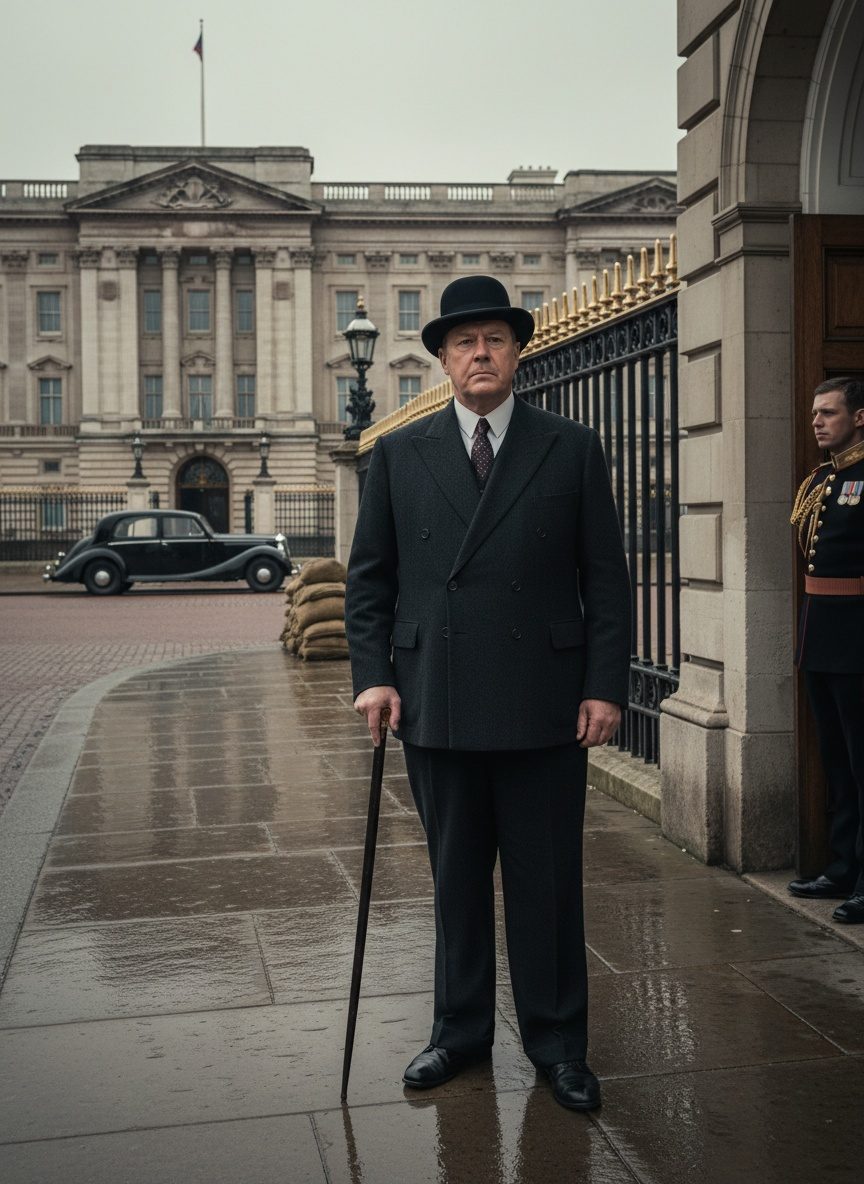
The sound of shuffle board shoes scuffing on a polished floor filled the stately corridors of Buckingham Palace as Neville Chamberlain made his way toward an uncertain future. It was the morning of May 10, 1940, a date that would become etched into the annals of British history, not for its quiet grandeur, but for its unprecedented political turbulence. Outside the palace, a storm of steel and blitzkrieg erupted as German forces began their lightning invasion into France. Behind the palace walls, another momentous change was about to unfold.
Inside the grand office, King George VI waited pensively. The monarch, known for his reserved demeanor, faced the uneasy duty of reconfiguring the leadership of his government at a time when such instability could be fatal for Britain. The king favored Lord Halifax, an ambassadorial figure in shining aristocratic armor, whose calm and diplomatic nature seemed more suited to overseeing a nation in peril. However, destiny had other plans. Chamberlain entered, carrying the weight of a conflicted parliament and festering distrust left over from years of appeasement policies that had failed to curb Nazi aggression. He tendered his resignation, passing the mantle of leadership into the wary hands of King George VI.
The king's decision was no small feat in the tapestry of history. Standing amidst the webbed iron lattice of constitutional obligations and personal inclinations, he summoned Winston Churchill to the palace—a choice driven partly by necessity and partly by an unexplainable force compelling the threads of time. Churchill, then 65 years old and possessing a presence as formidable as the storm itself, arrived not as a charmed diplomat, but as a warrior of words whose scabbard was history and shield, rhetoric. To some, his past was a recurrent theme of controversy, marked by daring strategies in times of war, and by dramatic falls from grace in the unforgiving halls of political power.
This morning felt different to Churchill. He arrived at the palace and was ushered into the presence of the king. It was a pivotal moment, one that he described as walking with destiny—a statement that belied his deep-seated understanding of the unfolding catastrophe on the continent. Churchill recognized himself as a soldier once more, though now his battleground was to be the war rooms and cabinets of London, his allies those behind the paper walls of parliamentary chambers.
Read next: The Day a British Stretcher-Bearer Refused an Order to Save Lives
As the clocks of London ticked into the deep pulse of action, Churchill accepted the appointment to form a government. The quiet solemnity of Buckingham Palace that morning belied the roiling uncertainty that gripped Britain. A nation stood on the precipice, peering into the abyss of potential defeat. Inside Churchill's mind flickered the promise of revival, the tenacity to rally his countrymen into the breach and broker the continuity of British sovereignty.
Even as the government seemed to crumble in London, stories of courage, both small and monumental, were taking root. Churchill, renowned for his speeches that breathed life into stoic words, prepared himself for what would soon be his greatest rallying cry. These moments would soon give birth to the narrative of resilience: the fierce howling of sirens, the distant thud of artillery, and the enduring image of a defiant Britain faced with the teeth of tyranny. Churchill was poised to navigate these treacherous waters, although he and the world knew all too well that fate would offer no certainty of success.
Read next: The Day a Army Chaplain Gave His Coat to a Dying Stranger
The corridors of power would see Churchill grow into the figurehead etched into the crowded annals of textbooks—yet outside, the tales unheard or forgotten would shape his leadership as much as his own decisions. By evening, as Union Jacks fluttered in the gentle wind atop a newly galvanized Britain, it was clear: the nation had no reversible paths, only onward until that promised victory in the darkest of nights. Churchill had vowed to offer nothing less than blood, toil, tears, and sweat, a commitment that would soon be tested by the very fabric of survival.
This fleeting encounter between Churchill and King George VI on that May morning was more than an exchange of resignation and acceptance; it was a moment laden with the aspirations and trepidations of a nation on the brink. It symbolized a changing of the guard where leadership was not courted by a crown but thrust upon the capable, if not unconventional, shoulders of a man regarded almost as an outlier of his own age.
Churchill’s open acknowledgment of this heavy mantle resonated through the ages since. He navigated through the thick fog of war not merely as a historic figure but as an embodiment of an era where courage, charisma, and relentless tenacity could inspire hope against overwhelming odds. The office into which he stepped was not one lined with certainties. Instead, it demanded heart and the nuance of leadership that felt both personal and profound in the face of a primitive future. The story matters because it charts the critical juncture where a single choice, made by both a reluctant king and a ready statesman, diverted the course of history. Their convergence echoed the idea that sometimes, the leaders least expected are the ones capable of steering through the most formidable storms.