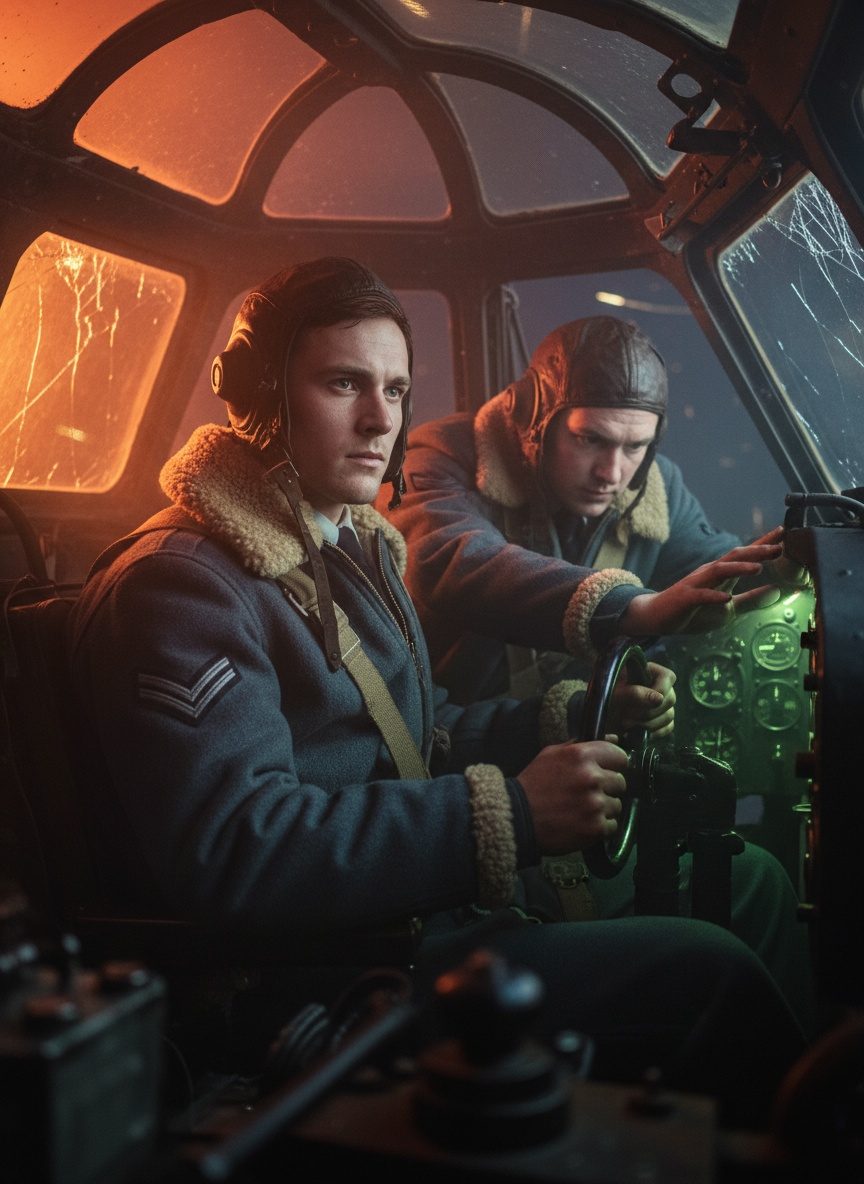
The smell of smoke and burning oil filled Leslie Manser's nostrils as he gripped the controls of the struggling bomber. Flames licked at the wings, casting an eerie glow against the inky night sky over Cologne. The Lancasters droned onwards. Somewhere behind him, crew members shouted, their voices tinged with urgency and fear.
The Infernal Skies Above Cologne
The night of 30 May 1942 was one that would go down in history as the beginning of the thousand-bomber raids, operationally codenamed Operation Millennium. The moon illuminated more than a thousand Royal Air Force bombers soaring towards Cologne, heralding the overwhelming force intended to demonstrate the might of Arthur Harris's Bomber Command. The RAF's strategy was clear: concentrate explosive power to cripple Germany, in hopes of bringing the war to a quicker conclusion. Amidst this massive aerial flotilla, a young pilot named Leslie Manser guided his heavy four-engined Avro Manchester through the clouds towards the city.
Bomb bay doors gaping, Manser’s Manchester, with a payload meant for destruction, edged closer to its target. The drone of hundreds of engines was a symphony of impending doom for those on the ground. The defenders below were awake, and the sky above Cologne erupted into chaos. Red arcs of tracer bullets, puffs of flak, and the sharp crack of anti-aircraft fire punctuated the night, turning it into a surreal battlefield.
A Desperate Battle for Control
Fire engulfed the Manchester. The aircraft rocked violently, buffeted by the explosions nearby and the shrapnel tearing through the thin metal skin of the bomber. Inside, the cockpit was a cacophony of wailing alarms, instruments flickering crazily in the dim light. At just twenty years old, Manser was at the helm of a burning craft, far from safety. Decision time loomed—the situation was deteriorating rapidly.
Read next: The Day a British Stretcher-Bearer Refused an Order to Save Lives
Backing out was becoming less of an option. Yet Manser remained poised, his training kicking in as he fought against gravity and fire. Crew members behind him awaited the command to abandon ship. They were suspended between bravery and the terrifying prospect of stepping into the dark, flaming sky. Time moved differently in that hellish reality, dictated not by clocks but the relentless advance of disaster. Manser knew; they all knew. Orders barked out, and one-by-one, they readied themselves to leap into the abyss.
The Courage to Let Go
The order to bail out was not without peril; the burning plane was an incendiary trap that could snuff out hope in an instant. The crew shuffled towards the rear escape hatch. Each man, clinging onto nerves and parachutes, would descend into enemy territory, trading the peril of being shot down for the uncertainty of evading capture. With a terrible finality, the command—“Jump!”—was shouted over the din. Leslie Manser stayed in his seat as the last of them disappeared into the night.
Manser looked towards the cockpit door that now hung slightly ajar in the flickering light, quietly realizing the weight of his decision. He had no parachute on. The wing, once a source of lift and hope, was now a trailing vortex of fire. Manser fought the controls, determined to give his crew the best chance of survival, defying the impossible odds. Commitment in the face of futility—a silent dedication marked his final moments.
Echoes of Heroism
In the cold light of morning, Cologne counted its scars. The city was ablaze, and while the mission had succeeded in proving Bomber Command's capability to amass a colossal assault force, it came with a hefty price. Among those lost in the darkened sky was Manser—his crew landed scattered and alone, but alive, due in no small part to his valor.
Read next: The Day a Army Chaplain Gave His Coat to a Dying Stranger
Stories of defiance, sacrifice, and split-second decisions circulated among the crews, whispers of admiration and loss in the mess rooms. Leslie Manser was posthumously awarded the Victoria Cross, the United Kingdom's highest military honor for gallantry in the face of the enemy. His heroism stood as a formidable testament to the resilience of the human spirit amidst the merciless mechanization of war.
Reflections in the Shadow of Sacrifice
Leslie Manser's actions that night highlight the quiet heroics that often remain hidden in the sweeping narratives of war. The titanic strategy debates and logistics driving a thousand-bomber raid were immense in scale, yet the choices of individuals amidst these massive undertakings lend a human face to history. Manser’s decision, as the skies dripped with fire above Cologne, exemplifies not just the chaos and destruction of war, but the steadfast bravery that can emerge from it.
As one explores the breadth of wartime tales, Manser’s story resonates with the enduring spirit of selflessness, a beacon for future generations to reflect upon the cost of warfare and the measure of courage. In a conflict dictated by numbers and strategy, it is the individual narratives like Manser's that offer poignant lessons on valor, sacrifice, and humanity.