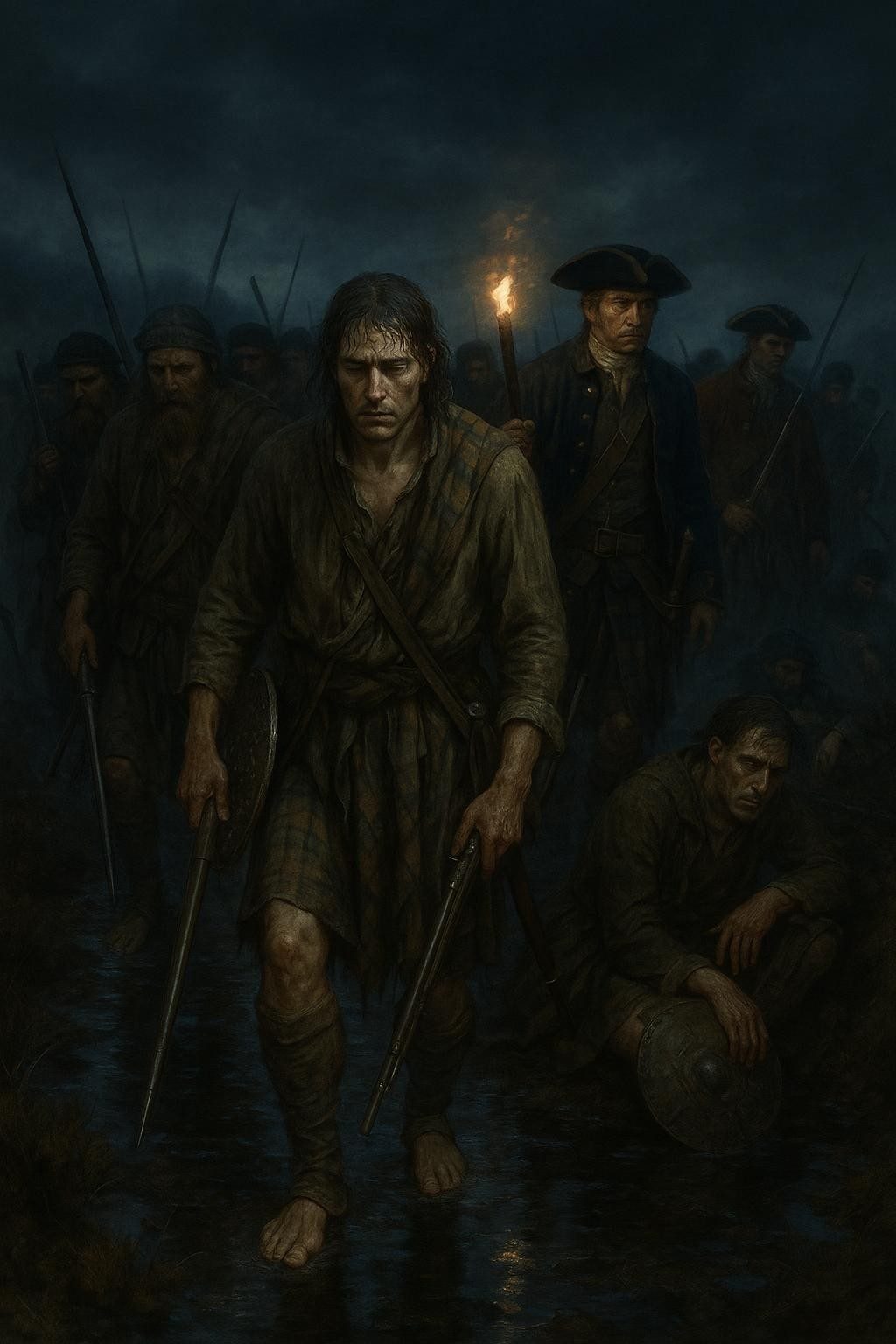
He was twenty-three years old. He had never been more determined to return a king to the throne he believed was rightfully his. As Charles Edward Stuart, known forever as Bonnie Prince Charlie, led the Jacobite forces towards the murky unknown of an April night in 1746, desperation was the rattle in their bones and hunger the spurring force in their stride.
Yet this was not the portrait of a victorious leader, but rather of a prince caught in the whirling vortex of a high-stakes, high-risk rebellion that was teetering towards a dramatic showdown. The Jacobite army, a rag-tag force of Highlanders, had been chasing an elusive dream of restoring the Stuart lineage to the British throne, a dream that was becoming progressively elusive with each passing moonless night. For two days, these men had felt the cruel pangs of hunger as their provisions ran dry. But despair was a luxury they could not afford, for they believed a decisive victory lay just beyond the horizon, somewhere in the wide, cold darkness that lay between them and Cumberland's camp.
The Duke of Cumberland, commander of the government forces, was not known for mercy. He understood the strategic advantage he possessed, encamped with a well-fed and rested army positioned to quash the Jacobite rebellion definitively. News of Cumberland’s birthday feast, rich with delicacies and warmth, traveled fast—and provided the triggering spark for the audacious night march that Charles and his men hoped would turn the tables in their favor.
As stars winked through a heavy Scottish sky, the Highlanders steeled themselves against the chill and set forth. It was not just the absence of moonlight that made navigation treacherous, but the betrayal of the familiar terrain they knew by day. Boggy expanses swallowed their resolve while frigid winds sapped their strength. The soldiers, unaccustomed to such extended marches, trudged on with fading cohesion. Step by painful step, they departed from unity, swallowed by the solitude of the enveloping blackness. The chaos of splitting formations heightened the cacophony of nervous whispers and muffled calls that should have led to triumph but instead echoed their unraveling.
Read next: The Day a Scots Weaver's Son Freed the Kirk From a King
By the time dawn dared to sweep the shroud of night away, the dream had turned sour. The Jacobites found themselves not at the heart of Cumberland’s leafy lair but miles away, bereft of surprise or strategy, casualties of ill fortune. With sunlight marching inexorably across the Scottish landscape, the painful resolution was inevitable: they were too far and too scattered to mount an effective attack. Turning back was no act of cowardice but a tactical necessity—though one laced with ominous foreboding.
The Highlanders’ retreat was engendered not by glorious echoes of pipes or grandeur but by hollow, sullen silences as they trudged back towards familiar ground at Culloden. Exhausted men fell into desperate slumbers amidst futile hope that rest would buy them strength and time. Instead, Cumberland's forces, positioned advantageously, were already poised to deliver a blow that would reverberate across ages.
Read next: The Day a Highland Clan Turned a Massacre Into a Legend
On that fateful morning of April 16, 1746, what unfolded was not warfare of equals. It was desperation met with military might; courage dashed upon the unyielding shield of precision. As Cumberland’s drums summoned soldiers to line, it was clear that the battlefield would favor structured ranks over the valiant but disorganized Jacobites. The very boggy grounds that had disrupted their night attack now hindered their defense, and the Jacobite lines, exhausted and drained, faced the brutal barrage from Cumberland's artillery.
Those rare few who survived the government's slaughter at Culloden returned to the harsh reality of a world that would no longer hold them as equals. The battle, devastating and swift, marked the decisive end of the Jacobite Rising. Bonnie Prince Charlie would escape, immortalized in romantic myths and ballads, but saw his dreams of British kingship reduced to ashes scattered by the wind. For the Highlanders, it marked the beginning of suppression and cultural erasure that would echo through history with the clearances and anglicization of the Scottish people.
The night march through the darkness was a doomed venture, a symbol of both courage and calamity. It exemplified the dual nature of human struggle—the hope for renewal and the grim toll of reality. In the tragedy of Culloden lies a paradoxical victory: a memory indelibly inked into the fabric of history, reminding us that the dreams ignited in the deepest dark can sometimes be extinguished by the very dawn they strive to meet.