Nineteen can feel like an awfully young age. Especially when you're the last line of defense on a bridge in Arnhem, holding off an entire German army.
The Inexperienced Gunner
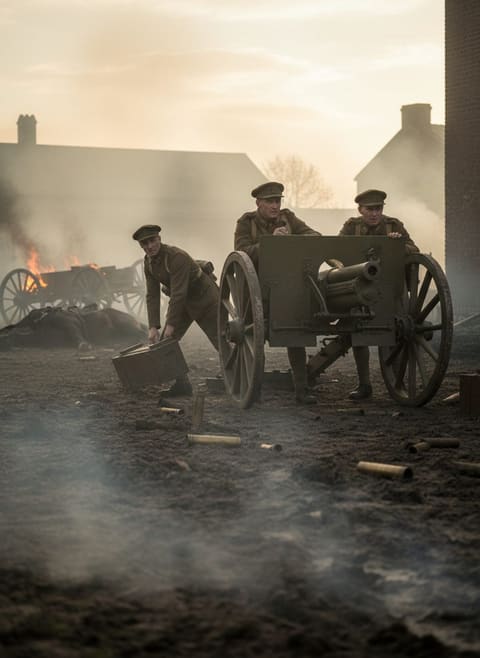
In September 1944, a battalion of British paratroopers was tasked with capturing and holding a key strategic point: the Arnhem bridge in the Netherlands. Among this unlikely ensemble was a teenager named John Grayburn, a gunner who had never fired his weapon in the chaos of battle. The idea of Operation Market Garden, brainchild of Field Marshal Montgomery, was to end the war by Christmas. Drop paratroopers behind enemy lines to secure bridges, enabling a rapid advance of Allied forces deep into Germany. For most, it was a calculated risk; for Grayburn, it was his baptism by fire.
No one, especially Grayburn, anticipated the resistance that awaited. As they descended from the skies with parachutes billowing open like giant white tulips, they landed not into the welcoming arms of liberation but into a landscape sown thick with armored troops of an SS Panzer division. The odds seemed insurmountably stacked against these young, brave soldiers. Their supplies were sparse, their communications patchy, and their hearts pounded with unyielding resolve.
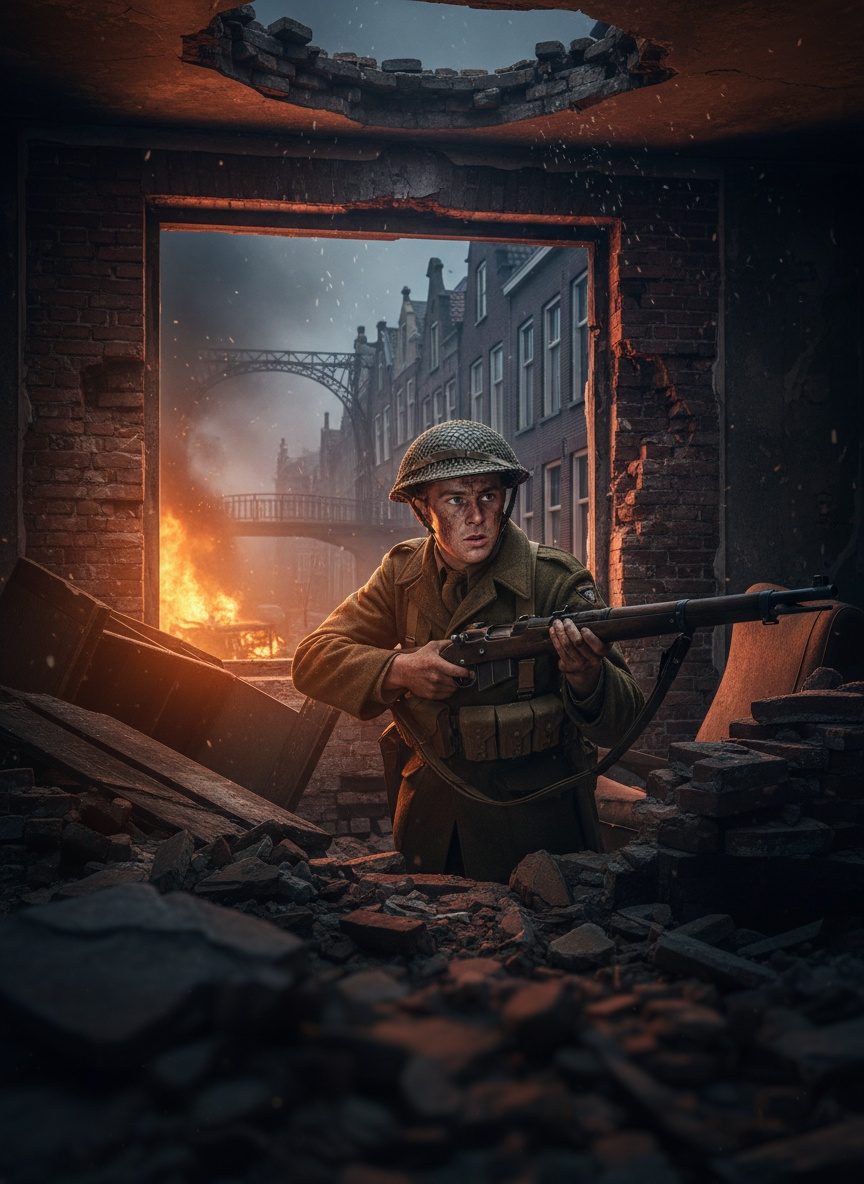
Grayburn, along with his fellow paratroopers, understood that failure was not an option. The bridge was a linchpin, pivotal to turning the tide of war. The scene was vibrant with actions that would freeze into heroic legend. Mortars erupted, sparking lightning on a canvas of fog and smoke, as bullets carved their angry paths through the sky. Yet there remained Grayburn, the untested youth, who took his post along the defense lines with a kind of ferocity and purpose that belied his years.
Read next: The Day a British Stretcher-Bearer Refused an Order to Save Lives
The Four-Day Inferno
For four harrowing days, Grayburn stood his ground at Arnhem bridge. Each hour seemed to stretch beyond the last in an endless barrage of force and fury. Under constant fire, he exemplified the raw tenacity of the human spirit—never wavering, never once reconsidering his place in the midst of madness. It was said that a kind of serene defiance settled upon him, steadier with each pull of the trigger. The echoes of his firing mingled with those of his compatriots, each volley a battle cry, each bullet a forged decision against despair.
What the textbooks leave out, what the official accounts sometimes gloss over, is the deeply personal courage that guides individuals like Grayburn. The bridge shattered under the impact of shells while the river below swirled angrily, threatening to overwhelm any who faltered. Relentless waves of German forces attacked, pressing hard against the thin crimson line. Yet, Grayburn tightened his jaw, his young hands finding a rhythm borne of desperation and resolve.
Details tell tales. The shadowed recesses where the paratroopers huddled, the garbled radio calls for reinforcements that never came, the scarce rations carefully divided—these speak to the stark reality of their siege. Grayburn didn’t just hold the line; he inhabited it, a living testament to youth's promise and the burden of wartime expectation. As ammunition dwindled, every shot carried the weight of strategy, a testament to Grayburn's resolve.
Read next: The Day a Army Chaplain Gave His Coat to a Dying Stranger
The Ultimate Sacrifice
John Grayburn's stand ended in sacrifice. He fell as many heroes do, not amidst cheers or triumph, but with a quiet dignity, embraced by the humility of final moments. The Teenage Gunner gave all he had to give on that bridge. As the dust settled and silence reclaimed the positions where shouts and gunfire once held sway, every breath he took became imbued in the annals of history.
What Grayburn did beneath the scarred skies at Arnhem was nothing short of extraordinary. He never lived to see the monument his actions became, but his spirit rose among the mist of what would become a pyrrhic archetype of valor. His name lives, awarded posthumously with Britain's greatest military honor, a counterweight to his youth and the impossible task he'd been handed.
The night a young gunner held the bridge is more than a vignette of heroism. It encapsulates a broader truth: that valor isn’t measured by years lived but through moments when courage blooms, defiantly, in the heart. Grayburn's story is about the choices we make when faced with seemingly unmovable forces. It's the untold chronicles like his which echo through the decades, reminding us that in the forge of adversity, one's spirit can indeed shine the brightest. Upon the shadows of history, it casts a light that reveals what the textbooks might miss—a tribute to indomitable courage in the face of formidable odds.