May 30, 1942. The skies above Cologne had turned into a fiery crucible.
The Thousand-Bomber Raid
As the night unfolded, the once silent expanse above Cologne became a chaotic theatre of war, vibrating with the determined hum of a thousand engines. This was Operation Millennium, Arthur Harris's gambit to break the German spirit by delivering them a thunderous declaration of Britain's unyielding resolve. A thousand British bombers, the largest airborne onslaught against a single target to date, charted their course across the choppy Channel towards the heart of Nazi Germany.
Among this formidable aerial armada was a young pilot, just twenty years old, invested with the formidable responsibility of steering his Avro Manchester over enemy territory. His name was Leslie Manser, a name unfamiliar to most but forever etched in the sparse chronicles of bravery that the world seldom revisits. For the crew of his aircraft, he was more than a peer; he was their steward in this perilous voyage through the shrouded skies.
Trials Above Cologne
The artillery fire that awaited them was relentless. As they reached the outskirts of Cologne, a constellation of anti-aircraft bursts illuminated the darkness, casting eerie shadows across the aircraft's fuselage. Manser, peering into the cold void with unwavering focus, felt the Manchester shudder under an onslaught of tracer bullets. The sky was no longer theirs; they were intruders in a realm governed by chaos.
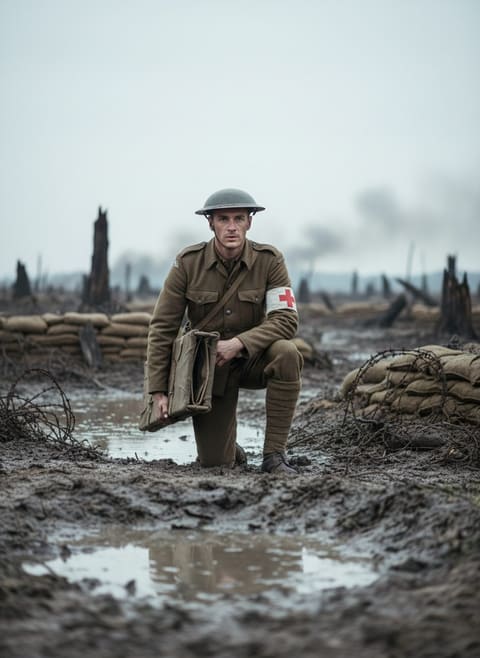
Read next: The Day a British Stretcher-Bearer Refused an Order to Save Lives
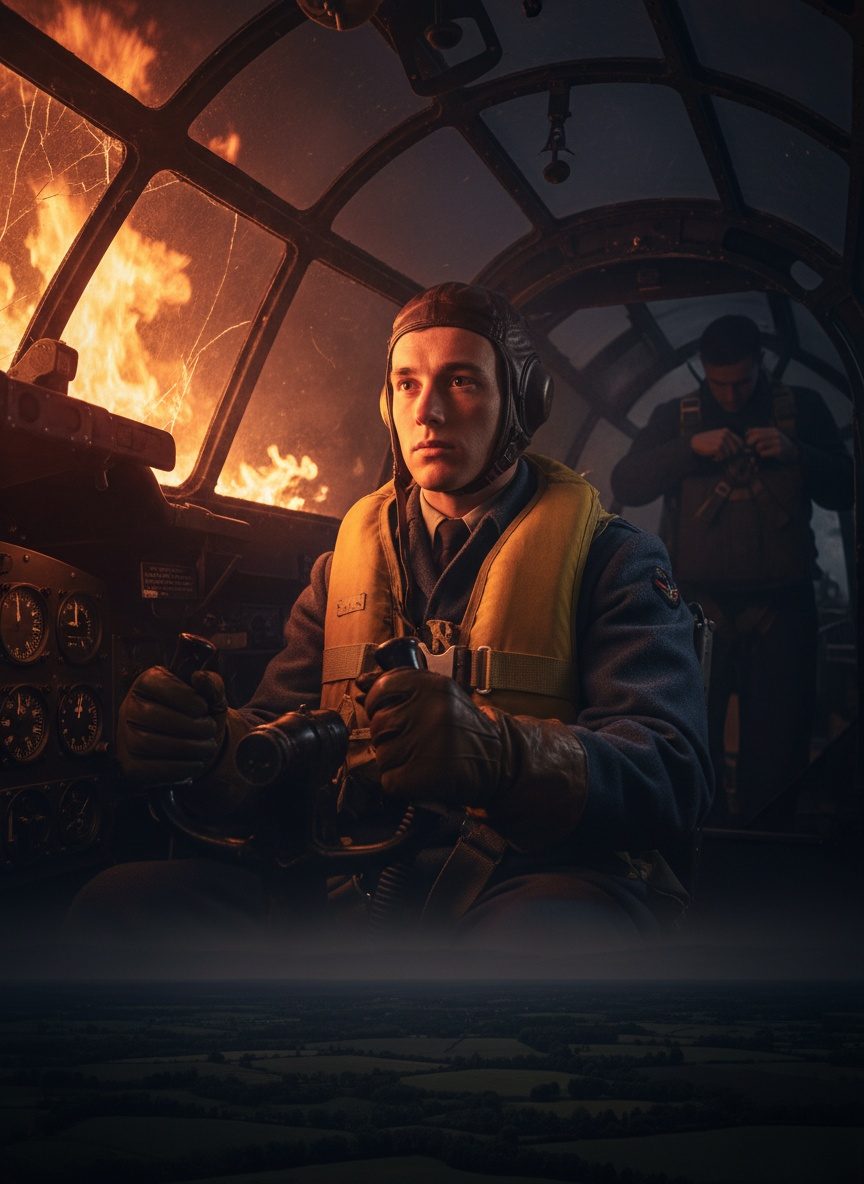
It was here, amidst the orchestrated fury, that Manser's bomber was fatally wounded. The aircraft's wing ignited in fiery defiance—a beacon for all that spelled doom. The flames licked hungrily at the wing, threatening to engulf them all. For the six men entrusted to him, the path diverged: abandon ship or face the catastrophic plunge into oblivion. Manser faced the moment of decision that would define his legacy and determine their fate.
The Burden of Command
In that crucible of survival, Leslie Manser weighed his options. His crew, his brothers in arms, looked to him for salvation. He knew the parameters of his duty—even in these last, teetering moments, his mission was clear: ensure that his comrades had a fighting chance to live. The inferno outside was unforgiving, scorching through metal and resolve alike.
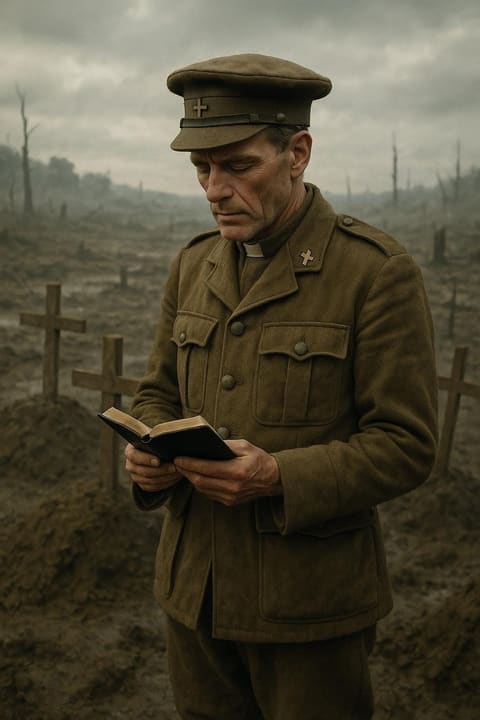
Read next: The Day a Army Chaplain Gave His Coat to a Dying Stranger
With steady hands and a determined heart, he maintained control of the burning bomber, battling gravity's pull with sheer willpower. As the crew donned their parachutes and prepared to leap, each man understood the gravity of Manser's commitment. He could have joined them, yet there he remained, backlit by the inferno, a testament to the power of human sacrifice.
The Return and Remembering
Guided by nothing but instinct and dedication, Leslie Manser held his charge until they reached a marginally safer airspace. When the last parachute drifted into the night, he faced the ultimate decision alone. Surviving the leap may have been impossible, but his duty demanded that he try. Tragically, fate did not favor the bold that night—Manser's parachute failed to deploy as intended. He paid the ultimate price, a solitary figure descending silently towards earth.
Back home, the echoes of that fateful night linger in scant records, barely punctuating the grand narrative of the war. Yet for the six lives he saved, each day is an homage to his courage. As history turns its pages, it's the indomitable spirit of individuals like Leslie Manser that offers the richest lessons. In a world perennially bounded by conflict and testament to trials, his decision sparks a reflection on the true nature of heroism. Humanity owes much to the few, unknown yet eternal, who choose sacrifice over self, gifting life through unwavering resolve.