The night sky over Cologne in late May 1942 was a foreboding expanse, swathed in the thick, inky blackness that swallowed both stars and solace. The air was heavy with anticipation and the faint, ominous hum of machinery. This was not an ordinary night. Below, a thriving city emanated a ghostly glow of lights, casting its own menacing shadow upwards, daring any who approached. What seemed like silence to the inhabitants on the ground was a cacophony for the Allied bombers above, as engines roared and hearts beat in tandem with the engines' relentless thrum. Somewhere within this steel-clad tempest of men and machinery, the fate of seven young men was teetering perilously close to the edge.
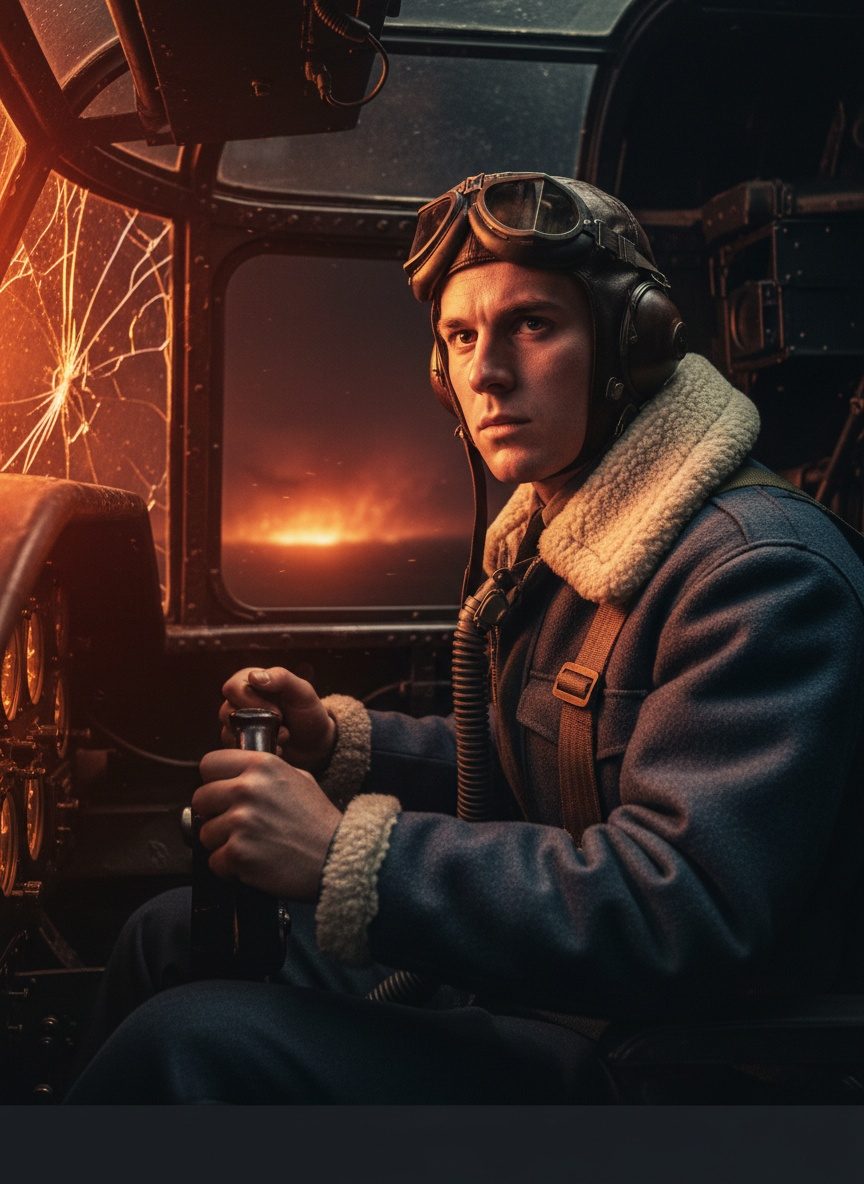
Amidst this grand aerial operation, a lone, beleaguered Manchester bomber found itself caught in a vice of fire and fury. With its right engine obliterated and flames licking hungrily across its fuselage, this aircraft was a breath away from becoming a fiery pyre in the German night. At its controls stood Leslie Manser, not yet a year past the celebrations of his twentieth birthday. Yet, here he was, faced with decisions that whispered the harsh truths of war into his ear. Surrounded by the crackling roar of fire and the heads-up that escape seemed increasingly improbable, Manser looked not at his predicament but towards the safety of his crew. Each face around him bore the strain of fear, yet each also reflected his resolve. He understood the plane was on borrowed time.
What drove Manser on that night was not just duty, nor the dogged stubbornness of youth, but rather a profound sense of camaraderie. The bomber's frame shuddered violently under the strain, and the altitude steadily bled away. Cologne was a relentless predator, rising to devour another captive from the skies. But in this dire dance between altitude and survival, Manser had to make a choice. He could save himself or possibly save them all. But to assure the latter, he needed to hold that flaming beast aloft long enough for each member of his crew to abandon the sinking metal ship.
The act of courage doesn't always announce itself with fanfare. Sometimes, it appears as the calm in the eyes of a pilot who grips the controls with a definitive intent, seemingly impervious to the chaos around him. Manser's actions echoed in the hearts of his crew, pushing them towards the minimal reprieve that a parachute offered against the conflict raging on either side of history. One by one, they reluctantly accepted his decision, clutching at the hope that their escape could be more than just an exercise in futility. And so, they began to jump.
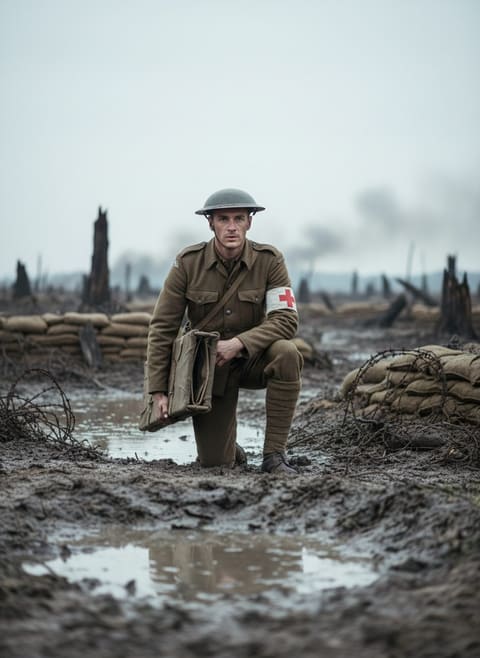
Read next: The Day a British Stretcher-Bearer Refused an Order to Save Lives
As each man leapt into the uncertainty of the night, trusting the silk above to cradle them to safety, Manser's burden seemed to increase. Yet, as the plane steadily emptied, it also became an epitaph to both the war's horrors and the enduring spirit that fought to conquer them. Over this heart-pounding, thunderous backdrop, there was, for each man who descended, the hope that his own stage of war had, perhaps, come to a close. But not for Manser. For him, the struggle was being won one life at a time, while his own course remained doggedly, defiantly fixed.
Eventually, the aircraft was empty, save for its enduring pilot. The flame-ridden plane's cries grew louder as if acknowledging its inevitable fall. All lifelines had been pressed into service except the one now draped around Manser’s neck like an unanswered question. He clutched at the lever that had steered hope and fear to opposite ends of its spectrum, and yet he found no guarantee that safety would reward him in kind. This was where calculated risk melded with brave certainty, each bolstering the other as Manser remained intimately aware of his dwindling time. As the crew floated beyond sight, the irrevocable reality became cerulean-clear.
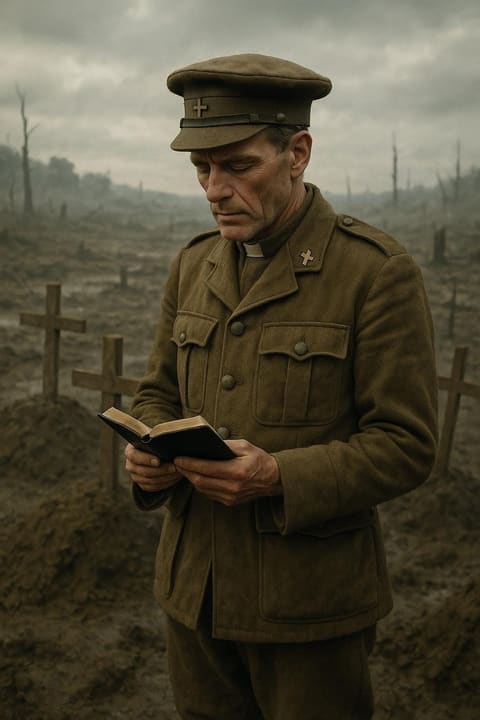
Read next: The Day a Army Chaplain Gave His Coat to a Dying Stranger
And then, without a grand flourish, the earth pulled irresistibly at the burning plane. It could no longer answer Manser's commands; it could anchor the skies no more. The calm that perhaps had embraced Manser was unbroken until the final embers of his legacy touched the German soil. Years later, as stories of valor were filed alongside the deeds of the unimaginable, Manser’s decision manifested as a haunting reminder of silent sacrifice. It was an unquantifiable proposition of heroism and heart, allowing a gleam of selflessness to pierce an era defined by shadow.
Every daring act whispered across history serves to reflect upon the fundamental question of human nature under pressure. Leslie Manser’s night over Cologne remains a quiet testament to personal valor amidst the unyielding din of warfare. His moment was not bound by the fruition of victorious consequences but instead rested upon the cherished belief that some stories, though unfinished, are timeless. To know Manser's sacrifice is to remember that history's true measure often lies submerged beneath the surface of textbook knowledge. In this equation of tragedy and triumph, those who jump may live to recount, but those who persist ensure the tale is told.