The night sky over London held a quiet majesty, a deep indigo velvet punctuated by innumerable stars that seemed to twinkle more cheekily than in years. A crisp breeze swept the timely hopefulness through the urban sprawl, dusting the soot-covered streets that had seen too much darkness under six years of enforced blackout. This was not your typical night. It was the 8th of May, 1945, and the British Isles were on the brink of trading the pall of war for the dazzling dawn of peace. As the sun dipped below the horizon, the order rippled across the land like an electric whisper: “Let there be light.” In an instant, a nation aglow; neighbours, once ghostly figures in the night, danced hand-in-hand with newfound ignited abandon. Forget caution—tonight, the light was on their side.
A Blazing Mosaic of Joy
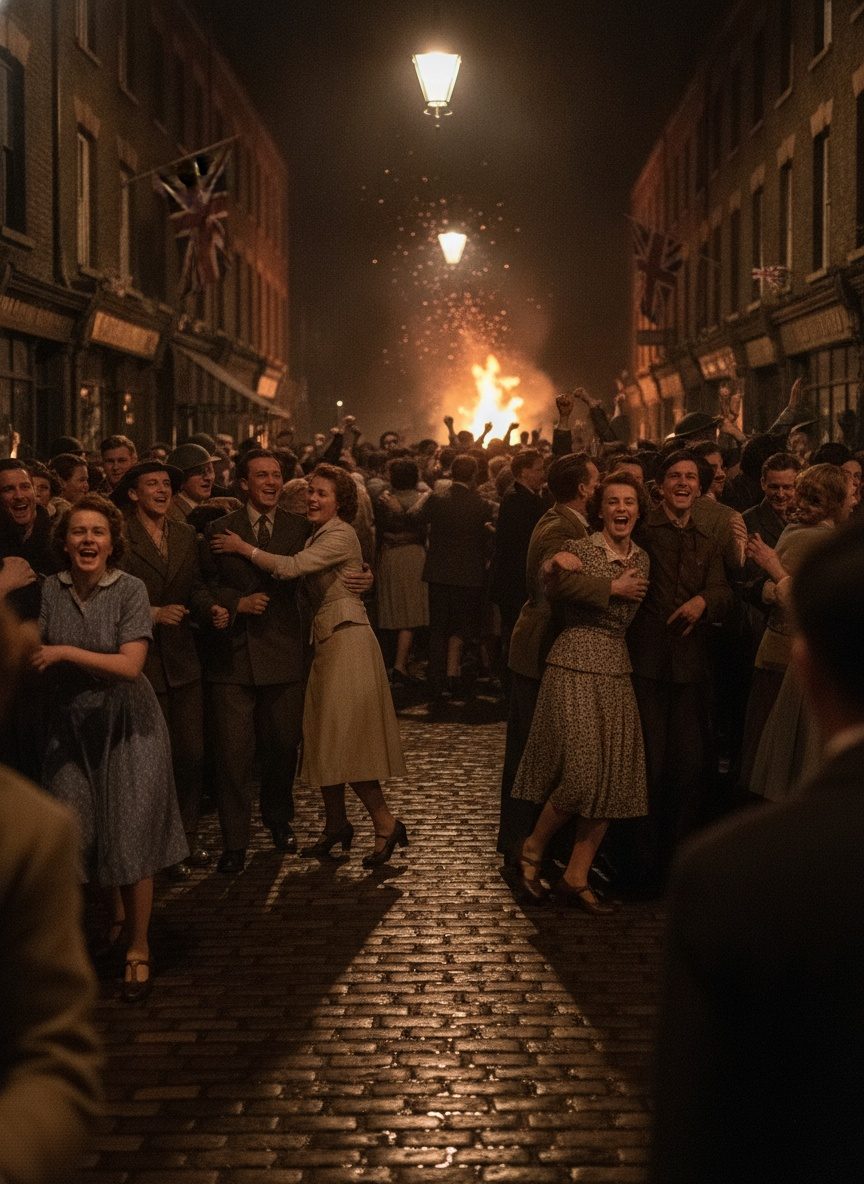
Across the emerald landscape of Britain, villages and towns flared into joyous artistry as clock hands inched toward darkness. Every street, every alleyway, every window—sites once terminally steeped in shadow—were suffused with a riotous assembly of lights. Parish after parish, liberated lamps dared to flicker under skies no longer hostile, breathing fire into the streets. The air carried not the mechanised drone reminiscent of grim nights past but now the tune of laughter, infectious and unrestrained, like bubbles bursting through stifled sorrow.
Bonfires, ancient symbols of celebration, crowned the hills. From the Highlands of Scotland to the chalk downs in the South, these beacons created threads of fire weaving through the night. Families discarded furniture that had lived through a thousand stories for the sacred flame; insignificance burned away, making room for hope eternal. Strangers became friends as sparks rose against the heavens, carrying wishes, memories, and the vital exhalation of collective relief.
Down cobbles slick from spring showers in village greens, bands played as though possessed, drumming outward the night’s secret anthem. Children, unburdened for the first time in memory, zigzagged frenzied joy through the gathered crowds. Youthful audacity saw girls climbing lampposts to hang banners of vibrant hues that matched the Swallows and Amazons of their dreams. Even the moon poured forth a fuller light as if in celebration itself, shedding layers of ash-grey war dust to bathe in communal discovery and vibrant promise.
Read next: The Day a British Stretcher-Bearer Refused an Order to Save Lives
Dancing with Destiny
The embers of unity sparked gathered souls who sought rhythm and rebellion on the avenues. In urban cores, famed London landmarks, which had stood unwavering through Blitz and bombardment, twinkled with newfound vigour. St. Paul’s Cathedral, having defied the darkness, now embraced the semblance of a hopeful phoenix, its shadow brought full-circle against the backdrop of a lit cityscape. To the pealing of untamed church bells, champions of endurance cradled arms as chandeliers swung in defiance to the fear they once symbolized.
From Piccadilly Circus to the promenades of Blackpool, the celebratory soiree had shifted to the grand exterior stages—empires of bygone gloom now reclaimed as ground zero for revelry. The vibrating revels filled Capitol and county, making each step weightless, ethereal. A congartulaory embrace of the ordinary turned extraordinary: kerbsides wore fringe champagne sprinkles from jubilant toasts skyward, inviting rainbows from shards catching streetlamps’ kiss.
On humble radios tuned to the frequencies of freedom, the echoed voice of Winston Churchill bore witness to the reality of England’s resolve. Cries of “Victory in Europe!” rejoiced through open windows into which light poured unabashed and resolute. The night was young, but its story was old—etched with the relief of endings and the yearning for new beginnings built on the backs of those who’d seen too much. Music—swan songs and dirges turned celebratory—erupted uncontained, incorporating brass sections and piano keys that celebrated peace as strides met beats in shared crescendo.
Read next: The Day a Army Chaplain Gave His Coat to a Dying Stranger
The Morning After's Reflection
As the embers transitioned to ash, whispers of dawn crept across a transforming land. The morning’s air was no longer pregnant with the typical dread or fire-watch obligations but instead buzzed with possibilities the sunrise heralded. Sleepy souls emerged, heads heavy with dreams manifest in the night’s luminary gatherings. The streets bore the gentle remains of their celebration: bunting flags drooped wistfully, confetti plastered like victorious battle scars to trolley wheels and shoes.
Nostalgia pulled tight on nerves as newspapers splayed across breakfast tables preached the wonder of what was accomplished and the nature of what had to follow. The stories therein demystified history’s pages, letting individuals become vessels of collective redemption’s newfound dawn—a legacy both to cherish and to nurture through the dusk of future conflicts.
The Night Britain’s Civilians Lit Up the Streets for Victory holds relevance not only as a jubilant release from oppression but as a metaphorical kiln from which facets of humanity’s resilience were forged anew. It stands as a stark narrative of how proximate we dance to the fine seam separating light from darkness and—importantly—our innate duty to choose illumination. For one radiant night, the past and future danced as one, creating not only pathways of brilliant relief but also architecting the stepping stones of an unyielding resolve: paving tomorrows with the fervour of today’s light.