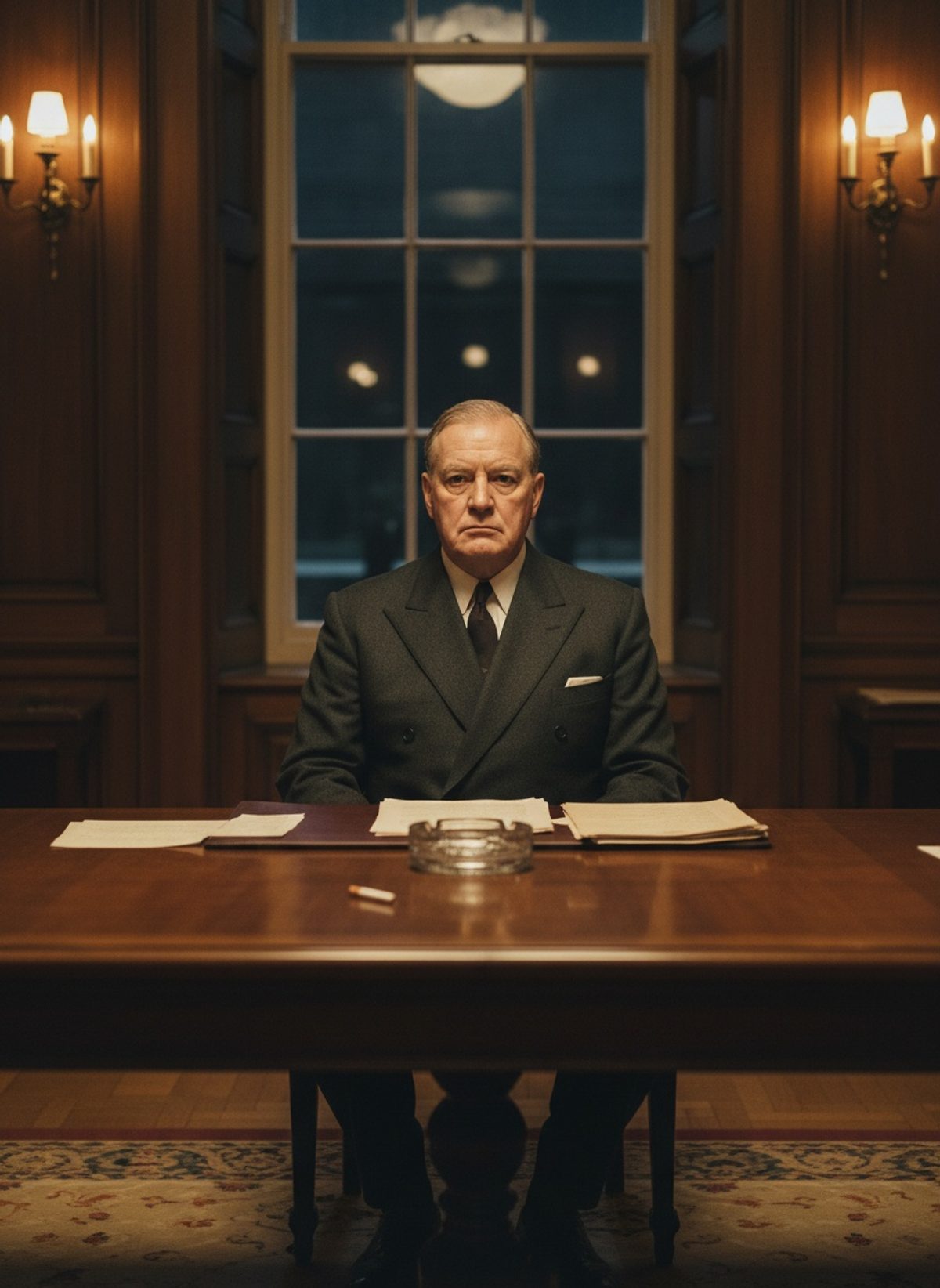
The walls of the Cabinet Room seemed to close in as Winston Churchill listened to the persistent murmur of voices around the table. The air was thick with cigar smoke and tension, the somber faces of his colleagues reflecting the dire situation facing Britain. It was late May 1940, and the fate of the nation hung by a thread. With the British Expeditionary Force trapped at Dunkirk and France on the verge of collapse, a shadow of despair loomed over the country. In those critical days, most of Churchill's War Cabinet believed the only way to survive would be to negotiate with Hitler.
The Siege Inside No. 10
Inside No. 10 Downing Street, the discussions were relentless. The Cabinet Room resonated with heated debates, as the Prime Minister faced mounting pressure. Voices urged a diplomatic path—a path some argued was the only viable option left in the face of unbeatable odds. Lord Halifax, the Foreign Secretary, was particularly vocal, advocating for opening peace talks via Mussolini to prevent a total German victory. The concern around the table was both palpable and understandable. The spectre of a German victory threatened to reshape Europe, with Britain risking invasion or imposed terms that would erode its sovereignty.
Churchill, however, remained steadfast. His reputation was one of resolve, an indomitable character forged in the furnace of previous conflicts. Yet, this conflict of ideologies within his own Cabinet tested his tenacity to the utmost. For Churchill, entertaining Nazi peace proposals seemed anathema to the very spirit of British resistance. Despite the turmoil, he knew that yielding to fear would only provide a temporary illusion of security, sacrificing England's future freedom.
The Walk Away
It was during another tense hour of debate, voices echoing in the room of oak paneling, that Churchill did the unexpected. Rising from his seat without a word, he strode out of the Cabinet Room, leaving behind a stunned silence. This abrupt departure was not an act of retreat but a moment of profound reflection. He sought solace and clarity, moving quietly to a nearby room where he could be alone with his thoughts.
Read next: The Day a British Stretcher-Bearer Refused an Order to Save Lives
Nothing disturbed the solitude as Churchill found himself enveloped in the quiet of the adjacent room, lost in contemplation. It was here, in this moment of solitary reflection, that he confronted his deepest fears and the daunting responsibility resting on his shoulders. Would appeasement betray what Britain stood for? Or could he, one man, stand against a chorus of voices urging a more cautious route?
The Resolve of a Leader
Emerging from this introspective moment, Churchill returned, his determination burnished like steel. The decision was clear in his mind. By rejecting the counsel of negotiation with Germany, Churchill chose the path of resilience over reassurance, courage over convenience. His conviction was that Britain's duty was to continue the struggle, no matter the cost. The nation could inspire others, providing a beacon of hope and resistance against tyranny.
Churchill presented his resolve to the War Cabinet and then to the wider Parliament, combining humanity and defiance in his speeches. These words would later resonate far beyond the walls wherein they were uttered. Churchill's unwavering belief that Britain, though standing seemingly alone, had allies yet unseen inspired those around him to recommit to the fight. As he spoke, a new reality began to dawn—England's isolation was not abandonment but a call to courage.
The Ripple Effect
This critical decision and the resolve that underpinned it struck a chord across the British Isles and reverberated beyond. As the days progressed, the miracle of Dunkirk unfolded before an astonished world. Civilian vessels joined military efforts, evacuating over 300,000 soldiers from the beaches, turning what could have been the darkest moment into one of unprecedented unity and hope. The heroism displayed at Dunkirk bolstered the morale and the fighting spirit of a nation destined to endure.
Read next: The Day a Army Chaplain Gave His Coat to a Dying Stranger
Against this backdrop, Churchill's choice to face the dark without succumbing carried a force that transcended mere politics. It redefined the essence of British resolve, fortress-like in the imagination of those who heard his call. As the summer of 1940 wore on, ordinary people prepared for whatever might come, inspired by the rhetoric that had found strength during those solitary minutes away from prying eyes.
A Legacy of Courage
The weight of that fateful decision in May 1940 continues to resonate. Churchill's solitary reflection in the quiet moments outside the Cabinet Room was more than fleeting introspection. It was a juncture where the destiny of nations coalesced around a singular figure's resolve. Had he acquiesced to the notion of negotiation, the course of history might have turned down a considerably different path. By opting for unyielding resistance, Churchill fortified the narrative that through adversity, determination stands impenetrable.
This episode, often overshadowed by more publicized events or buoyant rhetoric, offers a glimpse into the measure of true leadership—a willingness to confront fear directly and alone, to emerge with a renewed commitment to the greater good. It is a testament, as much today as it was then, that when facing the dark, the resolve to stand firm can illuminate a path forward for generations yet unborn.