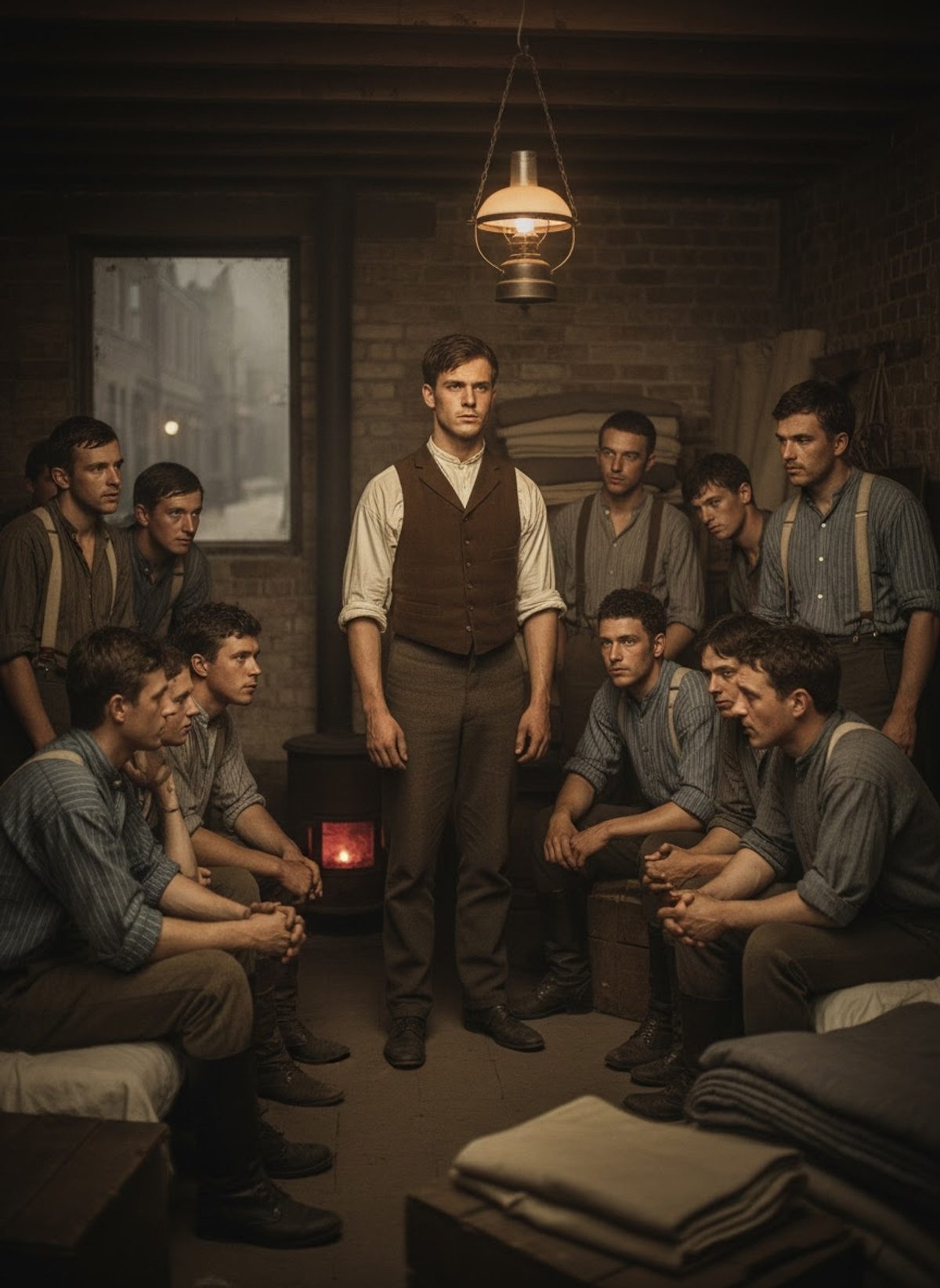
George Williams' name is not etched alongside the great industrialists of his time. Yet, the small act of defiance he staged, forever impacted lives across continents.
The Warehouse on Ludgate Hill
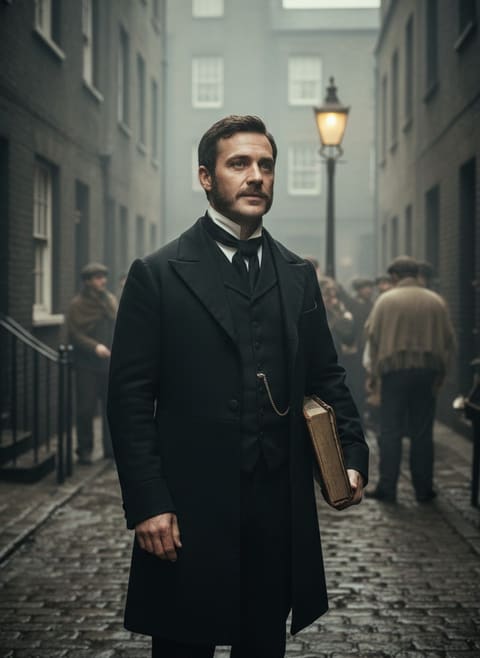
In the heart of Victorian London, amidst the cacophony of horse-drawn carriages and the emerging chimneys of industry, a simple drapery warehouse stood unassumingly amidst the bustling streets of Ludgate Hill.
This was the place where George Williams, at the tender age of 22, would light a beacon of hope that would reverberate far beyond the confines of the warehouse walls. The scene he surveyed nightly was one of stark contrast; young men, away from their families, toiled under harsh conditions in the relentless pursuit of livelihood.
This particular winter of 1844 was brutal, not just in its cutting cold winds that snaked through the cobbled streets, but also in the human suffering that plagued those who worked tirelessly, their existence often overlooked by the very society that thrived on their labor.
Read next: The Day William Booth Marched Into London's Darkest Slum
Cramped into the dormitory, these twelve young drapers faced not just physical hardships, but the burden of moral and spiritual neglect. For all the marvel of modern machinery and the swift progress of the era, life was unforgiving to them.
George noticed. A farmer’s son from Somerset, he saw beyond the grime and hardship, sensing a deep need for sanctuary and solace amidst the chaos. It was not just the overcrowded living conditions or the grueling hours that concerned him — it was the absence of hope that weighed heavily on his heart. The men faced a world full of material possibilities but devoid of spiritual warmth, buffeted in an era of rapid urbanization that focused relentlessly on profit and progress.
So, inspired by a quiet conviction, Williams gathered the young men around him in that dim dormitory. The flickering lamplight cast shadows that danced across their weary faces as he offered a moment of respite — a moment of prayer. This collective act amidst the clatter of sleeves and trimmings was the inception of something unforeseen yet transformative.
The Quiet Birth of the Young Men's Christian Association
Inside this simple room ablaze with a brotherly new resolve, something significant emerged: the YMCA was born. Williams, imbued with a newfound certainty, had recognized that the young men needed more than just guidance, they needed a gathering that bridged the void between fast-paced urban life and moral enrichment. His humble act was one of an extraordinary vision, one that seemed quietly radical in an age that prized industrious output over personal welfare.
The Young Men's Christian Association, or YMCA, began as a small fellowship under Williams' leadership in London. Despite its unassuming beginnings, the aims were ambitious. It was to be a haven for the youth to develop in spirit, mind, and body — a sanctuary from the constant churn of their daily reality. The basement of the drapery shop thus became a crucible of values that would eventually span countries and define communities.
Williams encapsulated the Victorian knack for philanthropic enterprise mixed with a deep-seated personal compassion. Unbeknownst to many, the movement represented one of the 19th century's significant social reforms, channeling the age’s newfound energy into a global association that not only provided shelter but nurtured humanity's brighter aspects. The YMCA began activities that focused on healthy living, education, and community, setting foundations for the civic duties and fellowship that we now take for granted.
Read next: The Day Annie Besant Gave London's Match Girls Their Voice
This bold initiative took hold initially in London but soon spread its influence internationally. The backdrop was ripe for growth: it was a time when the Industrial Revolution had planted the seeds of urban malaise alongside its innovative advancements. George Williams' awakening act of gathering and prayer in 1844 acted as a blueprint copied in countless urban settings worldwide over subsequent decades.
The Legacy of a Single Lamp’s Glow
Within a generation of lighting that first lamp, the YMCA had burgeoned beyond Britain’s shores. Its programs of education, physical training, and moral guidance first adapted to, then grew from, the needs of rapidly urbanizing centers across the globe. By World War I, the association had agencies in dozens of countries, attending to soldiers and citizens alike, driven by the same principles born one January evening on Ludgate Hill.
Today, the presence of the YMCA resonates in ways understated yet profound. It whispers in the aspirations of young individuals finding their first sense of community, in the architectural echoes of gymnasiums worldwide, and in policies for youth development still influenced by its early methodologies. George Williams' quiet origination of this movement reminds us of the power of conscious, compassionate observation and resolute action in transforming society.
Though much time has elapsed since Williams' act of defiance, his legacy asks us to pause and consider: in our own lives, where do we see the potential to plant seeds of change? His story serves not merely as a tribute to Victorian grit and Christian philanthropy, but as a reminder that hope kindled amid adversity can indeed light the world.