December 15, 1916. Snowflakes descended lazily over the barren, blood-soaked no-man’s-land.
The Boy Soldier
In the milieu of warfare, when courage is counted in the capacity to endure and confront, few figures emerge as defiant as the soldier who curled his fingers around fate and refused to relent. Launching himself into the cacophonic echoes of cannon fire, our protagonist joined the fray of the Boer War — underage, under a false name, and altogether unapproved.
The dash and the daring of this young soldier were remarkable. Absent from schoolbooks, his journey commenced in the dusty velds of South Africa, where hardships and heroism played out under torrid suns. This was a place where survival was not merely about escaping bullets but intertwining the strands of loyalty, desperation, and a relentless pursuit of something ineffable. With the grit of a veteran, he immersed himself in the orchestration of battle, and it was there he faced the unrelenting truths of war’s brutality.
During the Boer War, shot and wounded seven times, his scars were not just those of a soldier but of a determined spirit clinging tightly to purpose. The sovereign grandeur of cavalry and the harrowing cries of death composed a symphony in which he was not just a listener. He was a conductor, too. Yet, it was not the ravages of gunfire or the fear of mortality that defined him — it was a restless spirit, forged by scars and indomitable will.
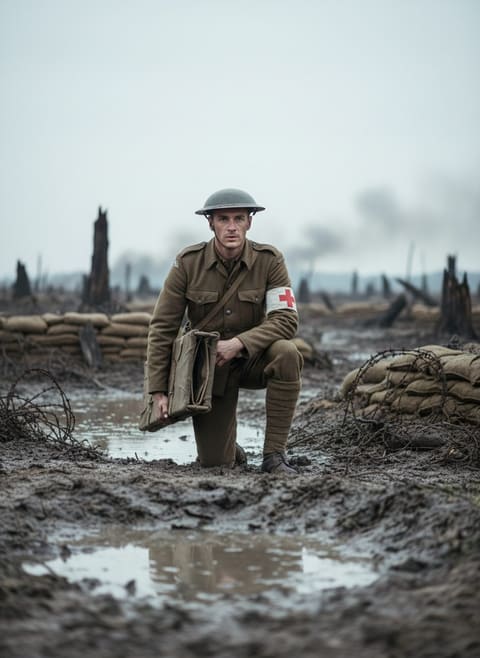
Read next: The Day a British Stretcher-Bearer Refused an Order to Save Lives
Alongside battlefield comrades, he became a tapestry woven with tales of sacrifice and survival. His resolve became his emblem, shielding him when even armor could not. In wars of words and wounds, the most profound truths often remain unnamed, yet here lingered the whisper of a young soldier's name, forever stilled by the thundering applause of a life spent staring down the relentless pursuit of non-existence.
Between Wars: A Life Beyond the Uniform
The aftermath of war leaves no man untouched, yet our soldier emerged not diminished but altered, with an air of venerable indifference to peril. His story did not retire with the ceasefire but strode alongside him into new adversities. The interwar years would not see him retreat into obscurity nor dim the fervor of his spirit. Instead, the soldier's life continued in a cadence of defiance — a narrative blurred by the peacetime illusions, only to be reborn whenever the call of duty tolled.
When the Great War ensued, the soldier again donned his uniform as easily as a second skin. Blinded in one eye, left with an injured hand, he continued to wear his wounds like badges of honor. Even when faced with the cruel kindness of a surgeon who refused to succumb to amputation, he took matters into his own hands, tearing off two fingers to maintain his readiness for life or war.
The power of place looms large. Where others saw wounded land or empty skies, he saw purpose. Whether stationed in makeshift camps or surrounded by the gory chaos of trench life, the soldier's resilience remained undaunted. With an eye sewn shut and a hand bereft of fingers, he still confronted the universe’s expanses, challenging it to break him.
England, his homeland, knew him as both a hero and a curiosity. His tales, though largely untold, resonated in whispers among those who dared to listen. His legend became an illustration of resilience and determination, accommodating both war’s cruelty and life’s vibrant promise within the spaces of his scars. The decades between battles were mere hiatuses, pauses punctuated by restless endeavors as he waited patiently for the tumult’s return.
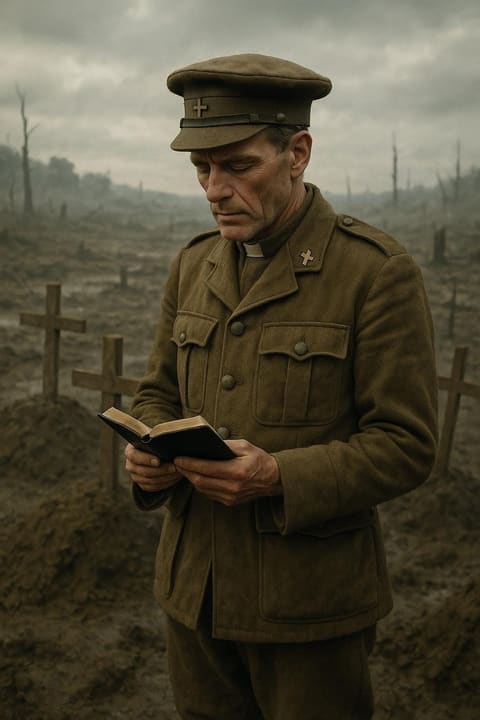
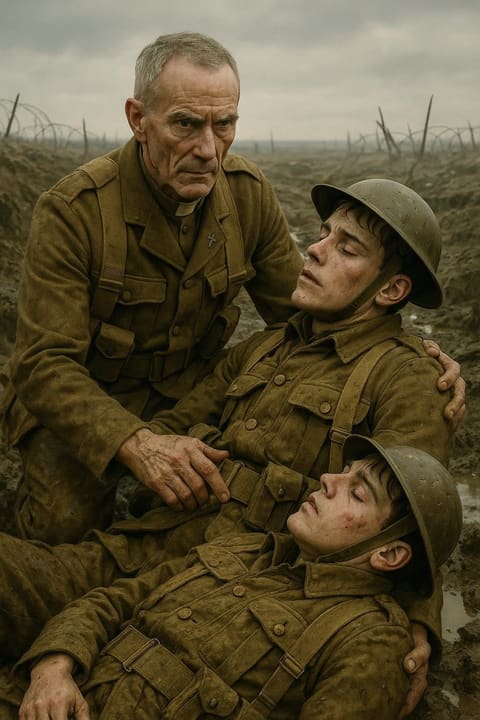
Read next: The Day a Army Chaplain Gave His Coat to a Dying Stranger
The Final Chapters of Valor
In time, he would confront new nemeses in the form of the Second World War. As Europe trembled under the goose-stepped tyranny, our soldier refused to be bound by simple mortal constraints. Even at the astounding age of sixty-two, his singular persona exuded a familiar vow — a bid against the entrapments of age and infirmity. Captured and detained in the cold stone chambers of an Italian castle, he nonetheless defied his captors, conjuring an extraordinary escape amid dire circumstances.
What does one make of a soldier who fought against both enemy and fate? His decades-spanning engagement with warfare painted the very essence of duty on the canvas of existence. These were not mere battles against adversaries, but rather a history-marked confrontation against boundaries set by muscles and bone, by fatigue and resignation.
To reflect upon this soldier’s life is to traverse the realms of possibility, to cherish the hacking paths tread by a singular resolve. He fought under more than one flag, faced relentless foes, yet considered the odyssey worthwhile. His terse verdict, declaring simply “I had enjoyed it,” speaks not only to a life lived but to an unwavering spirit that refused the familiar embrace of defeat.
In an age where hyperbole often eclipses substance, his real-life legend emerges distinct — a testament to the resilience of human will. We find inspiration in his capacity to face the dark depths of human conflict undeterred, embodying the truth that valor, perseverance, and audacity are strangers to no era. Not merely a soldier, he became a paragon of indomitability, leaving not just Britain, but the world, untold of his astounding story.