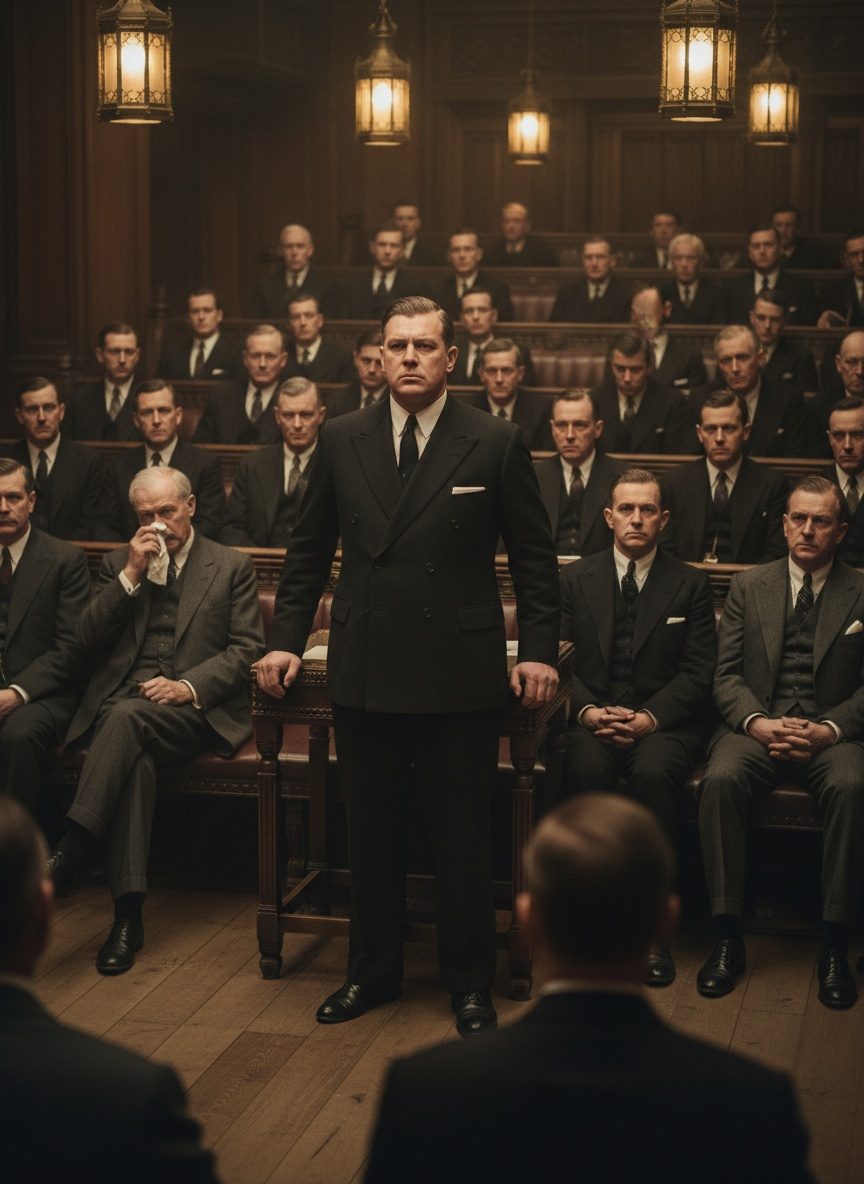
He had no military medals. The suits of fine fabric and bravado were all he brought to the war room that day. Winston Churchill was new as Prime Minister, but his task was ancient: to lift a nation from the jaws of despair. On 4 June 1940, Britain's fate teetered in the balance, and it required a leader to tether hope to the fraying threads of reality. Going live from the iconic chambers of the House of Commons, Churchill perpetrated what some called his greatest act of audacity. An army returned, yes, but they were home without the promise of fight, their guns and tanks left in the muddy beaches of Dunkirk. And yet, Churchill delivered a promise so titanic it etched into the very essence of British resilience.
To fully understand the weight of Churchill's words, we must step back to the scorched shores of Dunkirk—a scene of chaos morphed into miracle. Operation Dynamo, the mass evacuation from Dunkirk, stands today as a testament to sheer ingenuity, the phrase "we shall fight on" almost electrifying the slow and laborious extraction. Little ships, a surprising yet quintessential model of British grit, carried soldiers back to the haven of home soil. But with them came stories drenched in uncertainty and bereft of the deadly tools they needed to continue the fight. A dazzling exodus camouflaging a stark truth: Britain was unprepared and vulnerable.
As dusk whispered to dawn on that fateful June day, the echoes of war prowled just beyond the fragile perimeter of Britain's defenses. The House of Commons swelled with anticipation. Churchill, standing amongst his peers, appeared more curmudgeon than colossus, yet his gift was in the way he wielded language like an ancestral sword. The Prime Minister's typical eloquence took flight, soaring beyond the fractured silence that shrouded the nation's leaders like a heavy fog. His grave, dulcet tones cascaded across the chamber as he painted a picture that was neither hopeful nor hopeless.
There is something to be said for the power of words in times of crisis. Yet, on this day, the magic lay not just in Churchill's power to rally, but in his ability to reveal the unvarnished truth. Britain scraped its barrels for arms. The acrid smell of misgovernment, of complacency, of dread burnt the air. As he went on to articulate the desperate state of the military, something remarkable happened—something audible, yet almost beyond comprehension in the annals of oratory. For Churchill did not dare to merely lament the absence of arms; rather he pivoted, as if turning tension into a bowstring ready for a musical rebuke.
Read next: The Day a British Stretcher-Bearer Refused an Order to Save Lives
His words declared, etched in sound yet echoing the promptness of action: "We shall go on to the end, we shall fight in France, we shall fight on the seas and oceans, we shall fight with growing confidence and growing strength in the air, we shall defend our Island, whatever the cost may be, we shall fight on the beaches, we shall fight on the landing grounds, we shall fight in the fields and in the streets, we shall fight in the hills; we shall never surrender..." It was an odyssey captured in mere seconds. A promise born not of certainty but of defiance, not of might but of spirit. That afternoon echo, heard by so few, reverberated beyond the gilded walls and structured halls, spiraling into a chorus the people of Britain would carry like a cherished burden.
Outside the House of Commons, the streets teemed with daily rhythms oblivious to the momentous voicing within. News of the speeches often filtered out almost second-hand through newspapers and gossip like tributaries meandering toward the wider currents of public consciousness. Unlike today's speeches, replayed and dissected on screens, the greatest soliloquies of the time lingered first in chambers of political power before unfurling in public discourse. Indeed, the Prime Minister's declarations clashed against stone and oak furniture rather than live broadcasts, reaching the people of Britain via newsprint days later.
Read next: The Day a Army Chaplain Gave His Coat to a Dying Stranger
His speech differed from the exalted tales woven into assembly halls; it demanded not just action, but participation in an unrelenting saga. The reality was grim: a nation scant on weapons, embraced by uncertainty, yet indomitable in resolve. Churchill's defiant rhetoric struck a nerve—stopped the slide into collective disbelief. With his words etched like scripture into the soul of a beleaguered Great Britain, the absence of artillery and tanks paled before a unified call to action. The British public—and, indeed, the world—would not turn from such mortal combat but would strain and stretch against the rising tide.
What emerged from Churchill's emphatic oratory was not reflected simply in future victory, but in how a young and fragile Europe began to envision itself. A chapter of stout resolve titled in the House of Commons but footnoted in conversations and became a lodestone for every subsequent generation facing the echo of tyranny’s tramp. While statistics and facts forebode ill and guns lay silent, Churchill found solace in delivering a resolve so intense it fueled Allied determination and kindled the fires of redemption.
This story, one seemingly heard by nobody but known by everyone, captivates not just because of its heroism or defiance, but because it challenges us to think of courage beyond arms, of war as honor beyond conquest. It isn't just Britain’s past, but a piece of living history, unsettled and undeterred, pulsing through to the 21st-century heart. The speech may have been publicly overlooked in real-time, but its legacy lives on, unforgotten and unsilenced, reminding that when truth is spoken, even quietly, it can hold a nation together.