The vibrations of the explosions rattled through her steel hull, reverberating in the eerie silence that followed the roar of conflict. The air was thick with smoke and acrid fumes, a confounding mixture of oil and gas that clung to the senses, choking the breath from the brave souls clinging to life atop the burning tanker. Above the tumult, the rasping cry of Dudley Mason pierced the chaos: "We will not abandon the Ohio!"
The Relentless Onslaught
The tanker Ohio, an American-built leviathan, sailed through the tempestuous waters of the Mediterranean, under relentless assault from the Axis forces. It was August 1942, and the ship was pivotal in Operation Pedestal, a desperate attempt to supply the besieged island of Malta. Without the crucial kerosene and fuel oil she carried, the island's aircraft capacity—and thus its very survival—was at stake.
Under constant threat from the Germans and Italians, the convoy surrounding Ohio faced a hellish barrage. By the time she reached the midpoint of her journey, Ohio had already suffered multiple hits. Torpedoes had plunged into her side, while an aerial mine exploded with relentless force beneath her. A calamitous thunder heralded a bomber's screaming dive directly onto her deck, its wreckage snapping like tinder beneath the brutal clash.
Yet, remarkably, Ohio endured. She had no business being afloat, yet there she was, steadfast and stubborn, held aloft by some maritime miracle and the sheer determination that fueled Captain Mason and his steadfast crew. Through the oily haze and flames, they fought—lashed by the sea, beleaguered by enemy onslaughts, but driven by the desperate need to protect their precious cargo.
Read next: The Night Thomas Cochrane Bluffed an Entire French Fleet
A Desperate Gamble
The Ohio was more than a ship; she was a symbol of resilience, a vessel of hope amid despair. As twilight descended on the night of August 12th, her damaged structure bobbing precariously, Dudley Mason and his men made a fateful decision. The Ohio could not sail on unaided—her engines all but useless, her rudder seemingly lost to the whims of the sea. The Royal Navy destroyers, led by the skillful men who shared Mason’s resolve, took drastic action.
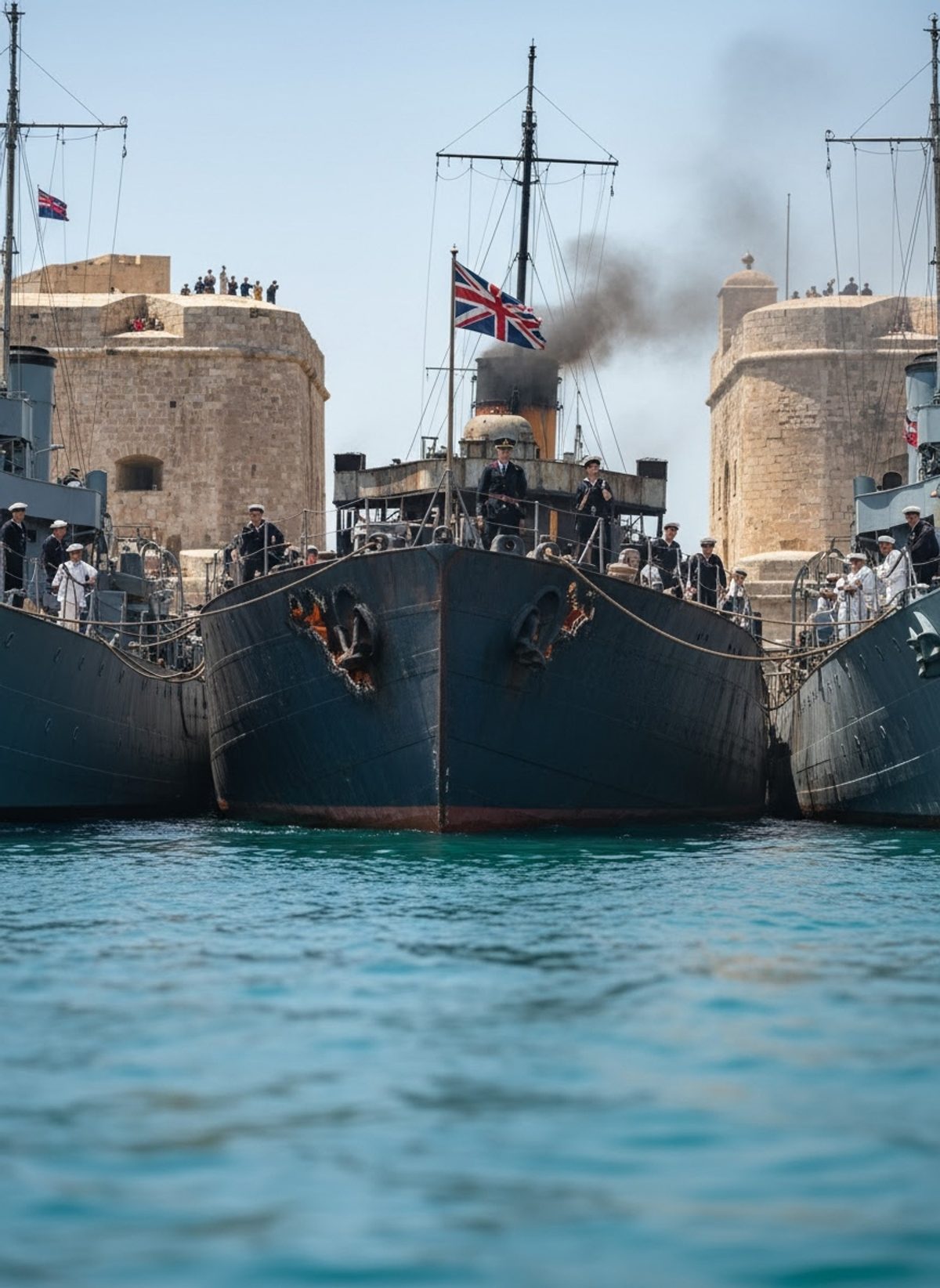
Two destroyers were lashed to the behemoth; like riverboats tethered to push and pull a giant log. This jury-rigged convoy struggled forward, with the destroyers providing the guidance Ohio desperately needed. Mason, a man whose will exceeded his rank, commanded his vessel with precision, his voice carrying orders like bolts of iron amid the chaotic symphony of war.
Through day and night, the convoy toiled and inched forward. Spotlights danced off rolling black swells, intermittently illuminating the colossal tanker in silhouettes of burning orange and glowing red. The enemy appeared relentless, their attacks frequent and ferocious. Still, the convoy pressed on, the destroyers now guardians to an indomitable giant that refused to yield.
The Arrival at Grand Harbour
Finally, on August 15th, as dawn's light unfurled across a sea now calm but cluttered with wreckage and debris, the Ohio neared the sanctity of the Grand Harbour in Valletta, Malta. Her journey had been one of attrition and dogged determination, carved from equal measures of bravery and desperation. Her arrival was less a triumphant march and more a crawl of battered resolve.
Read next: The Night Captain Bligh Navigated 3,600 Miles in an Open Boat
The crowds gathered along the bastions, Malta’s civilian and military population coming together in anxious anticipation. As Ohio appeared on the horizon, grinding forward under the guidance of her escort destroyers, a profound silence fell over those watching. Mason, steadfast to the last, stood on Ohio's bridge, saluting the spirit of the men and ships that had sacrificed so much to get her there.
As the fractured form of Ohio slid into the harbor, the silence shattered—an eruption of cheers echoed from the fortress walls, a crescendo of piercing relief and adulation. The tanker's survival was not merely a victory of men over machinery; it was a defiant stand, a beacon of resilience against overwhelming odds.
The Unsinkable Spirit
Ohio’s journey stands as one of the most striking examples of human determination and seamanship in the theatre of war. Her mission, to resupply Malta in its hour of need, held within it the essence of strategic necessity married to an unwavering courage. The island survived because a ship—burning, flooding, and seemingly crippled—brought hope in the form of fuel and a will that refused to be quenched.
The tale of the Ohio is steeped in those timeless qualities that define true courage: resolve, sacrifice, and indomitable spirit. We look back on that August day not as a distant echo of war history but as a powerful reminder that sometimes, success hinges on resilience and the ability to continue when every rational course suggests you should stop. The Ohio did not stop; she prevailed, and in doing so, left an indelible mark on the annals of maritime legend.