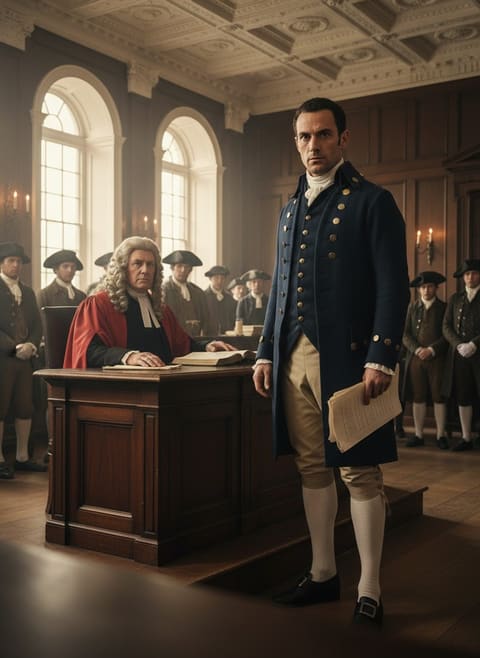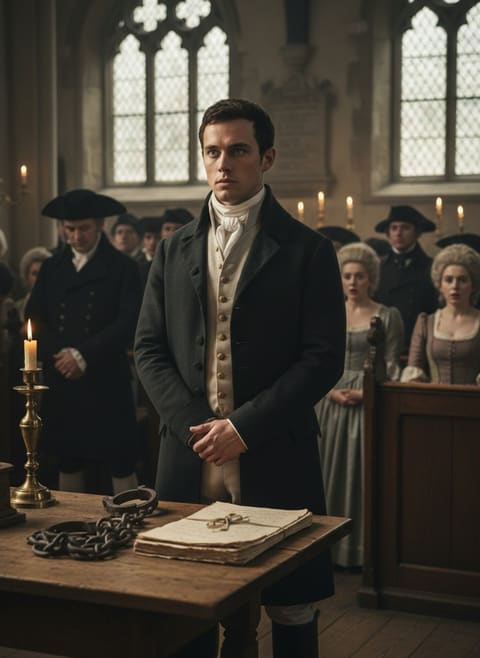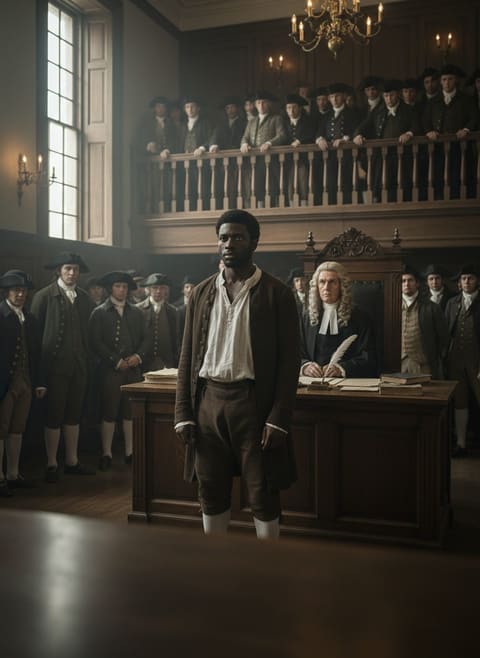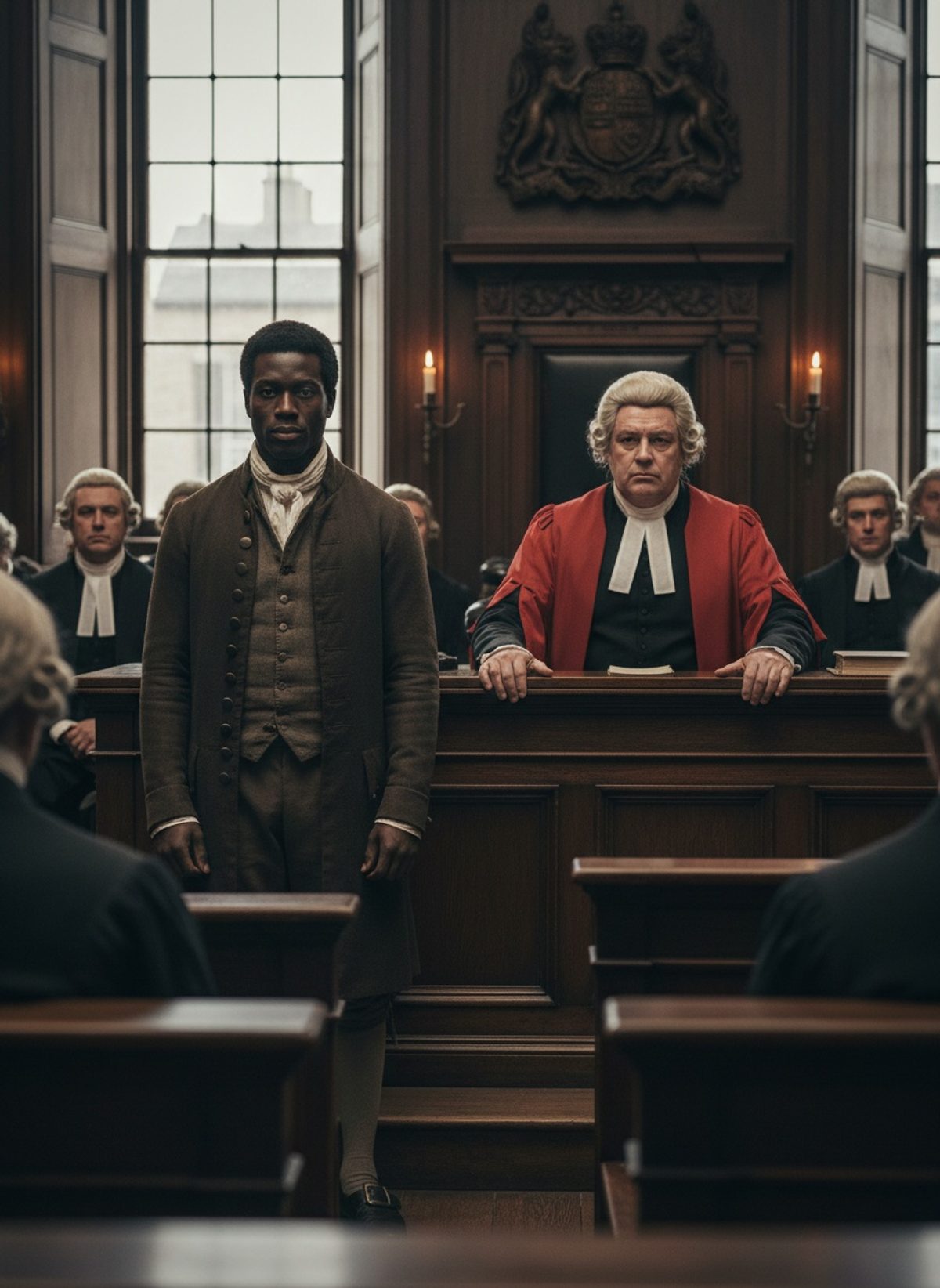
The heavy clouds hung low over London, a blanket of grey that promised rain but offered no respite from the oppressive heat. The streets around Westminster Hall thrummed with an electric tension, the usual clamor of city life hushed as if the very air held its breath. It was 1772, a pivotal moment in history, and within the wood-paneled confines of the courtroom, a man's fate—and perhaps the fate of an entire nation—hung in the balance. This was no ordinary legal proceeding; it was a defining moment that would challenge the moral and legal fabric of Georgian England.
James Somerset, a man of African descent whose life had been one of bondage and toil, sat at the center of it all. Just months prior, he had been little more than a name on a shipping manifest, another piece of property owned by Charles Stewart, a Virginia customs officer. Stewart had intended to ship Somerset to Jamaica, a jewel of Britain’s colonial empire, where his life would be one of grueling labor under the harsh tropical sun. But here in London, far from the plantations of the Caribbean, he was no longer anonymous. His very presence challenged the established order of the world’s most powerful empire.
The case was unprecedented. Slave ownership was woven into the tapestry of British commerce and society, a grim but accepted reality. But now, Somerset’s supporters argued, those chains were in conflict with the profound ideals of English liberty—the same ideals the nation prided itself on in the face of tyranny abroad. The argument was spearheaded by Granville Sharp, a fervent abolitionist whose zeal for justice had previously overturned other legal cases involving the rights and freedom of individuals. Yet, the implication of this verdict would reach far beyond a single man.
Lord Chief Justice Mansfield, a man known for his judicious temperament and thoughtful deliberation, presided over the case. A figure of formidable intellect and cautious pragmatism, his rulings were watched and weighed with immense interest across the nation and its colonies. For months, he had deferred delivering his judgment, acutely aware that the repercussions of his decision would ripple far beyond the court’s walls. To some, this delay was seen as hope; to others, a tactic of calculated caution.
Read next: The Day a Black Sailor Walked Into Court and Freed Himself
Inside the chamber, arcane legal texts lay open alongside the thumping hearts of those who had come to witness history being written. The stakes were monumental. The crux of the case lay in defining whether the legal concept of slavery found a legitimate foothold within English soil. Somerset's defenders insisted the air of England was too pure for a slave to breathe, leaning into a precedent that had been held in courtrooms for nearly a hundred years. Yet, precedent and practice were two separate beasts—the former idealized, the latter often compromised by economic interests and social complacencies.
Amid this tense tableau, Lord Mansfield finally cleared his throat and began to speak. The quiet that descended was absolute, as though the very rafters strained to catch each word. Somerset, restrained all his life by the legal fiction of ownership, would be defined not by chains but by choice—his right to liberty paralleled the burgeoning discourse on human rights, stirring through the corridors of power and the coffeehouses that buzzed with intellectual ferment.
The judgment was delivered simply, yet it was stark in its implications: Somerset must be discharged. These words—by legal determination, unemotional and serene—sent waves of emotion crashing through the gathered onlookers. For Mansfield, there was a careful balance to be struck between justice and pragmatism. He had not declared slavery illegal, but he had erected significant barriers against it, setting a precedent that would resonate throughout the land.
Read next: The Day a London Clerk Walked Into Court for a Dying Slave
As Somerset walked free, the rain finally broke, cascading in silvery sheets across the city, washing away the dust of uncertainty that had settled over this case of monumental importance. The ruling did not dismantle slavery within the British Empire, but it dealt a significant blow to its legal standing within England itself. The judgment echoed across the Atlantic, to the colonies where the institution thrived and would, less than a century later, ignite a conflict of brutal resolve.
The Somerset case heralded a shift in consciousness. It was a crack in the legal and moral facade that supported the enslavement of countless human beings—a crack that would eventually widen into a chasm, as Britain, and later the world, began to grapple more earnestly with the ethics of freedom, autonomy, and human dignity. It would inspire the abolitionist movement, energizing figures who fought tirelessly across decades to eradicate the scourge of slavery from their society.
This story matters not just as a historical record, but as a reminder of the power that individuals—armed with conviction and galvanized by truth—can wield in the pursuit of justice. Somerset’s legacy, etched into history by his stand against the tide of his times, continues to prompt reflection on the structures of power that govern human lives. It serves as a testament to the persistent, often turbulent march towards a more equitable future. In the shadow of a decision made over two centuries ago, echoes of liberty continue to challenge and inspire. The day James Somerset stood before the King’s Council is one we should remember—for it is a day that dared to redefine the value of a human being under the eyes of the law.