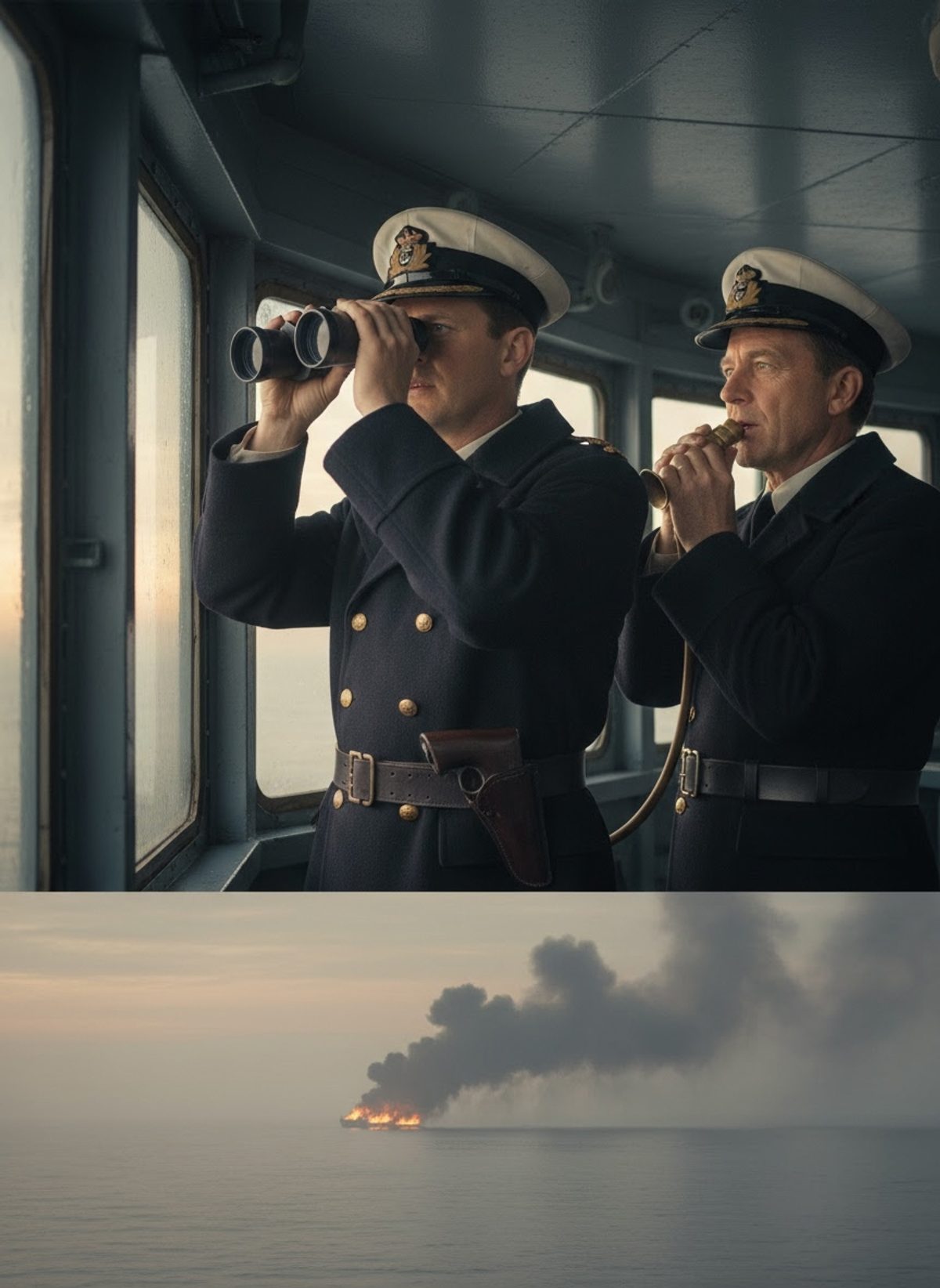
December 13, 1939. The cool morning air over the South Atlantic began to fill with the distant thud of gunfire. Three British cruisers, HMS Exeter, HMS Ajax, and HMS Achilles, had converged on the formidable German pocket battleship Admiral Graf Spee. The waters off the River Plate, near Uruguay, were about to stage the Royal Navy’s first fleet action of World War II in a ripple of fate fraught with steel and fire.
The Trap Behind the Mist
As dawn unfurled over the ocean, the British ships caught sight of their target. Admiral Graf Spee was a notorious predator of the seas, having sunk numerous merchant vessels since war broke out, and her reputation preceded her. She outgunned them all, boasting mighty 11-inch guns that surpassed the range and power of her British adversaries.
Yet it was the enduring tenacity of the Royal Navy that transformed this encounter into an epic clash. Commanded by Commodore Henry Harwood, the British cruisers executed a daring maneuver, fanning out to present multiple targets to Commander Hans Langsdorff of the Graf Spee. Despite the disadvantage, the British persisted, hoping to disable the beast they faced.
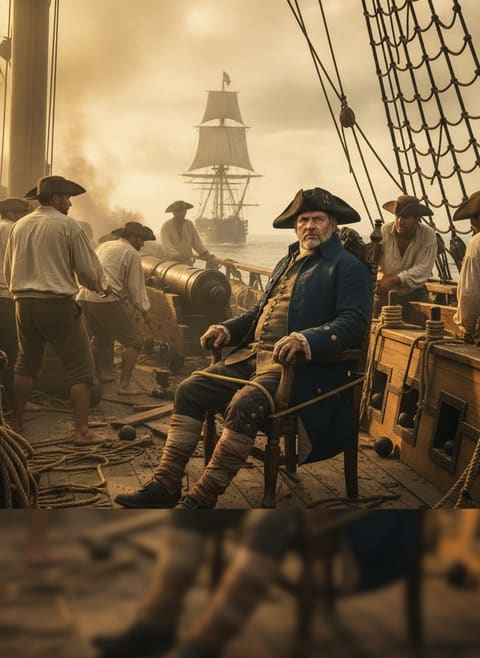
Over several tense hours, the battle raged. Monarchs of the waves, they exchanged fire with thunderous salvos, each plummet of ordnance stirring the ocean to foam. HMS Exeter suffered grievous damage early on, her bridge shattered, and her captain incapacitated. Yet through this chaos, valor lived: the signalmen and gun crews, standing in their roles despite shrapnel tearing the air.
Read next: The Night HMS Victory Limped Home Carrying Her Dead Admiral
The Unexpected Peregrination
Incredibly, as afternoon wore on, the Graf Spee ceased fire, battered but not broken. Langsdorff chose to seek refuge in the neutral port of Montevideo, Uruguay. Perhaps it was the sustained harassment by Harwood's fleet or a strategic miscalculation, but the showdown at sea shifted to a game of diplomatic chess.
Here began the strange dance of international politics and seafaring lore. For days, Langsdorff negotiated and executed a deft shell game of wills with the British forces and local authorities. Meanwhile, concealed in the wings, the world watched, gripped by the tension enveloped around one warship stranded between escape and entrapment.
The British undertook a masterstroke of subterfuge, relaying fictionalized reports of reinforcements closing in. The clever ruse aimed to sway Langsdorff into an untenable position, though the silhouette of truth would soon cut through the diplomatic fog with the sword of decision.
Last Salute and Scattered Ashes
Finally, after days of negotiation and reflection, Commander Langsdorff opted for a fate neither side had anticipated. Choosing honor over humiliation, he ordered the scuttling of the Graf Spee just outside Montevideo’s harbor on December 17. As flames consumed the vessel, sailors and officers stood solemnly aware that, in a realm devoid of complete victors, there remained a refined nobility.
The end of the ship did not mark the conclusion of their saga. A surprising gesture of humanity illuminated the aftermath of conflict. British merchant captains, men whose livelihoods had faced the wrath of Graf Spee’s reign, sent wreaths to commemorate the fallen German sailors. Neither a gesture of sympathy nor endorsement, it was an acknowledgment of a shared human experience, a poignant reminder of mutual respect amid the horrors of war.
Read next: The Night Thomas Cochrane Bluffed an Entire French Fleet
In this act, the strange paradox of battle revealed itself. Death was met by compassion, beyond the reach of language, and beyond the political lines that once seemed so paramount. It was a silent nod from one seafarer to another, hailing the courage found in those troubled waters.
The Ripples that Speak Beyond
The wreck of the Graf Spee lay visible at low tide, a testament to the events that unfolded under the eyes of Montevideo. Over the years, her carcass drew curious eyes and historians' pens, forever a haunting reminder of the conflict, perseverance, and the strands of humanity woven into warfare.
In history’s ledger, these occurrences often rest as sepia-tinged footnotes, ephemeral yet persistent in their legacy. The story of the Battle of the River Plate speaks less of naval strategy or military clout, and more of the human spirit that rises amid dire adversity. It is about those brief interludes of chivalry amid destruction, illuminating the terrains of our shared past.
As the wreaths vanished into the waters of the estuary, leaving behind salted silence, we are reminded that war does not just etch names into stone. It challenges us to peer deeper, understand its shades, and marvel at the fragments of humanity worth preserving.