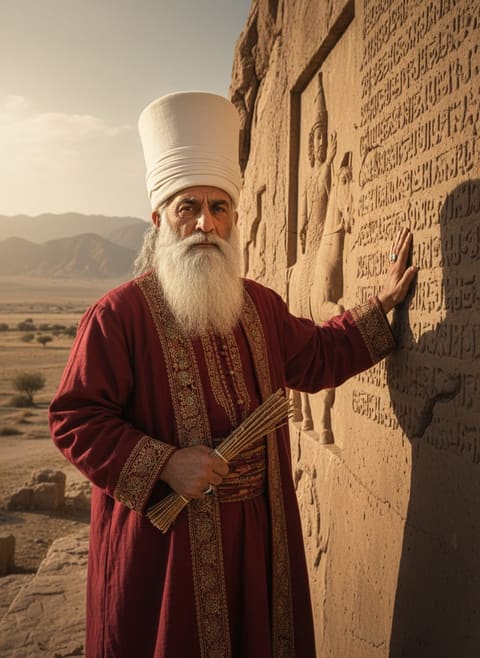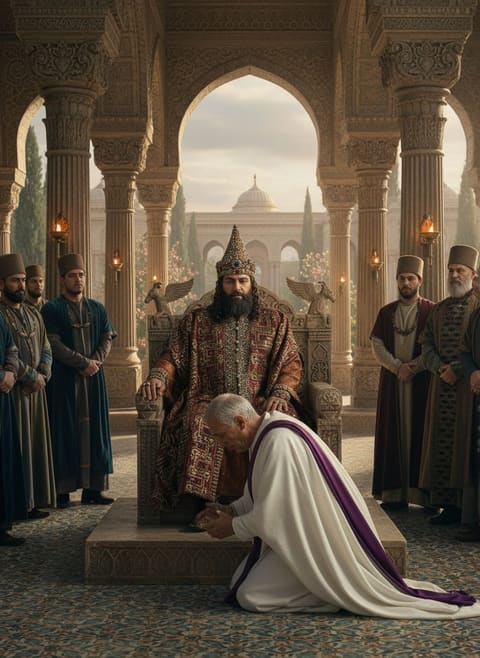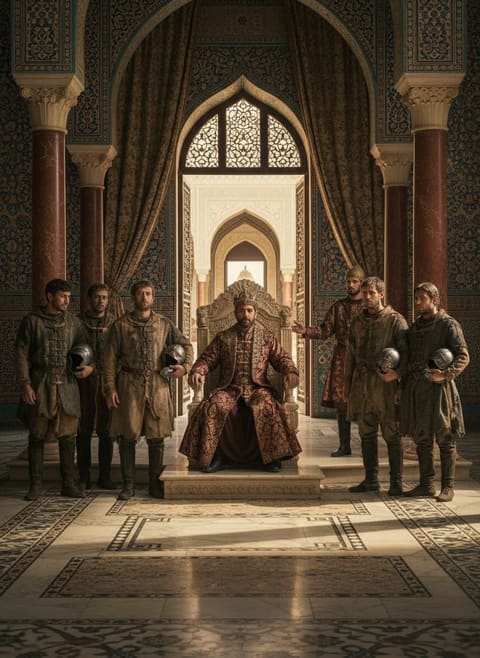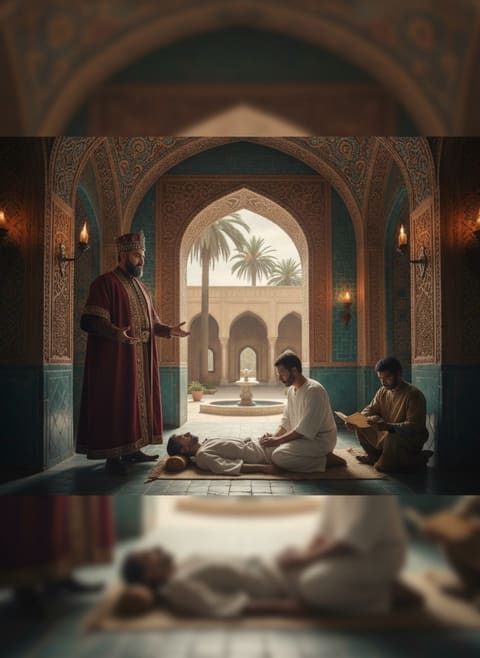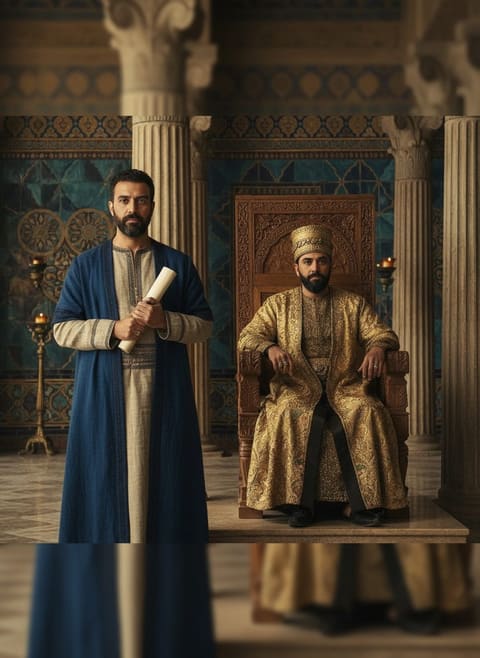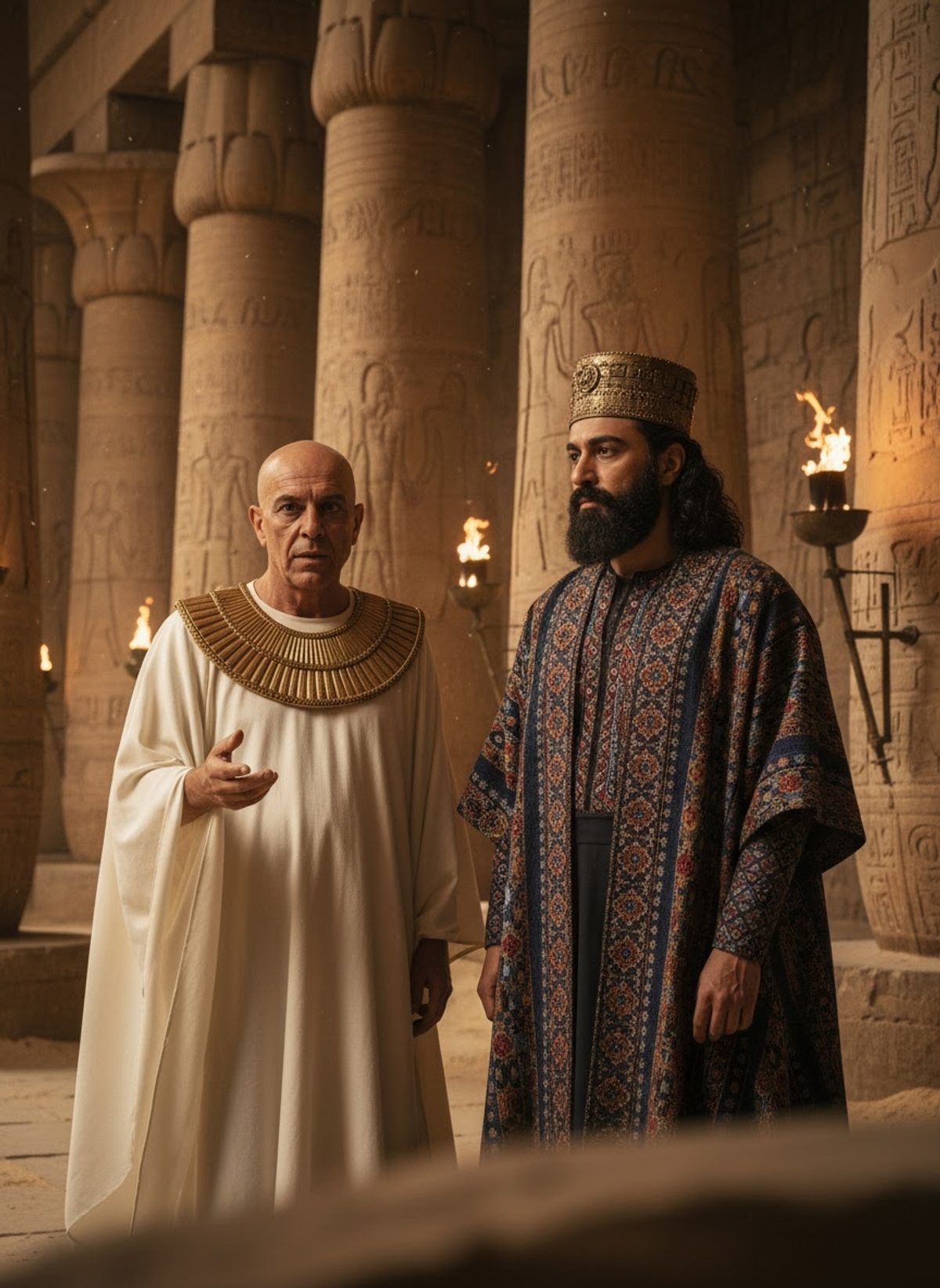
He was a caretaker of tradition yet served as an envoy of change. Udjahorresnet, an Egyptian priest and physician, chose to navigate the tempestuous waters of foreign occupation to preserve the very essence of his homeland. What seemed an act of betrayal turned into a diplomatic mission that safeguarded Egypt's sacred institutions under the rule of the Persian Empire.
The Arrival of Cambyses II
In 525 BC, Egypt faced an existential crisis. Cambyses II, son of Cyrus the Great, swept into the heart of the Nile Valley, defeating the last pharaoh of the 26th Dynasty, Psamtik III, at the Battle of Pelusium. Many of Egypt's priests, scholars, and scribes fled, fearing the repercussions of foreign rule.
But Udjahorresnet stayed. He was not just another priest; he was a high official with manifold roles, including a naval commander under Pharaohs Amasis II and Psamtik III, a chief physician, and a dedicated servant of Neith, the mother goddess, in Sais.
The Persian conquest brought a sudden halt to the existing order, and Egyptians feared the worst for their temples and traditions. Yet, Udjahorresnet found himself unexpectedly rising in influence at a foreign court. He opted to serve as chancellor and chief physician to Cambyses, a calculated move to protect Egypt's core cultural elements from within. Udjahorresnet was no mere collaborator; he was a diplomat, leveraging his position to ensure Egyptian customs were honored under a new regime.
Read next: Ardasher I Defeated the Parthians and Founded the Sassanid Empire
Bridging Cultures Through Diplomacy
The approach of Udjahorresnet to Cambyses II was anything but ordinary. He not only gained favor but managed to enlighten the Persian conqueror about the complexity and sanctity of Egyptian traditions. Under his guidance, Cambyses wore the pharaonic titularian: Horus Smatawy, "He who unifies the Two Lands," thereby integrating himself into the cultural fabric of Egypt. But perhaps even more telling was Cambyses' homage to the goddess Neith in Sais, an act championed by Udjahorresnet.
The priest-physician successfully persuaded Cambyses to expel the Persian squatters who had not only occupied but defiled the temple grounds. This act of reverence reassured the Egyptian populace that their religious customs would endure. Udjahorresnet's astute political maneuvering didn't go unnoticed. He was seen as a leader who not only submitted to authority but one who cleverly preserved the soul of Egypt in silence and prudence.
Under Darius I: Rebuilding the House of Life
When Cambyses met his demise in 522 BC, Udjahorresnet's diplomatic mission continued seamlessly with Darius I, Cambyses' successor. Udjahorresnet even accompanied Darius on his return journey to the Persian heartland, Susa, thereby establishing an intimate diplomatic channel with the new ruler. His influence played a key role in persuading Darius to restore Per-ankh, or the "House of Life," Egypt's eminent center for education, wisdom, and culture.
The restoration of Per-ankh was a significant achievement, as it rejuvenated the cultural and intellectual vigor of Egypt. While some may have viewed Udjahorresnet's close proximity to power as mere collusion, to others he became a guardian of Egypt’s cultural legacy. By the time of his death during Darius' reign, likely buried with honor in his large though looted tomb at Abusir, Udjahorresnet had ensured the continuity of Egyptian traditions through wise and calculated diplomacy.
Read next: Roxana of Bactria: The Captive Who Became Queen of the World
The Legacy of Udjahorresnet
The story of Udjahorresnet is essentially an exploration of what it means to serve one's country in times of foreign domination. His method of cultural preservation under the guise of collaboration challenges the binary notions of traitor versus hero. Archaeological evidence even suggests that Udjahorresnet was venerated posthumously, demonstrating the respect the Egyptian populace had for his complex legacy.
What might seem as opportunism at first glance was, in fact, a profound act of patriotism. Through navigating the corridors of Persian power, Udjahorresnet succeeded in protecting what mattered most: the heart of Egyptian identity.
It’s a reminder that resistance takes many forms, some as quiet and cunning as the inscriptions carved into stone, left to echo through millennia. The choices made by one man, armed with wisdom rather than weaponry, ensured that Egypt's temples and traditions would endure beyond the shadow of foreign occupation.