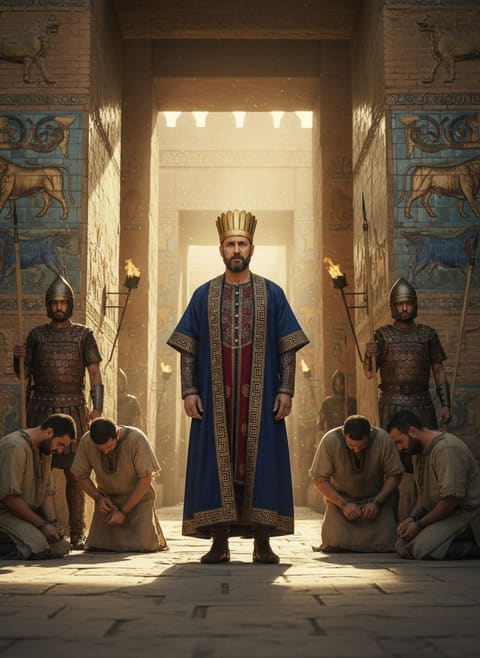
602 AD. The fires of Zoroastrian temples flickered against the vast skies of Ctesiphon, the imperial heart of the Sasanian Empire. Here, amid the splendor and the whispers of the court, Khosrow II Parviz, the Persian emperor known as "the Victorious," stunned the world with an act of unexpected mercy.
A Monarch in the Mold of Legends
Khosrow II, the grandson of the illustrious Khosrow I, was steeped in tales of grandeur from the moment of his birth around 570 AD. His name, meaning "he who has good fame," augured a life destined for greatness. Emerging from the tumultuous court of his father, Hormizd IV, Khosrow navigated political quagmires and rebellions to emerge as the ruler of the Sasanian Empire in 590 AD, although not without a one-year interruption that tested his resolve and cunning.
Ruling from the famed imperial city of Ctesiphon, nestled by the Tigris River, Khosrow II was as much an emperor as heroines of courtly love, immortalized in the famous works of Persian literature. These texts echoed tales of his passionate pursuit of Shirin, a love story entwined with political drama, gracing works such as Ferdowsi's *Shahnameh* and Nizami Ganjavi's *Khosrow and Shirin*. But beyond these romanticized portraits lay a ruler caught in the relentless dance of war, politics, and legacy.
War and Captivity: The Spoils of Conflict
The year 602 AD marked the dawn of yet another war with the Byzantine Empire, a conflict born from vengeance. Khosrow II launched his campaign under the pretext of avenging the assassination of his benefactor, the Eastern Roman Emperor Maurice. This war would rattle the foundations of both empires, but it also provided an opportunity for Khosrow to target the Roman provinces rich with resources.
Read next: Nehemiah Crossed the Desert Alone. He Carried One Letter.
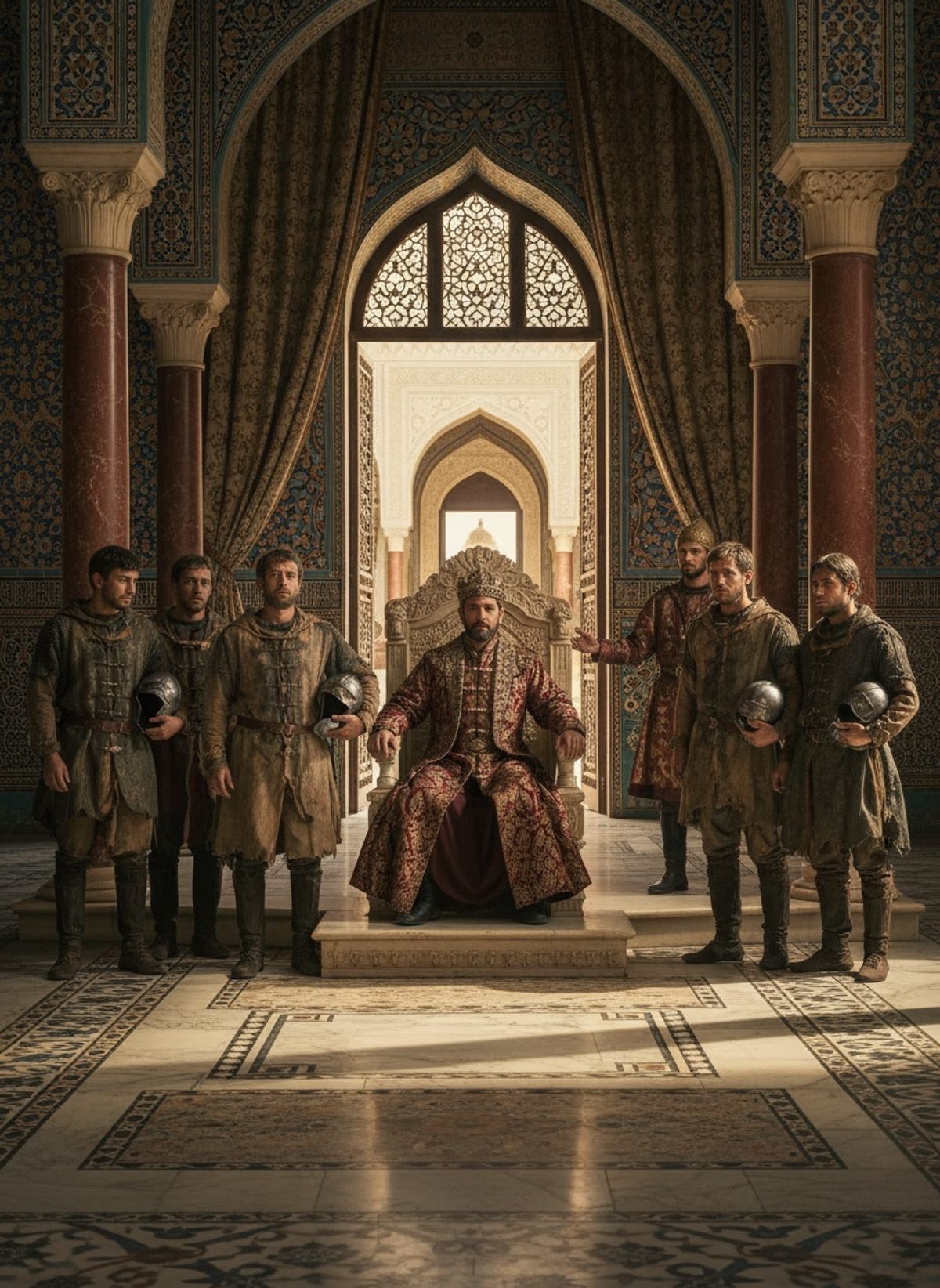
As Persian banners advanced, thousands of Roman soldiers met their fate on the battlefields or found themselves marched into Persian captivity. Within the vast reaches of his empire, Khosrow II held these Roman prisoners, human tokens of his victories, symbols of his power over his adversaries. Numbering in the thousands, these prisoners languished, assuming they were bargaining chips for future exchanges or ransoms.
The Day of Unbelievable Mercy
In a world defined by the ruthless calculus of war, Khosrow II's unexpected decision arrived like thunder on a clear day. He ordered the release of approximately 3,000 Roman prisoners caught in the web of his campaign. This act of humanity was as shocking as it was strategic—no demands, no conditions, no ransom, just freedom granted by the decree of an emperor who understood power in ways that transcended mere conquest.
The Byzantine chroniclers, accustomed to the pragmatic and oftentimes brutal exchanges of empires, recorded this moment with disbelief. Why, they wondered, would an emperor who had emulated the territorial ambitions of past Persian rulers choose to release men who could just as easily take up arms against him once more?
Perhaps Khosrow's reasoning was layered, a tapestry woven with threads of political foresight, ethical conviction, and the intricate dance of courtly influence. It reflected a sophisticated understanding of power that reached beyond the immediate gains of war—a gesture that perhaps sought to destabilize the Byzantine psyche or to cultivate an image of magnanimity that even his rivals could not ignore.
Read next: Mardonius Offered Athens Gold. She Sent Him Away.
The Complex Portrait of a Sasanian Ruler
Khosrow II's life was a whirl of contradictions and complexity. While he orchestrated wars and seized cities, he also found himself immortalized in tales of romantic pursuit and unlikely mercy. This was the emperor who could both advance upon Byzantine cities and then turn to release swathes of their soldiers, men who carried the scars and hopes of two empires on their shoulders.
His reign witnessed profound political turmoil, including a fleeting dethronement and the pursuit of long-lasting legacies. As he navigated alliances and enmities, Khosrow sought to recreate the grandeur of the Achaemenid Empire, challenging the Roman Empire's dominance with renewed vigor. Yet, his aspirations were as fragile as the empire he sought to expand. Ultimately, his estranged son, Sheroe, deposed him, leading to Khosrow's execution and the disintegration of the Sasanian gains he had so fiercely amassed.
The Legacy of Parviz
The choice to release thousands of prisoners without condition offers a stark juxtaposition to the narratives of perpetual conflict that dominate our understanding of empires. Khosrow II's actions remind us of the moments when leaders transcend the limitations of their age, revealing indelible truths about power and forgiveness.
In a world embroiled in the uncertainties of war, the Persian emperor's decision invites reflection on the nature of strength. Was Khosrow's unexpected clemency born of a strategic calculation, a keen understanding of political optics, or perhaps an echo of the mythical tales that recounted his life? It is a story that challenges the assumptions of historical power dynamics, inviting us to reconsider our perspectives on mercy and foresight. As we cast our gaze back upon his reign, may we find not just the relics of battles fought, but the resonant legacy of an emperor who dared to wield compassion as a tool of transformative power.