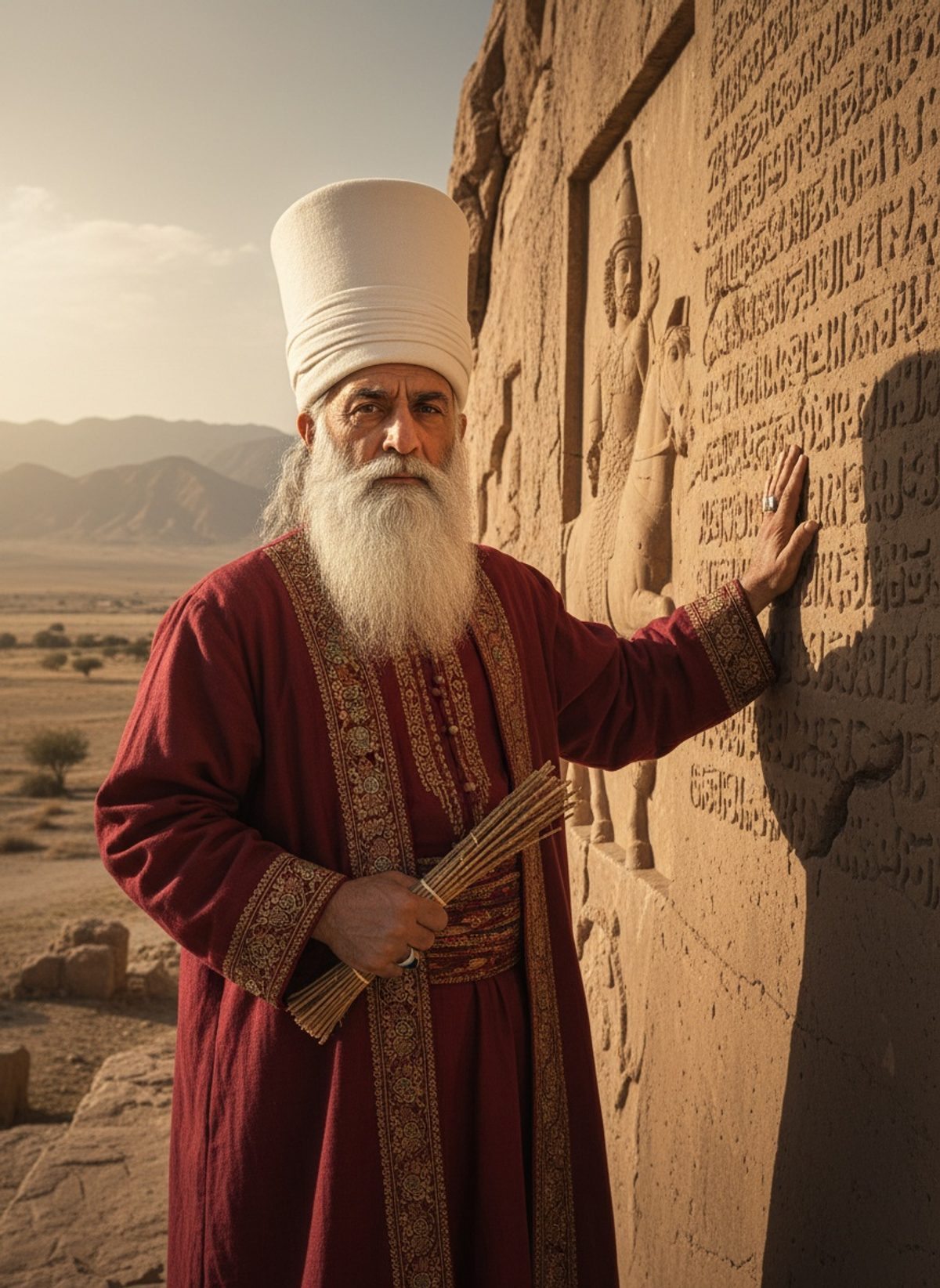
The sun beats unrelentingly upon the vast, barren landscape of Naqsh-e Rostam, throwing stark shadows on the ancient rock face. Here, where the mountains of the Fars Province rise with quiet majesty, the echoes of history whisper through the dry desert air. Carved into these stones are the stories of ancient Persian kings, each inscription a testament to their power and glory. Yet among these grand narratives of emperors and conquerors lies an unexpected voice, etched not by a king, but by a man of entirely different stature—a priest named Kartir.
The year was 270 AD, a turbulent time in the Sasanian Empire, itself a sprawling testament to human ambition and divine sanction. This was a realm governed not only by royal blood but also by divine favor, where Zoroastrianism formed the spiritual backbone of society. In this intricate tapestry of power, Kartir emerged as an unprecedented force. He was no king, nor a general, nor even of noble blood, yet he possessed an influence that surpassed many who wore the crown. Through sheer will and favored circumstance, Kartir’s words found immortality beside those of the emperors, carved eternally into the sacred cliffs of Naqsh-e Rostam.
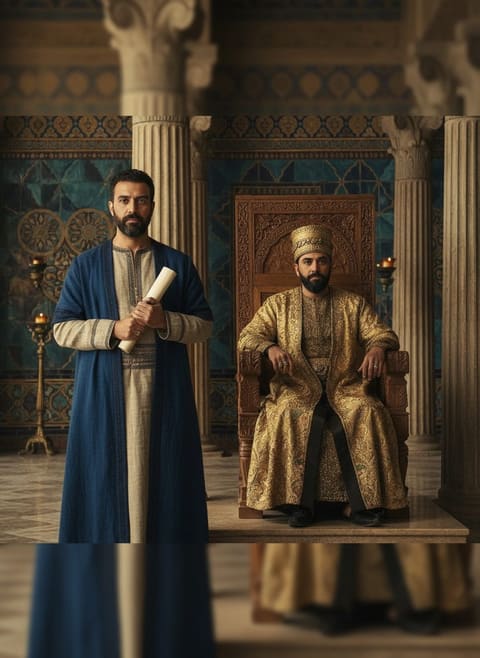
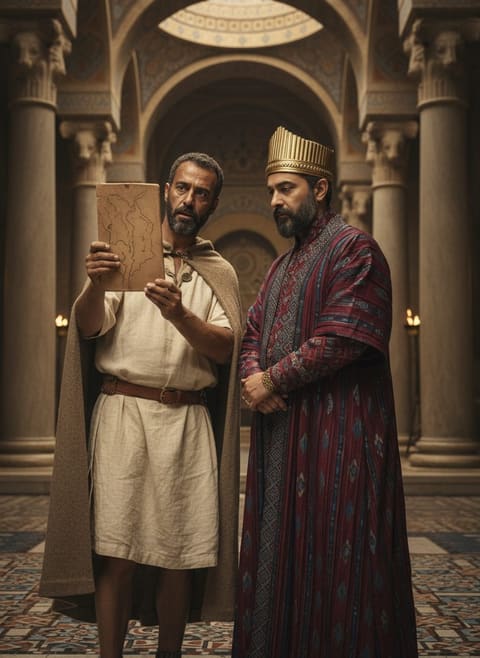
Kartir's journey began under the reign of Shapur I. In Shapur's inscriptions—crafted between 260 and 262—Kartir is more than a mere footnote; he stands out as a significant religious bureaucrat during a time when the king himself, though a Zoroastrian, embraced religious pluralism. While Shapur I allowed the minds of different faiths—Christians, Jews, Buddhists, Hindus, and even the founder of Manichaeism, Mani—to flourish, Kartir disapproved of these foreign influences permeating his sacred empire. Yet, during these early years, Kartir could only watch as Shapur I indulged in practices anathema to orthodox Zoroastrianism, such as animal sacrifices. Despite Kartir's tenacious orthodox vision, he still succeeded in rising through the ranks during Shapur's reign, hinting at his capacity for strategic adaptation and patience.
When Shapur I passed in 270, Hormizd I ascended the throne. His reign was brief—a mere year—but pivotal for Kartir. Under Hormizd, Kartir gained the title of mowbed, a chief priest, signifying his growing influence within the religious hierarchy. This elevation came with symbols of high status—the cap and belt bestowed by the Shah himself. Though Hormizd's rule was short-lived, Kartir's power did not wane; instead, it laid the foundation for his future as one of the most potent non-royal figures in the Sasanian Empire.
Read next: Arria the Elder Pulled Out the Blade. Then She Smiled.
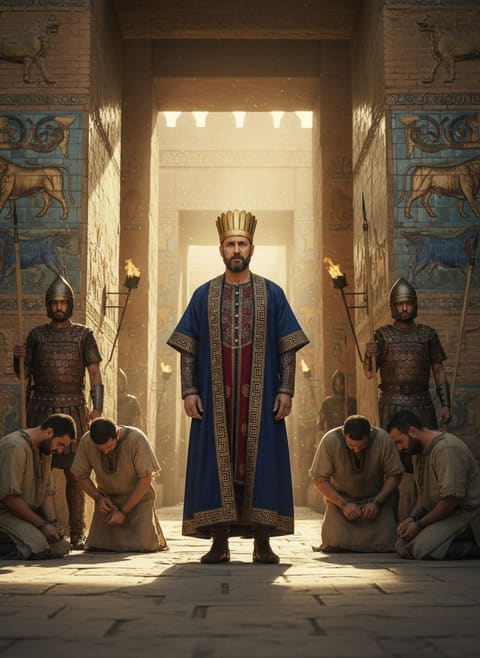
With the accession of Bahram I, Kartir's influence reached its zenith. Bahram I, a ruler not initially deemed the rightful heir, owed his ascension, in no small part, to Kartir's strategic counsel. Together, they shifted the empire's tapestry towards religious orthodoxy, deviating from Shapur's inclusive policies. Bahram I, influenced by Kartir's vision of a purified Zoroastrian state, set about a series of religious reforms that went on to reshape the empire. Notably, Kartir's influence marked the condemnation and eventual arrest of Mani—a symbol of Kartir's crusade against religious diffusion. Such actions crystallized a crucial shift in the empire's policies and demonstrated Kartir's prowess not only as a cleric but as a tactician versed in the art of power.
The tension simmered beyond spiritual borders; Bahram I's relationship with his brother Narseh was fraught with implications. Kartir, ever the diplomat yet steadfast in his principles, played a decisive role in ensuring Bahram's reign went unchallenged, though the delicate peace brokered saw Narseh ruling in Armenia under the titular banner of the Great King of Armenia.
Through the reign of Bahram II, Kartir's influence continued unabated. The Sasanian Empire saw the religious landscape further cemented in Zoroastrian ideals, largely due to Kartir's unyielding advocacy. Embracing his role as a protector of the faith, Kartir's deeds—some benevolent, others less so—were inscribed as indelible reminders of his time in power. No longer a shadowed figure, Kartir carved his own narrative, an autobiography amid the royal scripts—a declaration of how one man's conviction could intertwine with the fate of an empire.
Read next: Khosrow II Freed 3,000 Roman Prisoners on a Single Day
When Bahram II died, the empire faced yet another pivotal moment with his son, Bahram III. A figure of instability, Bahram III’s ascendancy faced internal discord, and Kartir again was at the helm, guiding the political tides. Joining forces with the influential nobles, Kartir spearheaded support for Narseh's rebellion—a strategic intrigue that saw Bahram III's fall and Narseh's rise. Yet, with Narseh's ascent, Kartir faded into the annals of obscurity, his power dimmed, but his legacy etched forever in stone.
Kartir's remarkable journey through the Sasanian halls of power tells a tale of faith, strategy, and the perpetuation of religious ideology. His carvings on the cliffs of Naqsh-e Rostam invite contemplation: how did a priest sway the mighty currents of imperial politics? Kartir's story is a testament to the complexity of power—not bound by titles or armies, but often determined by the unsung pragmatists and believers who can shape the ambitions of kings. His influence endured across four shahs and left a lasting mark on the cultural and spiritual identity of the Sasanian realm.
In the end, Kartir's life prompts a reflection on the nature of influence and the silent architects behind historical legacies. His story, inscribed among the royal decrees and heroic exploits, speaks to the enduring question of how individuals without thrones can bend the arc of history beneath their will. As the sun sets over Naqsh-e Rostam, the whispers in the wind remind us that history often hides its most captivating storytellers amongst those we least expect.