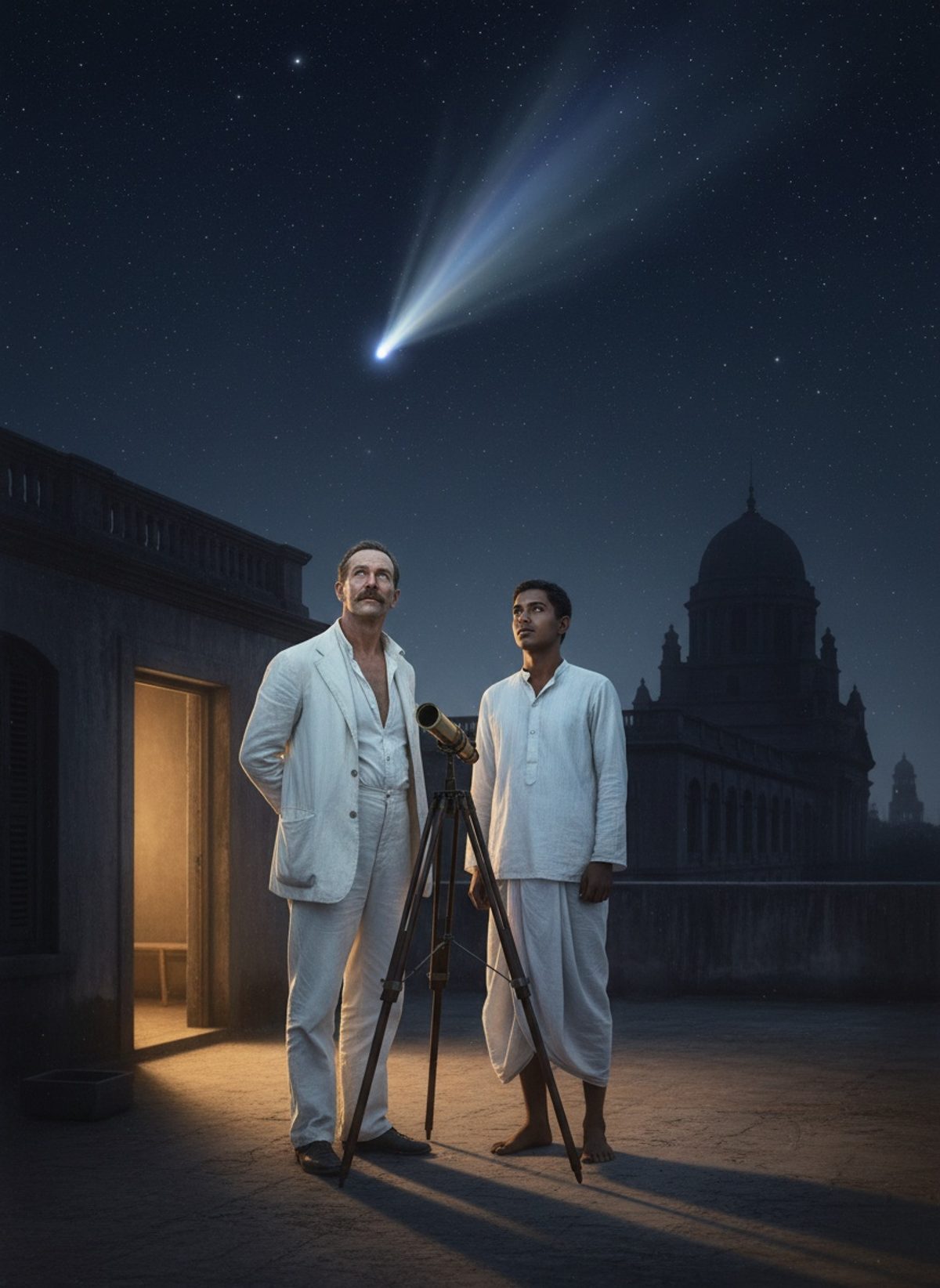
Halley's Comet had visited Earth's skies many times before. Yet, in 1910, its return set an empire quivering with anticipation and dread.
The Comet's Train of Awe and Terror
From the crowded streets of London to the quiet reaches of the veldt in South Africa, Halley's Comet stole the gaze of millions in 1910. But it was more than a celestial spectacle; it was a harbinger, an ill-omened visitor from the cosmos. Newspapers filled their columns with dire warnings, declaring the comet as harbinger of doom. Rumours ran rampant of poisonous gases in its tail, stirred up by sensationalist articles and nervous imaginations. Science had assured the public of their safety, yet fear took root, whispering through towns and villages in hushed, fretful tones.
The impending night was described with a fevered intensity. People peered into telescopes and squinted skyward through makeshift viewers, desperate to bear witness. As the comet's frosty light glinted, fear and fascination flickered in the same heartbeat. The empire, while vast and varied, found commonality in the shared act of looking up, holding a collective breath under a domed sky alive with streaking fire.
Colonial Reflections Under a Celestial Journey
In Calcutta, where the monsoon rains painted the city afresh each year, rooftop stargazers revealed their apprehension and awe. Halley's Comet traversed their skyscape, uniting nobles and commoners, clerks and coolies in a singular vision. The experience was more than a testament to astronomy; it was an event that punctured the normalcy of colonial rule with celestial wonder. The comet served as a reminder that no matter the reach of the British Empire, there were powers far greater and remoteness more profound.
Read next: When the Dhobi Wallahs Kept the Empire's Armies Clean
In East Africa, where missionary outposts dotted the landscape, the comet's brilliance ignited both curiosity and fear among the local populations. Missionaries penned accounts of villagers fleeing to the forests, convinced this fiery sword in the sky portended the world's end. Yet, as light danced on the horizon each night, resilience shone in those who learned this cosmic wanderer was more of a curiosity than a curse.
The Conversation at the Crown
Back in Britain, the event stoked fires of conversation at high societal levels—the parlors, clubs, and even the halls of power. The turn of the 20th century had brought burgeoning advancements and an empire's exploration of modernity. Yet, even as industry and innovation thrived, an ancient comet rendered such progress vulnerable to cosmic whimsy. Astrologers argued that great upheavals accompanied the comet, whispering fears of political unrest or ecological disasters. Scientifically minded aristocrats dismissed such talk in one breath, then whispered their own worries in the next. Perhaps the greatest power the comet held was in its ability to momentarily humble even the most stalwart of colonial attendees.
But it was not all dread. The comet inspired a resurgence in astronomical study, capturing the imaginations of England’s academic circles. Lectures proliferated, explaining this icy wanderer and lifting the shroud of superstition from its glowing tail. The comet was no longer just an object to be feared but an opportunity to understand the heavens.
Notes from the Edge of the Empire
In Hong Kong, past the junks and bustling harbors, the comet etched itself into the narratives of a city in flux. Residents interpreted the event through the lens of their traditions, seeking answers in the tea leaves and the doctrines of ancestors. While British dignitaries crafted official responses, the community privately considered the sign the comet heralded—from good fortune to impending change.
Read next: When Syed Ross Masood Made Forster See India Whole, 1906
In Cape Town, where the docks teemed with life and trade, whispers of Halley still swirled in tavern-side conversations. Though many took part in the vibrant commercial activity of the empire’s farthest reach, once-distracted eyes now turned upward. Here, amid the shadows of Table Mountain, the realities of empire met the mythologies of the sky, each nightly apparition a reminder of the liminality that enveloped life at the Empire’s edge.
The Empire's Shared Sky
April 1910 offered the empire an unforgettable nightly show, but more importantly, a unique opportunity for reflection—an examination of humanity's place beneath the cosmos. For the empire, stretched across a quarter of the Earth, the comet acted as a reminder of the shared sky under which its extraordinary complexity unfolded. While spreading influence and power, it was still bound to the same cosmic events visible from every corner of its dominion.
This celestial visitor, unchanged for millennia, transcended the divisions laid out in human affairs. It was indifferent to the treaties of men, unaffected by the ambitions of empire. And yet, by merely passing through a human sky, Halley's Comet prompted a recognition of the belittling vastness of the universe. This spectacle of 1910 subtly but profoundly unraveled a fundamental truth: the ultimate legacy of such events is not a tale of fear or folly but of unity—a glimpse for millions under the same astral dance.