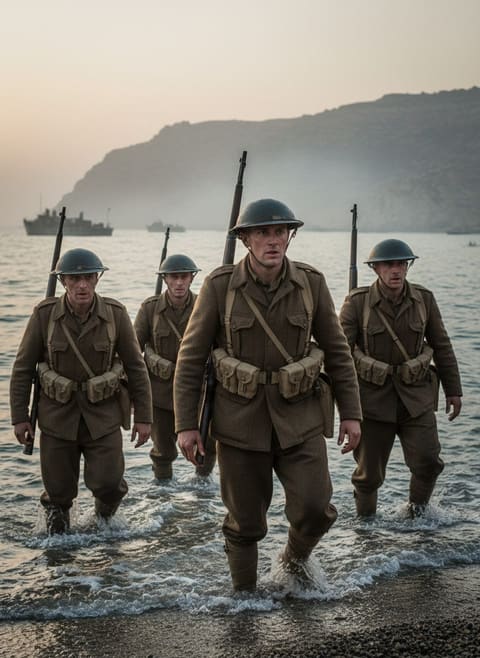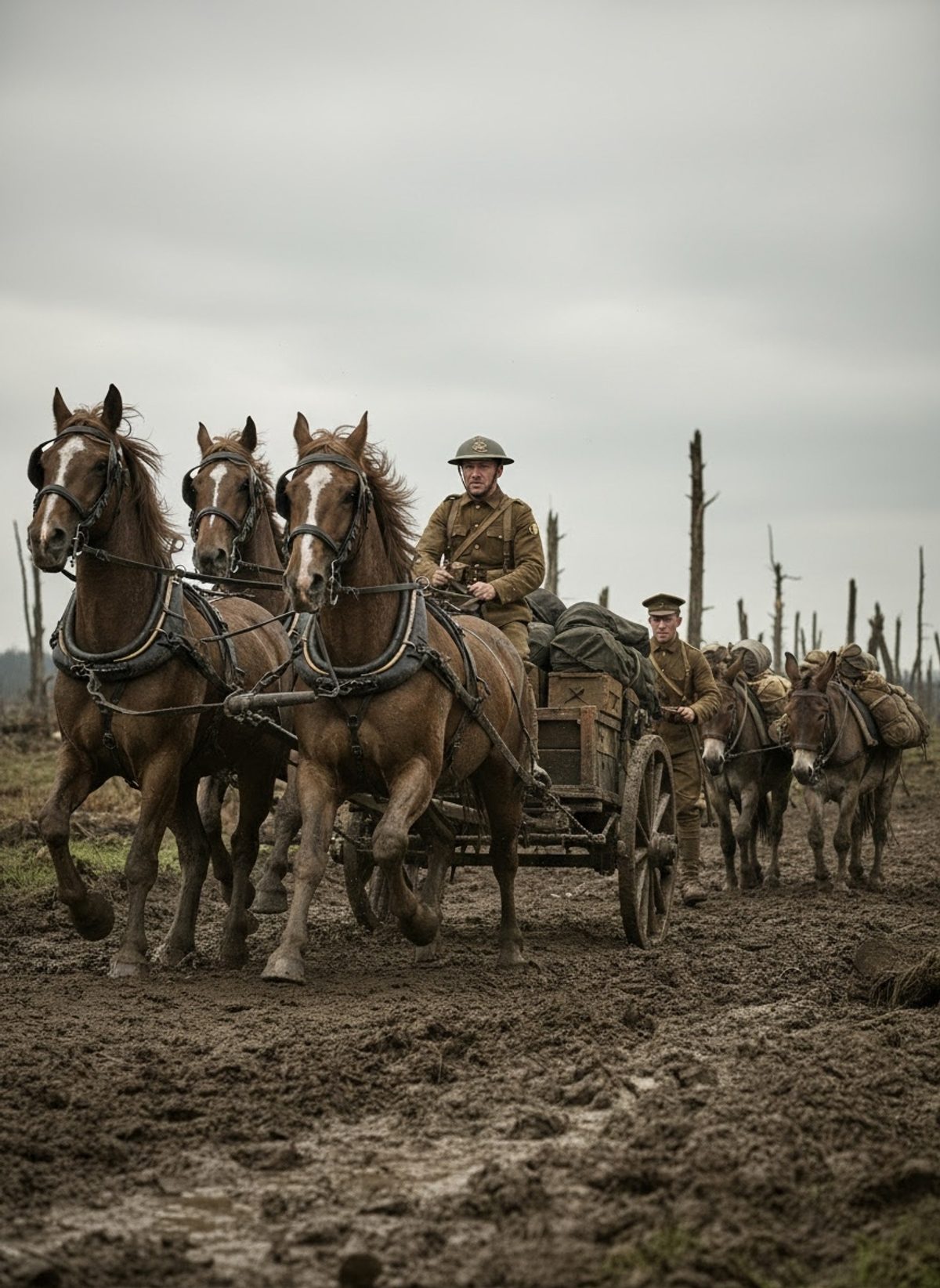
April 22, 1915. The sky over Ypres tinged with an eerie green as chlorine gas crept silently across the fields.
The Beasts of Burden: Unsung Heroes
In the relentless churn of the First World War, amidst the roar of artillery and the cries of the wounded, there were other sounds — the bray of mules, the heavy snort of horses, the cooing of pigeons. The British Empire mobilized an extraordinary army of eight million animals to aid in its war efforts, each a silent participant in a conflict of human making.
Horses, both noble and humble, bore the brunt of the burden. They hauled artillery pieces through the cloying mud of Flanders fields, their hooves stirring the mire as soldiers urged them on. These equine allies, often overlooked in their sacrificial service, were linchpins in maintaining the supply lines and moving heavy equipment where machines could not go. Against the horrors of trench warfare, their ability to carry out these crucial tasks made them invaluable, even as they faced untold risks.
The Unseen Sacrifice of Smaller Creatures
Beyond the horses, a diverse menagerie helped sustain the precarious balance of war. Pigeons, for instance, performed the high-flying duty of messaging — their small frames belied their critical importance. Radios frequently failed under the rigors of front-line life, leaving pigeon messengers as a final, earnest line of communication. With a homing instinct refined over centuries, these birds navigated battle smoke and enemy fire, their wings bearing the fate of countless lives.
Read next: When the First Poppy Fields Bloomed Over Flanders, 1915
Below ground, the canary’s song played an unlikely savior’s role. Deep within the dank, foreboding tunnels, miners listened for the sharp silence that might save their lives. Canaries acted as an early warning system against toxic gases that could fill subterranean passages. These tiny sentinels, with hearts full of life, sometimes became the war's unknown martyrs, their chirps a testament to the unseen dangers of war.
Dogs of War: More Than Companions
Dogs were more than loyal companions in the trenches; they were trained to be medics and sentinels. St. Bernards and German Shepherds often worked alongside medics, braving gunfire and chaos to locate wounded soldiers. Once found, they brought back identification tags or guided medics into the fray, becoming both guides and guardians amidst the carnage.
In another testament to their versatility, dogs carried messages and pulled sledges loaded with supplies over rugged terrain where vehicles failed. Their lower stature allowed them to navigate the war-torn landscape, where the perils of war loomed large yet were unable to deter their dutiful hearts.
The Empire's Dependence on Non-Human Allies
The scale of animal mobilization unveiled an aspect of warfare often underrepresented in history books. Packed into troop ships, animals crossed seas, affronted by the same hardships as their human counterparts. Yet, with no say in the political struggles that conscripted them, they delivered with unwavering loyalty.
Read next: When a Boy Carried His Tin Soldier Out of the Siege, 1900
Camels were tasked with navigating the harsh desert conditions, proving indispensable in regions where horses and mules foundered. These desert ships carried supplies across the arid theaters of the Middle East, sustaining the British forces under the blistering sun. Their efforts, silent and enduring, fortified the British Empire’s reach across disparate landscapes.
Reflecting on an Overlooked Legacy
When recalling the Great War, the human cost is often at the forefront. Yet, envision the magnitude of eight million animals thrust into service, each performing tasks beyond their choosing — a reflection on the breadth of war's reach. In trenches and deserts, skies and tunnels, their sacrifices tell a harrowing history of silent duty.
The story of these non-human participants in World War I urges us to contemplate the multifaceted nature of warfare, where human ingenuity and survival often depend on creatures without a voice or a vote. Amidst the chronicles of bravery and loss, we must remember those whose service went unspoken — the animals whose spirits once moved amidst gunfire, their story, one of silent consequence, etched into the annals of history.