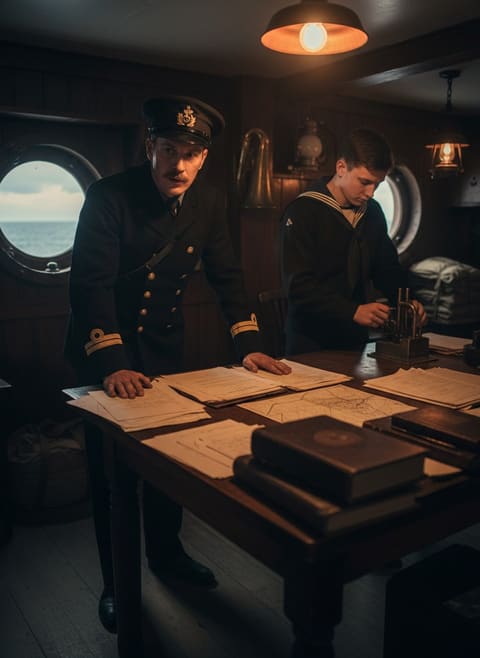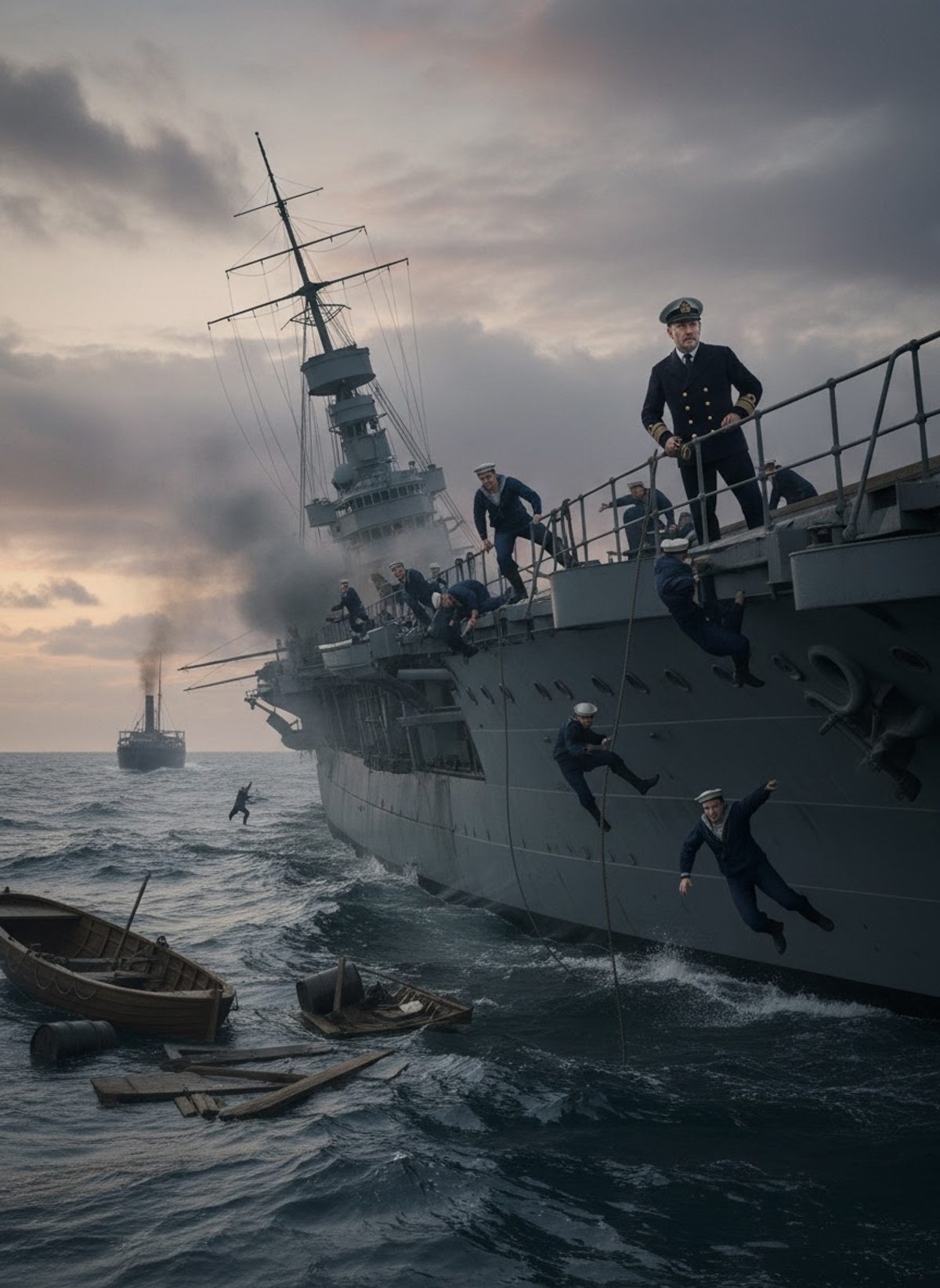
The deck pitched sideways under his feet as alarms blared urgently from every direction, a jarring chorus of metal and panic. HMS Courageous, an aircraft carrier of the Royal Navy, had been quietly pursuing her routine patrol under the grey September skies when suddenly the ocean erupted.
A thunderous boom tore through the vessel, sending a shockwave of fear cascading through her corridors. Men stumbled, mid-task turning to chaos, their hearts pounding with the dreadful realization that the ship was under attack.
Strike from the Depths
Two torpedoes launched by the German U-boat, U-29, tore into HMS Courageous's flank with an unrelenting precision, their icy harbingers of doom tracing silver paths beneath the waves. The first struck with a violent jolt, shattering the early evening calm and rending steel as if it were paper. Twenty minutes. That’s all it took for the mighty vessel to roll over, succumbing to her watery grave.
Inside, the men grappled with failing lights and rapidly rising water. There was no time for coherent thought, only instinct as lifeboats were cut loose amid the shouts of survival. What had been a deceptive sense of routine patrol rapidly disintegrated into the chilling grip of wartime reality. It was the first British warship lost in this new world conflict, a harrowing testament to the lurking dangers beneath the seemingly placid waves.
Read next: When Keith Park's Fighters Broke the Great Raid on London, 1940
As the ship tilted at an impossible angle, the desperate scramble for survival began. Men trapped below deck clawed their way through passages, the cold Atlantic already nipping at their heels. Above, the horizon was a mad dash of ships and men, the accompanying vessels hurtling into action as they fished survivors from the icy grip of the sea.
The Unseen Shadow
U-29 had been stalking HMS Courageous for over two hours, an unseen shadow biding its time. Beneath the surface, the crew of the U-boat felt the palpable tension; each tick of the chronometer echoing in their minds as they maneuvered into range. The submariners knew that success here meant a swift maneuver and a clean getaway in the frigid gloom of the North Atlantic.
The act of torpedoing a formidable British aircraft carrier was no small feat. It was a calculated risk, a dance of peril beneath the waves. The U-boat, with her slim profile and hardened crew, emerged briefly to seize the opportunity, sending the deadly gift of destruction across the void.
As chaos reigned on the surface, below the sea U-29 made her silent escape, the taste of a fleeting victory in her wake. She carried with her the legend of sinking the first Royal Navy ship of the war, a harrowing omen of the tactical shifts that naval warfare would undertake in the battle against the silent hunters.
Read next: When Vickers Built a Tank the Empire Could Actually Afford
The Survivor's Legacy
Among the wreckage and violent upheaval, one survivor's journey would carve a niché into history. Defying the odds, a single determined officer fought against the cruel sea, climbing out from the clutches of icy disaster. Though many men perished in those frantic minutes, this survivor would go on to command in circumstances more desperate than anyone dubbed possible.
Fate, it seemed, spared him not for longevity in peace, but for a more poignant purpose during war. Announcing his return to combat with audacity, he spearheaded what history remembers as one of the war's most hopeless attacks. Undeterred by the shadow of inevitable defeat, his leadership exemplified a courage paralleling the name “Courageous” itself.
The loss of HMS Courageous marked a stark reminder of the vulnerabilities hidden within the enormity of war. It wasn’t just the inversion of steel and the vast expanse of ocean that spelled defeat, but rather the stark human toll that echoed through families and nations alike.
As this narrative charts the collapse and resolve born out of Courageous's demise, it prompts a reflection on the fragility and fortitude intertwined in the human spirit. In moments of great peril, when fate carves its cruel path, it is the enduring tales of courage that surface from the darkness, casting light on the lost legends that textbooks may overlook but that history refuses to forget.