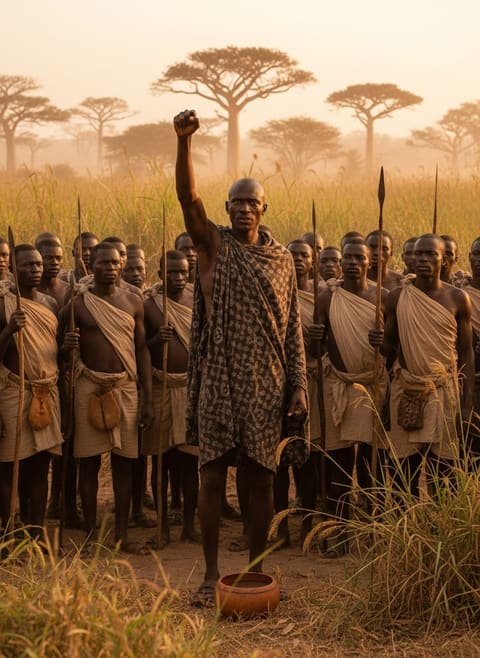
The clash of shields resonated through the clear African air as the Zulu warriors marched. The sun dipped low on the horizon, casting elongated shadows across the rolling grasslands of Zululand. Amid this sea of sinewy men, King Cetshwayo stood resolute. His gaze dissected the backdrop of the sky, now tinged with the orange blush of dusk. Nearby, the haunting call of a horn signaled to his impis—warrior regiments that stood ready to defy an empire.
The Ultimatum
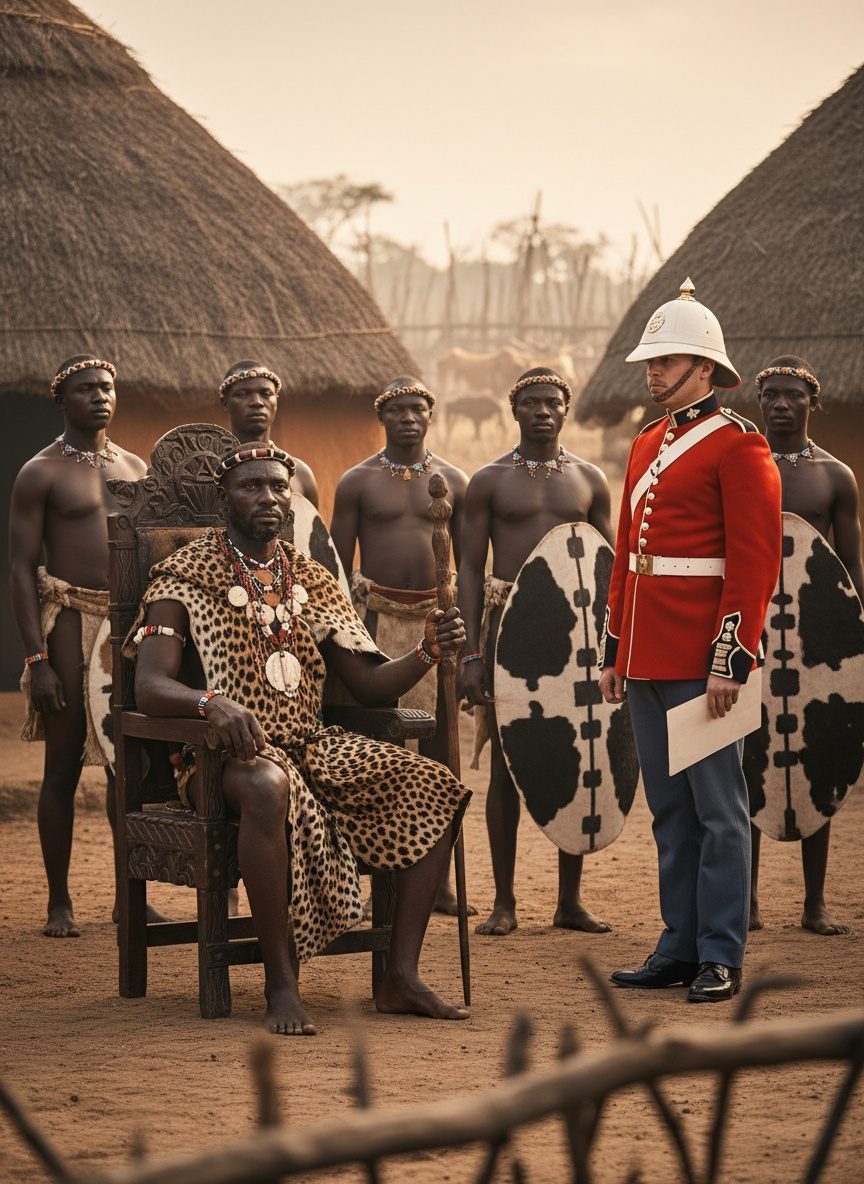
On a day steeped in tension, Cetshwayo kaMpande, King of the Zulu Nation, received a fateful message delivered under the guise of British diplomacy: disband your army. Disarm your nation. Submit, or face the consequences of defiance. Such were the terms dictated by a colonial power that vastly underestimated the spirit of a king devoted to his people's sovereignty. This was no simple directive; it was an ultimatum that threatened the very essence of the Zulu way of life.
To understand the gravity of Britain's request, one must consider the kingdom's core: a warrior society that trained its boys from youth, honing discipline, endurance, and, above all, a fierce sense of loyalty to their heritage. The Zulu army wasn't merely a fighting machine; it was the embodiment of their cultural identity. The demand to dissolve it was akin to asking the Zulu people to erase their collective memory.
Cetshwayo, a strategic thinker forged in the fires of his father Mpande's reign, was not one to rush into a decision. The Zulu king did not reply with words but rather opted for calculated silence. In that stillness, he called upon his generals, the architects of Zulu military prowess. He knew that his response would reverberate not only through Africa but also echo across the waves to the very heart of the British Empire.
Read next: When Disguise Carried a Fugitive Through Empire's Heart, 1876
The Muster of Warriors
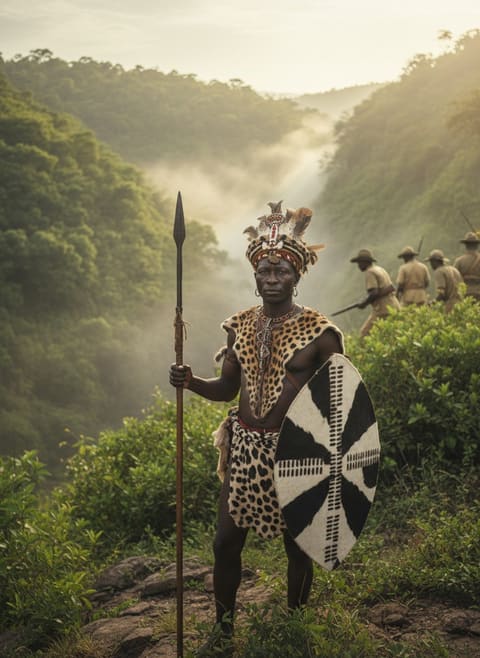
As the deadline loomed, the impis gathered at the Ndini kraal, their regimented formations casting shadows that danced between certainty and peril. These were men adorned in traditional attire, their bodies adorned with cow-hide shields and short stabbing spears known as iklwa, the weapons that had carved out Zulu legends in the mightiest of battles. They were the emissaries of defiance, each step they took echoing with stories of past victories and a future yet unwritten.
Cetshwayo, tall and imposing, moved among his men, connecting with them through brief nods and fierce looks that needed no words. His presence evoked courage among the warriors, infusing them with the resolve that only a leader who truly grasped the stakes involved could impart. He knew well the power balance, of course; Britain, with its modern rifles and organized formations, possessed technological superiority. Yet, Cetshwayo harbored an advantage that lay within the heart—a profound understanding of terrain, guerrilla tactics, and the undying loyalty of his men.
Across the verdant plains lay the British Empire, attempting to spread its indelible mark upon Africa. However, to Britain, the Zulu nation's collective might was an enigma, one not easily cowed into submission. Cetshwayo's decision to send his warriors to the border was both an act of daring and a signal that echoed his unyielding stance. The empire's underestimation of Zulu tenacity would soon become painfully evident.
The Battle That Reverberated
And so, under an unyielding sun, the first match struck the fire of what would become known as the Anglo-Zulu War. Neither side anticipated the seismic shift of power dynamics that followed. The turning point was the encounter at Isandlwana, where the Zulu impis overwhelmed the British forces, marking one of the empire's most infamous military defeats.
Read next: When Gate Pā Swallowed the Empire's Guns, 1864
The battle played out against a sprawling backdrop of rocky outcrops and open felds, a natural amphitheater for the spectacle of combat. The Zulus executed their pincer movement with precision, the traditional "horns of the buffalo" strategy shattering British lines. Even as volleys of musket fire rained upon them, the Zulu warriors moved swiftly and silently, their focus unbroken.
For Britain, the loss was both tactical and symbolic. It was one thing to wage wars upon distant nations brandishing swords and shields, and quite another to understand a people who fought with the spirit of their ancestors within them. The flaw in Britain's imperial arrogance lay in its failure to recognize that the Zulu resistance wasn't just resistance to colonial rule; it was a unified assertion of identity and pride.
Though short-lived, Cetshwayo's defiance opened up dialogues, not just of military strategy but of cultural recognition overflowed from the confines of Zululand. His refusal to kneel demonstrated that strength is sometimes forged not in the corridors of modern warfare but through the bond of ruler and ruled, of story and reality. It signaled to the world that the ambitions of empires could, at times, be checked by the resolve of a single, united nation.
The bold stance taken by Cetshwayo is a vivid reminder from history: In the dance of power dynamics, every step speaks volumes, and sometimes the rhythm of resistance beats mightier than the drums of war. The Zulu Kingdom’s stand remains a testament to the unwavering courage that shapes legends, even those too often left untold in the annals of textbooks.