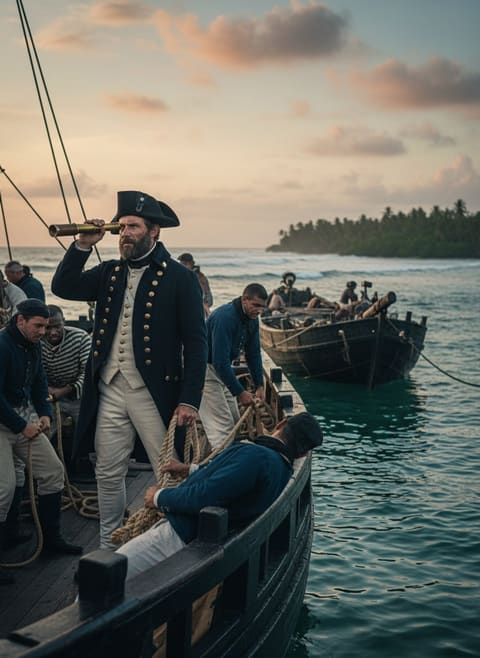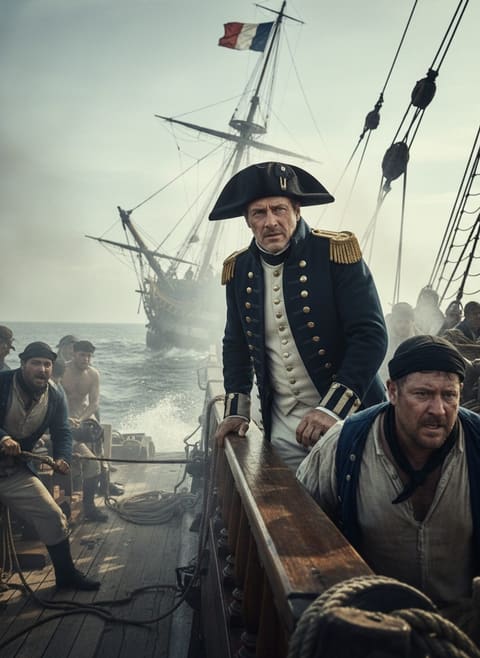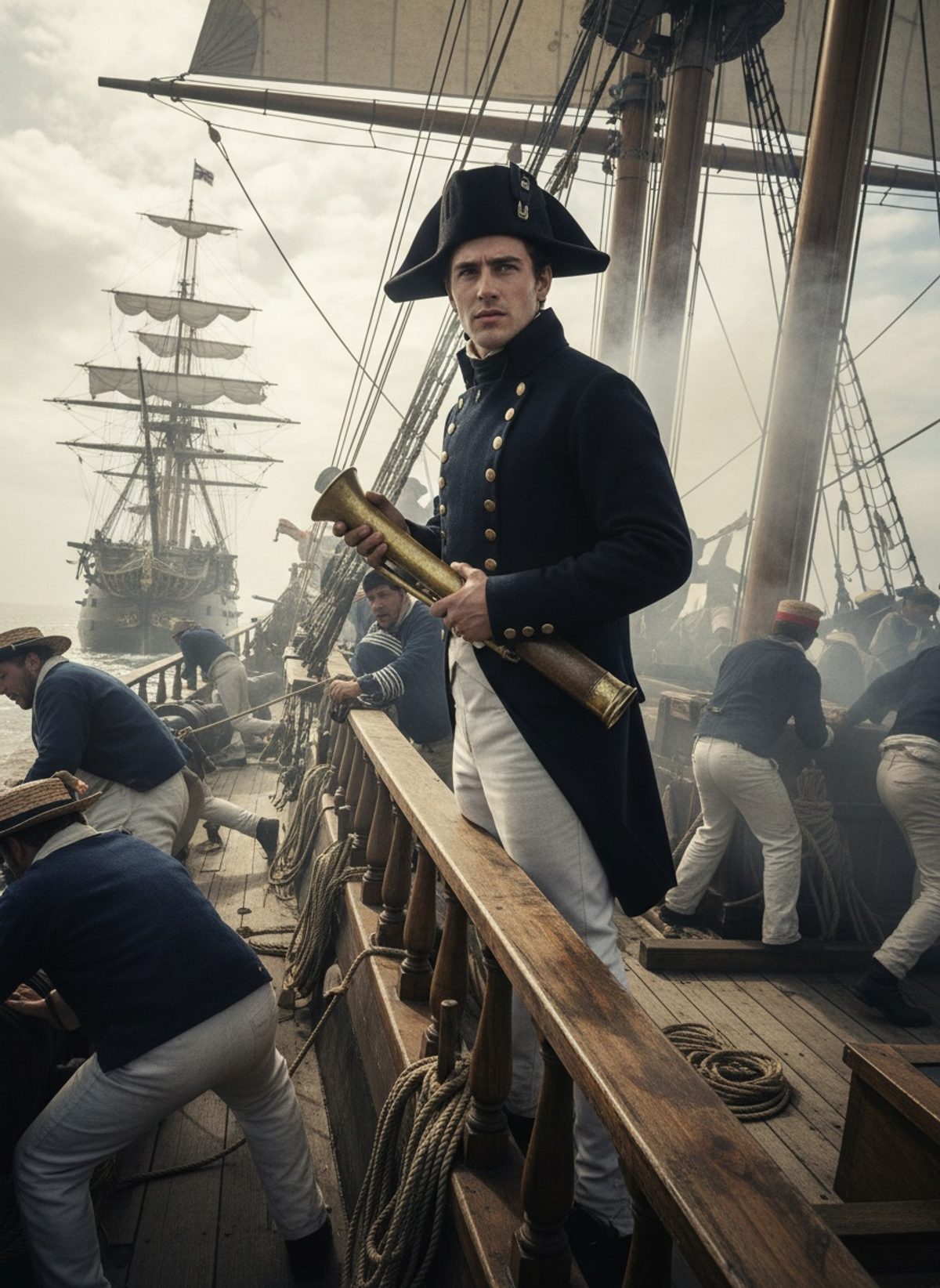
The Spanish fleet had thirty ships. Lord Cochrane had twelve guns.
In August 1801, the waters off the coast of Spain rippled with tension, the horizon dotted with the silhouettes of formidable Spanish warships. Into this nearly impenetrable net sailed the HMS Speedy, a compact sloop of war that a less audacious captain might have turned away from such grave odds. But Thomas Cochrane, the young but intrepid captain of the Speedy, was not one to shy away from a challenge that promised glory—or disaster. Known for his cunning as much as his courage, Cochrane engaged in an act reminiscent of David's challenge to Goliath, a gambit so brazen it would ensure his place in history—and frighten his foes into fevered whispers.
The Daring of a Young Captain
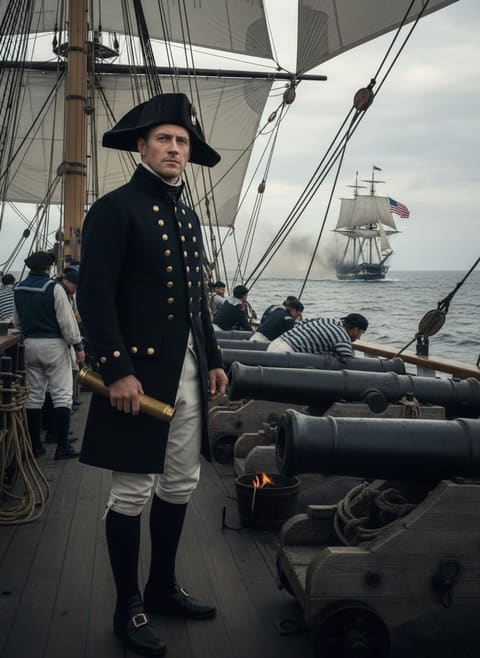
To understand the magnitude of Cochrane's folly—or brilliance—one must first consider the technicalities of naval power in 1801. A mere sloop like the HMS Speedy, armed with twelve small guns, was scarcely a match for the gargantuan ships of the line that formed the Spanish fleet, many carrying upwards of seventy guns. Such vessels could reduce Cochrane's little ship to driftwood in minutes. Yet it was precisely this disadvantage that Cochrane used to his favor. With nothing to lose, and a penchant for tactics that bordered on the piratical, Cochrane chose audacity over retreat.
Cochrane's naval career was characterized by a flair for unconventional tactics. As he approached the Spanish fleet, maintaining an air of deceptive confidence, he enacted a plan that seemed almost delirious to those who later heard of it. Using the Speedy's small size to maneuver through the fleet with agility, he managed to disorient the larger, slower vessels, appearing from unexpected quarters. This agility was matched only by the boldness of a decision that would become infamous in naval history: he targeted the Spanish xebec frigate El Gamo, a ship three times the Speedy's size, armed with five times the firepower.
Read next: When HMS Dreadnought Sailed and Made Every Warship Obsolete
Unlikely Victory Against All Odds
Cochrane's attack on El Gamo was executed with surgical precision. Like an orchestrator commanding a symphony of chaos, he navigated the Speedy closer to the Spanish giant, minimizing the enemy's firing arcs while maximizing his own potential for delivering crippling blows. The battle was not one of mere pistols and cannons but of nerves and genius plotting. Cochrane personally directed the speed, movement, and rhythm of the assault, commanding his crew in tones both urgent and assuring.
The engagement was fierce and intimate; sailors clawed and fought amid the chaos, the Speedy's crew utilizing grappling hooks to disastrous effect on El Gamo. Then came the pivotal moment that turned intrigue into legend: Cochrane, with the drama of a stage actor, convinced the Spanish captain that his ship was surrounded by British reinforcements. It was an ingenious gamble, a bluff supremely audacious in its execution.
Amidst the smoke and confusion, the Spanish spirits broke. To their disbelief, their flags were lowered, and El Gamo was in Cochrane’s hands. The record of his exploits soon crossed oceans, shaking perceptions and strategic assessments throughout navies around the world.
An Escape as Daring as the Assault
Yet, capturing El Gamo was only half the achievement. Cochrane had to escape with his prize itself. The Spanish fleet, realizing too late the slight to their honor, mustered a relentless pursuit. But once again, Cochrane's mastery of deceptive maneuvering, coupled with the Speedy's nimble frame, proved too much for the lumbering giants. He sailed through the fingers of Spain's grip, vanishing into secrecy with his spoils, leaving his frustrated foes to mull over their folly.
Read next: When Pellow Was Taken by Pirates at Age Eleven, 1715
This episode was not merely a lesson in naval warfare but a revelation of character. Cochrane's abilities extended far beyond the strategic; they were a psychological prowess that manipulated not just the adversarial tactics but also the very perceptions of his foes. His reputation heightened, he became a shadowy legend upon the waves, a narrative amalgamation of so many romantically remembered heroes of bygone eras.
The Legend Left Untold… Until Now
What compels us to remember Cochrane's daring dash into peril so fondly is more than the simple admiration for military prowess. It is the spirit of defiance itself—a reminder of the improbable that history loves. In a world constrained by the predictable, his refusal to comply inspired a generation of naval officers and is whispered in tales of fiction, his escapades influencing the characters of Frederick Marryat, C.S. Forester, and Patrick O'Brian, who muscled Cochrane's spirit into our literary mythology.
Lesser-known tales of unwavering nerve, like Cochrane’s venture into the lion’s den, forge the chapters of history that textbooks rarely capture. They educate not just with facts and dates but with the essence of what it means to face insurmountable odds with nothing but ingenuity and valor. Cochrane's story matters because it shows the daring dance that is strategy and the fine line between audacity and recklessness. His legacy is a testament not merely to victory but to the possibilities endemic to those with the fortitude to challenge the goliaths of their time and live to sail another day.