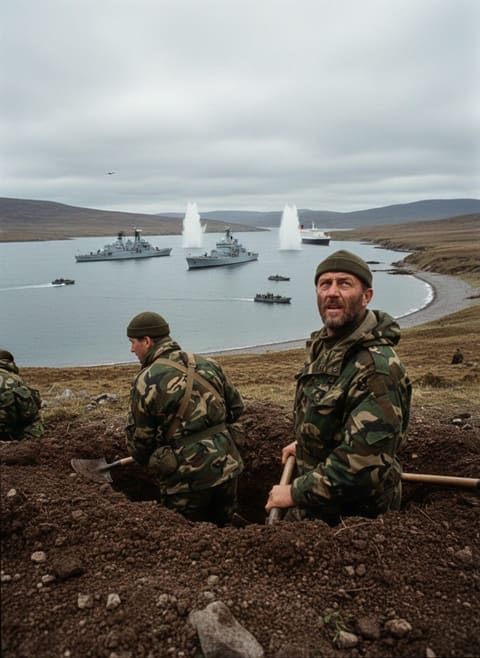
April 25, 1982. The biting wind howled over the rugged, icy wilderness of South Georgia, whipping through the jagged peaks and rugged valleys. In the midst of this forbidding landscape, the White Ensign once again unfurled, reclaiming its rightful place among the islands of Britain's far-flung empire.
A Reluctant Beginning
The story had begun weeks earlier, on April 3, 1982, when Argentine forces audaciously seized control of South Georgia, sparking an international crisis and stoking the fires of conflict over the Falkland Islands. The British response was swift and resolute. Assembling an elite task force, Britain set upon the mission of reclaiming the frigid islands, a symbol of British sovereignty in the remote South Atlantic. Operation Paraquet – a name transformed by the troops to "Paraquat," after the noxious weedkiller – would become a testament both to military ingenuity and to the unpredictable fury of Mother Nature.
The task force included 132 Royal Marines alongside the seasoned Special Air Service (SAS) and the Special Boat Squadron (SBS). Their mission was clear: take back what was claimed without warning by Argentina. These troops were no strangers to inclement weather, having previously trained in the harsh winters of Norway. However, even they could not have foreseen the trials that lay ahead. The operation was ordered by Admiral John Fieldhouse from Northwood Headquarters, dictated by the political will of a government pressed for decisive action. The commanding officer on the ground was Major Guy Sheridan of the Royal Marines.
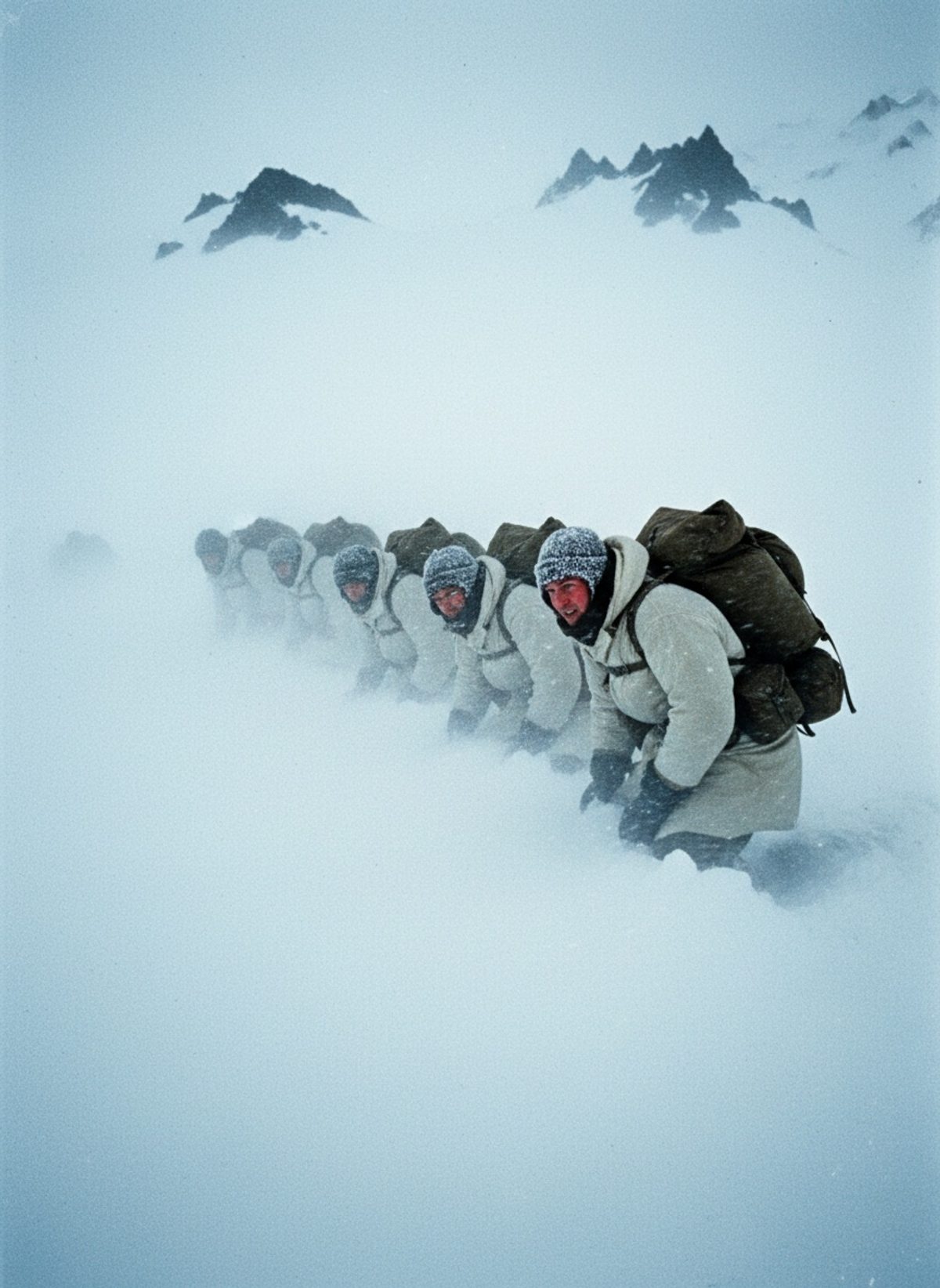
The SAS selected a daring infiltration path via the Fortuna Glacier, located eight miles west of the Argentine positions. Captain Gavin Hamilton, leading 15 men of the Mountain Troop, flew into this path on April 21, 1982. The journey was fraught with peril; 100-mile-per-hour winds tore at them relentlessly, freezing temperatures bit into their very bones, and beneath them, the glacier's hidden crevasses lay waiting like traps. Environmental casualties imminent. The message from Hamilton to his superiors was clear; nature itself was the enemy here. An evacuation was urgent, and imperative.
Read next: When Pellow Was Taken by Pirates at Age Eleven, 1715
The Ice's Unforgiving Grip
Responding with haste, three Wessex helicopters were dispatched into the inhospitable elements to retrieve the beleaguered men. Two Mk5s from the tanker RFA Tidespring and one Mk3 from the destroyer HMS Antrim were called into action. Despite the pilots' best efforts, the merciless whiteout conditions led to disaster – one helicopter crashed upon encountering disorienting conditions, its pilot deceived by the opaque veil of snow swirling around them. The men from this aircraft were hurriedly transferred to the two remaining helicopters, but fate struck again. The second helicopter met a similar fate, striking a ridge and leaving its occupants helpless upon the frozen, hostile terrain.
In a stroke of heroism and relentless determination, Lieutenant Commander Ian Stanley piloted Antrim's solitary remaining Wessex into the chaos to retrieve the stranded SAS men and aircrews. Overcoming failure upon failure in trying to land, Stanley finally succeeded on his third valiant attempt. The helicopter, loaded beyond its recommended capacity, clawed its way through the storms back to Antrim, carrying both hope and its precious cargo against all odds. For this act of courage, Stanley was later awarded the Distinguished Service Order, a recognition of bravery beyond the call of duty.
Meanwhile, the SBS faced its own trials. On April 22, at Hound Bay, the SBS attempted to execute their operation. Hindered by winds that thwarted air reinforcements, HMS Endurance had to close to within 800 yards of the coast to land the rest of the troop by Gemini inflatable boat. The SBS troops advanced on foot, reaching the foot of Nordenskjöld Glacier, before headwinds and drift ice forced the mission to be called off.
The Battle Unfolds
As the seas and skies taunted the assembled British forces, the SAS regrouped and launched another daring incursion under the cover of darkness on April 22/23. This time, five Gemini boats carried the Boat Troop, led by Captain Tim Burls, into South Georgian waters. An unforeseen gale complicated their mission. Two boats floundered, engines refusing to cooperate amidst the icy waves. Yet determination prevailed; one boat was successfully recovered by Antrim's Wessex, while another display of skill and fortune saw the second boat restart and return safely to the Busen Peninsula. At last, three Geminis arrived at Grass Island, a cold bastion from which to observe the enemy positions near Stromness.
As plans developed, HMS Endurance's Wasp helicopter airlifted the scouts from Grass Island. Unyielding, Captain Brian Young of HMS Antrim, commanding the task group, pressed on. On April 25, British forces caught the Argentine submarine Santa Fe on the surface. British helicopters disabled her that fateful morning, and that afternoon the garrison at Grytviken surrendered a brief 15 minutes after encountering M Company of 42 Commando, led by Captain Chris Nunn. The Argentine garrison at Leith capitulated the following day, firmly securing South Georgia for its rightful holder.
Read next: When the Great White Whale Carried 3 Commando Brigade to War, 1982
The simplicity of the signal that radiated home belied the gravity of what had been achieved: "Be pleased to inform Her Majesty that the White Ensign flies alongside the Union Jack in South Georgia." A tale of audacity, dogged perseverance, and strategy against adversity, Operation Paraquet reasserted British resolve and symbolized the indomitable spirit of its forces at the edge of Empire.
The story of South Georgia stands as a vivid illustration of human will against the harshest of environments. It serves as both a military triumph and a reminder of the complexities inherent in holding territories that seem as much mythical as they are strategic. As the White Ensign billowed defiantly in tandem with the Union Jack on those desolate shores, it heralded both victory and a reflection on the costs and challenges of sovereignty in distant lands. This extraordinary tale that unfolded beneath South Georgia's ominous sky speaks not just of battles won, but of men who matched nature itself in grit and fortitude.
Last week, British paratroopers rehearsed a landing on the Falklands, the first such exercise there in years.
Part 9 of 24: One Falklands story a day until Remembrance Sunday