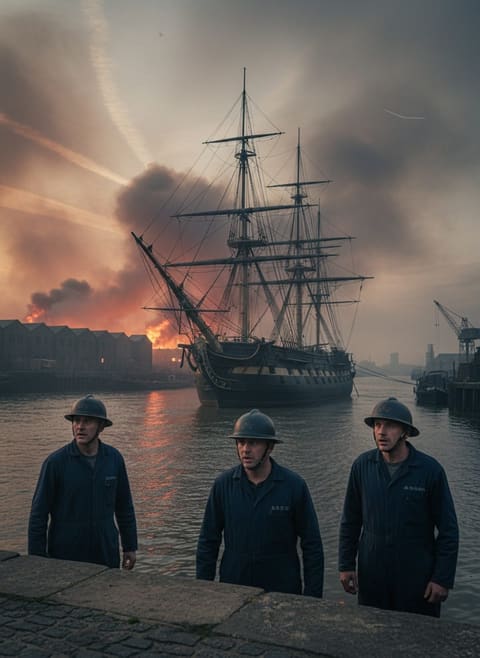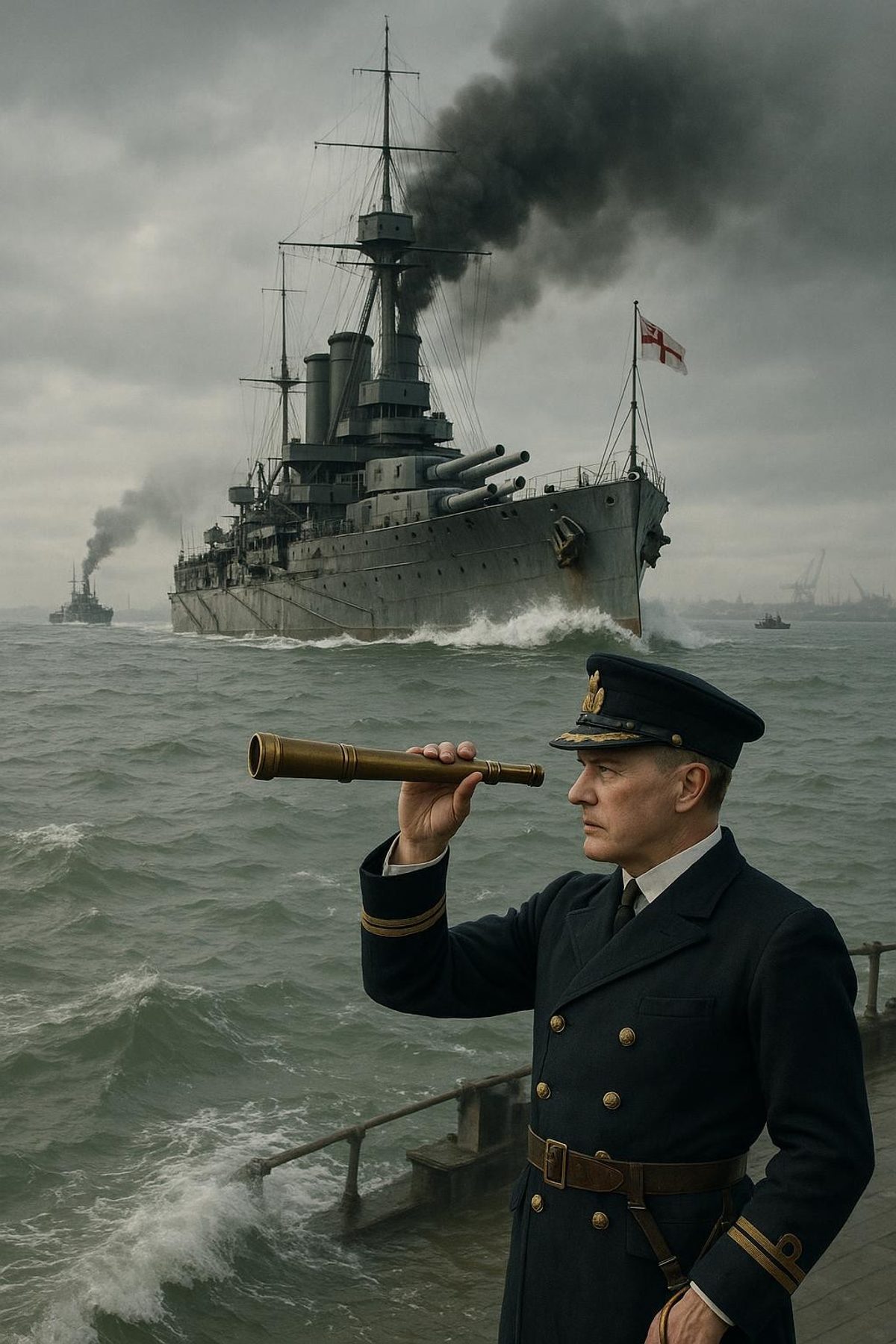
February 1906. The earth shook as steel giant HMS Dreadnought slipped into the icy waters off Portsmouth.
The Dawn of a New Era
In February 1906, the British Royal Navy unveiled a radical innovation that would reverberate throughout naval history: the HMS Dreadnought. This ironclad leviathan was a staggering revolution in ship design, fundamentally rewriting the very rules of sea power. What made Dreadnought so extraordinary was not just its sheer size or strength, but its audacious prowess and speed—a combination that rendered every existing battleship obsolete in the blink of an eye.
Until the emergence of this powerful warship, the seas were ruled by pre-dreadnought battleships, which were typically armed with a mixture of large-caliber and smaller, faster-firing guns. But Dreadnought was different; it was armed exclusively with uniform-caliber, heavy 12-inch guns mounted in five twin turrets, a design that favored long-range shelling over the cacophony of mixed-caliber artillery duels.
A Leap in Naval Design
The HMS Dreadnought was the brainchild of the famed and assertive Admiral Sir John "Jacky" Fisher, who had a vision for restructuring the Royal Navy. His plan was bold and risky, yet brilliantly executed. Under his helm, construction of Dreadnought was remarkably swift, completed in just under a year—an engineering marvel at the time. The ship's propulsion system also marked an impressive leap forward, utilizing steam turbines that not only reduced vibration but propelled the behemoth to speeds unheard of at the time for a ship of its size: around 21 knots. It was swifter and more stable than its predecessors, capable of turning the tide in naval engagements.
Read next: When the Great White Whale Carried 3 Commando Brigade to War, 1982
Fisher's gamble materialized into an icon of technological dominance, and Dreadnought set the stage for an intense naval arms race. Nations across the globe suddenly found their navies outdated, and the competition to build even more advanced warships escalated rapidly, pushing the limits of engineering and geopolitical strategy.
The Global Ripple Effect
The ripples caused by Dreadnought's launch extended far beyond Britain's shores. The world watched in equal parts awe and alarm as the balance of power tilted. In mere months, naval strategies were recalibrated, shipyards fired up with feverish activity, and new schematics hastily drafted. The Germans, for instance, responded with their own series of dreadnoughts, a move that intensified the rivalry leading up to World War I.
The concept of the dreadnought quickly became a benchmark for naval superiority, its very name synonymous with power and dominance at sea. Countries scrambled to construct similar vessels, sparking what was arguably one of the most formidable arms races in history. The pace at which this naval revolution advanced was dizzying, changing the strategic landscape of global sea power almost overnight.
The Heart of a Leviathan
Inside the steel hull of HMS Dreadnought lay a labyrinthine network of advanced machinery, a testament to innovative marine engineering of the era. The turbine engines, a cutting-edge marvel, coupled with a robust armor plating and centralized fire control systems, made Dreadnought an intimidating and highly efficient war machine.
Read next: When Broke Sailed Into Boston and Dared Them to Fight, 1813
Though celebrated for its firepower, Dreadnought’s design wasn’t solely about aggression. Its incredible speed allowed for swift strategic maneuvering, enabling it to outflank slower adversaries and control the engagement's tempo. It projected an aura of invincibility, sending a clear message to the world of Britain's maritime might and determination to remain at the forefront of naval technology.
The Legacy of the Dreadnought
The launch of HMS Dreadnought didn't merely make waves—it reshaped the ocean. As stark a departure from tradition as it was, the dreadnought would soon be joined by bigger, faster, and even more formidable iterations. Nonetheless, this singular ship remains etched in history as the vessel that propelled military strategy into the 20th century.
In its wake, the dreadnought sparked not just technological arms races but a new way of thinking about deterrence, sovereignty, and power. It ushered in an era characterized by rapid innovation and continuous competition, setting a precedent for how nations approached warfare at sea. To understand how a single warship could make every other afloat outdated is to witness not just a shift in naval engineering, but a transformation in global geopolitics—a ripple effect that resonates to this day, echoing the age-old truth of how technology shapes the course of human conflict.