Edward Seago wasn't a soldier. Yet he ventured further into wartime chaos than most who wore a uniform ever did.
Between Canvas and Conflict
Edward Seago’s journey from the quiet landscapes of Norfolk to the thundering decks of a Royal Navy destroyer is a tale of dual worlds colliding. Known primarily as a landscape artist whose brush captured the gentle English countryside, Seago’s wartime art painted a different reality—one filled with smoke, steel, and the vast, roaring silence of the North Atlantic. But he wasn’t one to shy from contrast.
His entry into the world of war came unexpectedly. Britain’s involvement in the Second World War had shifted priorities, focusing the nation’s resources and creative efforts on the war effort. While Seago had already made a name for himself with exquisite circus scenes and serene pastoral depictions, the call of duty beckoned beyond the British Isles. Rather than stay tethered to the familiar, Seago accepted a commission that placed him amidst the relentless might and fury of anti-submarine warfare.
The Artist at Sea
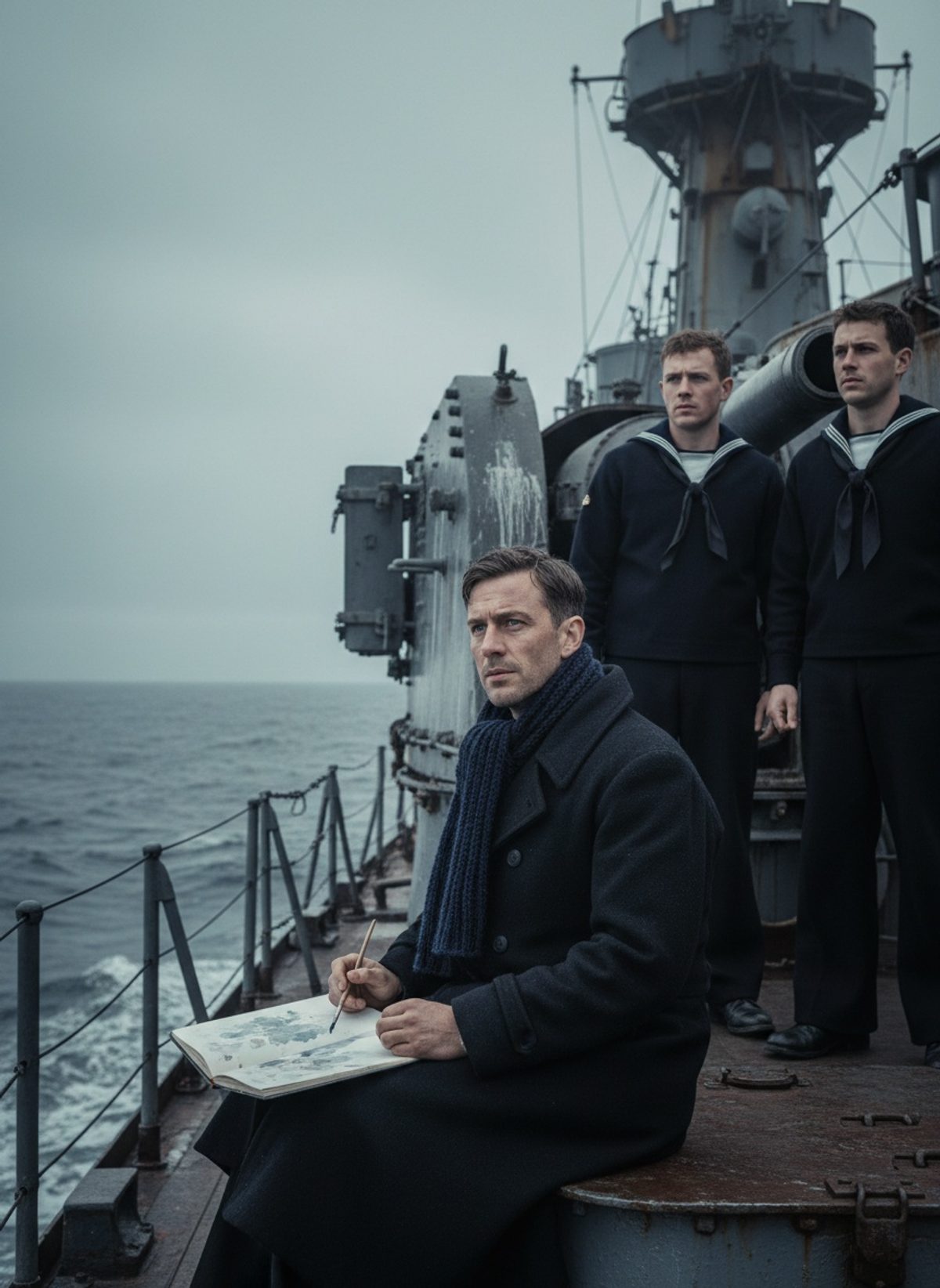
Placed aboard a Royal Navy destroyer, Seago found himself in an environment defined by constant movement and vigilance. The North Atlantic was both cruel and beautiful, an ever-shifting canvas waiting to be immortalized. Here, the ocean wasn’t merely a subject; it was an active player in a drama of survival and ingenuity. Days on the ship were marked by long stretches of monotony punctuated by intense bursts of action as the destroyer hunted German U-boats.
Read next: When HMS X24 Slipped Into Bergen and Left a Gift, 1944
Amid this relentless vigilance, Seago wielded his paintbrush with an adeptness that translated the chilling vastness of the ocean onto his canvases.
With the spray of the sea on his face and the sound of engines thrumming through his feet, he captured the intricate dance of light and shadow on waves, the ominous skies, and the hustle of men engaged in naval choreography. His works conveyed not only the vastness of the Atlantic but also the human resolve etched into each ship’s course.
Scenes of Silent Devastation
Seago’s portrayal of war extended beyond the open ocean. He traversed bombed towns and war-torn streets, sketchbook in hand, documenting the impact of conflict on land. His images of ruined cities told stories that words often failed to convey—stories of lives interrupted and landscapes scarred by the throes of warfare. Yet, his art refrained from sensationalism. Instead, it captured the quietude and dignity of places and people reshaped by violence.
His ability to find beauty amid destruction was uncanny. Seago transformed charred buildings into powerful symbols of endurance, where the absence of life spoke as loudly as presence. His artistic eye recognized the stark contrasts—where the darkness of rubbled alleyways met the flickering hope of rebuilding efforts. He painted these scars with a sensitivity that invited viewers to see past warfare’s raw wounds to the latent stories beneath the surface.
An Unlikely Chronicler of War
Edward Seago might not have been a soldier by trade, but his contributions to wartime art were deeply soldier-like in their dedication and focus. Through his art, he offered a lens into the duality of war—where the same waves that provided a stage for his artistry were also arenas of conflict and survival. He preserved moments that otherwise would have been fleeting, capturing them with a clarity and precision only an outsider could provide.
Read next: Matilda II vs Panzer III: Which Tank Would You Choose?
His works opened windows into the complexities of wartime existence—celebrating courage, acknowledging loss, and questioning the motive of man’s quest for domination. Seago’s wartime paintings resonate with a sense of intimacy, as though he allowed viewers to lean in and listen to the whispers of history rather than the shouts. He painted not just the sights, but the underlying hum of perseverance and humanity’s relentless will to endure.
The Legacy of Seago's Brush
Edward Seago’s art from the Second World War endures as a conduit for understanding a part of history often overshadowed by monumental battles and military strategies. He was present at the heart of conflict, yet he stood slightly apart, bestowing upon him a unique perspective. As a result, his works serve as a visual narrative of the war’s quieter, but no less significant, moments.
In an era where technology threatened to overshadow human narratives, Seago’s paintings remind us of the pervading simplicity within complexity. They are everlasting emblems of those lost threads of history, inspiring reflection on the layers of conflict seen through the eyes of an artist whose heart beat to the rhythm of both peace and turmoil.
In translating war’s chaos into profound art, Edward Seago gifted the world a different kind of memory—one not dictated by historical precedent but one birthed in emotion and the universal language of imagery.