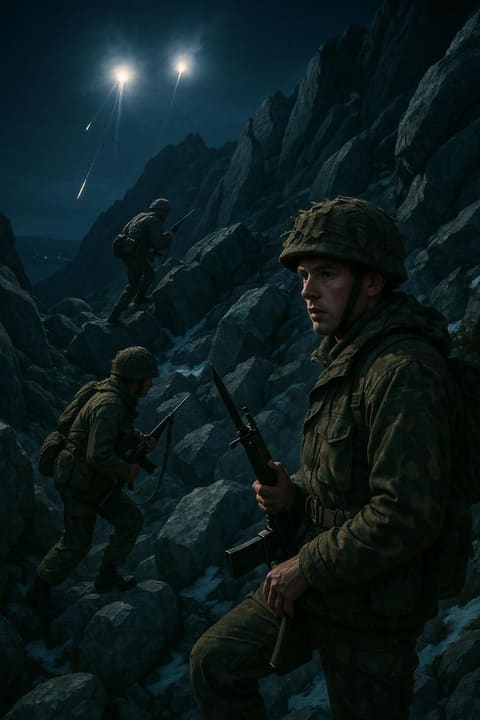
The Battle of Loos was just another chapter in the massive and brutal book of World War One. Yet amid the gas and gunfire, the strains of a lone bagpipe changed its course.
The Fog and the Fury
September 1915. The small mining town of Loos in northern France found itself unwillingly painted onto the blood-splattered canvas of World War One. As the sun peeked tentatively through the muddy grey of dawn, it revealed a landscape marred by shells, trenches, and a grim determination on both sides. The Battle of Loos was underway, distinguished by Britain's first use of poison gas; the same lethal blanket intended to choke the enemy now crept back on its own men due to an unforgiving wind.
The 7th King’s Own Scottish Borderers, part of the British 15th Division, soon found themselves ensnared in this toxic shroud. A greenish-yellow cloud seeped into the trenches, and chaos threatened to overturn carefully laid military plans. Men, rendered mindless by fear and gas, coughed and retched as tears carved tracks down filthy faces. Discipline, the lifeline of any military regiment, began to fray.
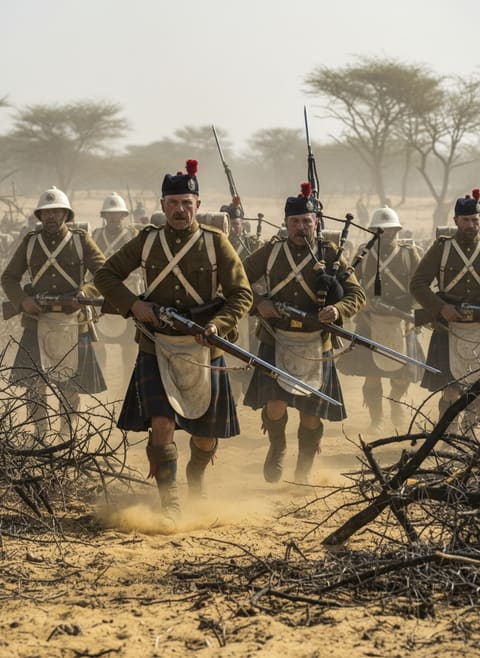
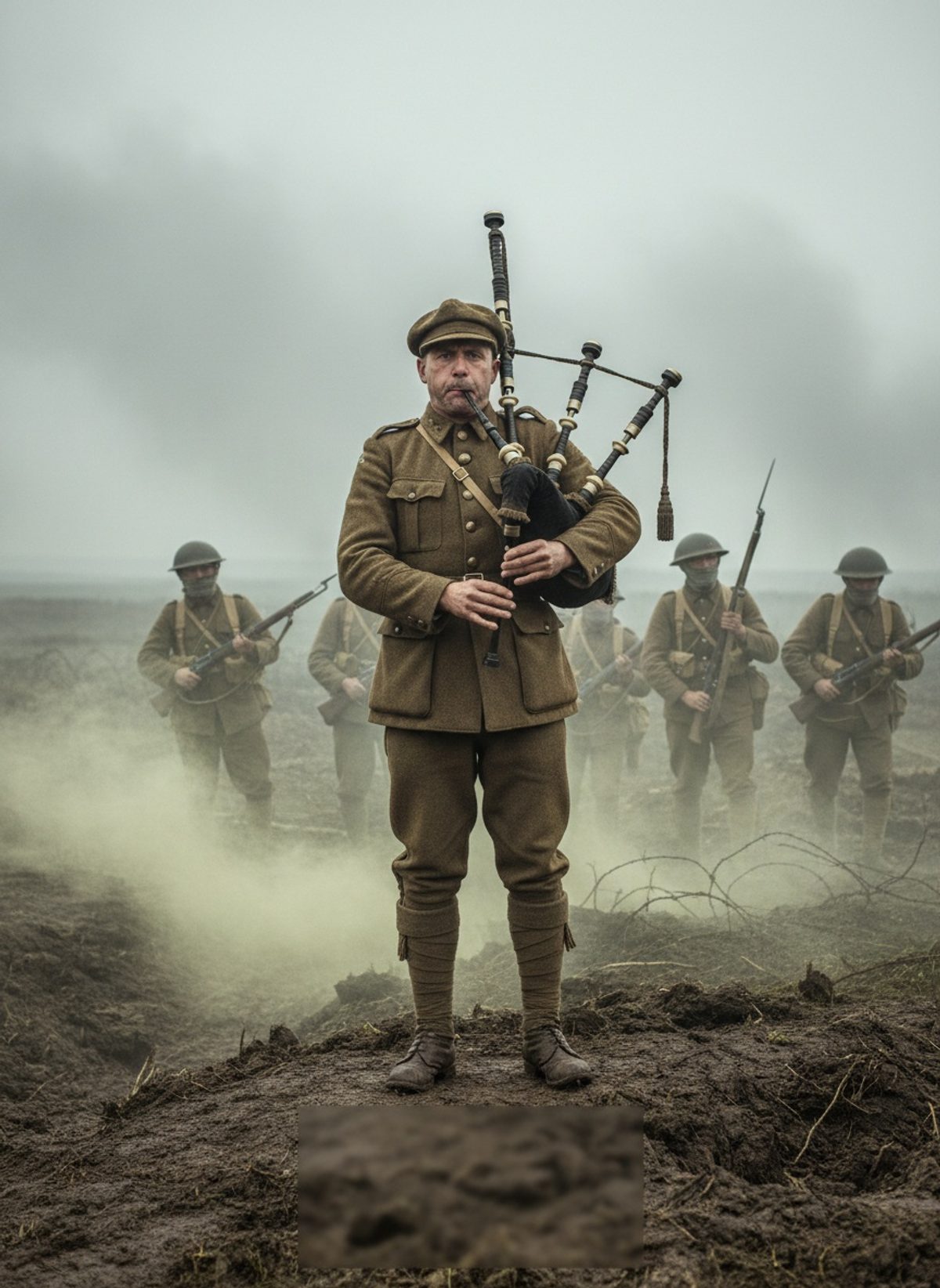
It was then, as negativity nudged at the soul of every soldier present, that one figure broke the horizon. Piper Daniel Laidlaw of the King’s Own Scottish Borderers was never made for hiding. Without fanfare, he climbed onto the parapet, ignoring the deadly din of gunfire that cracked the air like a malevolent whip. And that’s when he played.
Read next: When Diwali Lit Up the Trenches of the Western Front, 1915
The Call of the Pipes
The sound of bagpipes has long been intertwined with Scottish and military tradition, no melody more iconic than the rallying notes of "Blue Bonnets Over The Border." As Laidlaw's fingers danced over the chanter, the sweet and sorrowful strain cut through chaos like a knife, a sound both alien and deeply resonant against the thunderous backdrop of warfare.
In that moment, the valor and heritage of an entire regiment reverberated through his tune, coercing worn-out bodies to stand where the mind hesitated. The melodies echoed along the trench line, traveling from man to man—an unwritten command that rose above the clamor of fear. With a backdrop of piercing bullets and men shouting curses and prayers, Laidlaw showed that a bagpipe could weather the storm.
No longer dazed casualties but soldiers once more, the men of the 7th King’s Own Scottish Borderers surged up from the trenches, following Laidlaw’s commanding call. Reluctance gave way to resolve; panic transformed into purpose. Over the top and into the maelstrom they charged, urged on by Laidlaw’s defiant piping, as if their very souls were tethered to the ancient drone.
Read next: When Sergeant Ian McKay Charged the Guns on Mount Longdon, 1982
A Legacy in Notes
The subsequent charge at Loos driven by the wild, unyielding skirl of Laidlaw’s pipes did not rewrite the course of the war, but it marked a singular moment of human courage and cultural resonance. Daniel Laidlaw’s unwavering stand earned him the Victoria Cross, one of Britain's highest military honors. A citation noted his "conspicuous bravery and great devotion to duty" on a field that drank deeply of blood and valor in equal measure.
Beyond the medals and accolades, Laidlaw's piping at Loos underpinned the power of music and tradition in battle, demonstrating a timeless truth: even in the mechanized hellscape of World War One, humanity could rise from the trenches. In choosing to stand when others faltered, Laidlaw played not just notes, but the chords of history, weaving together folklore, martial spirit, and a raw defiance against the odds.
This story serves as more than a stirring battle anecdote; it is a reflection on the role of culture and individuality in the crucible of conflict. During those moments at Loos, Laidlaw’s pipes transcended their Scottish roots, their impact felt across the spectrum of human emotion in war. They serve as a reminder that amidst even the most harrowing circumstances, one person’s courage can shape the course of events and etch harmony onto the cacophony of battle.