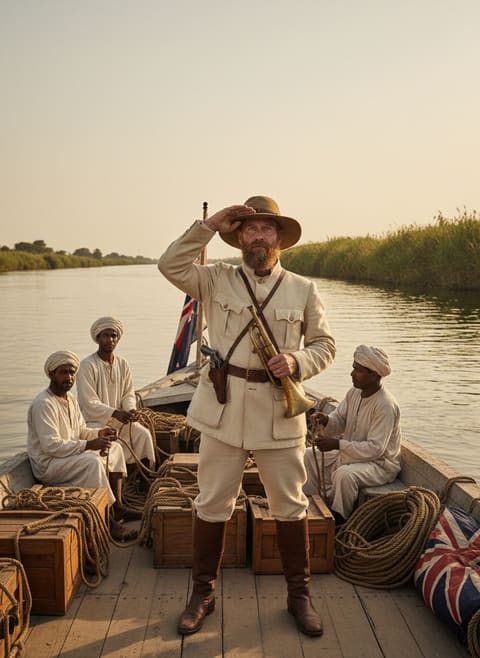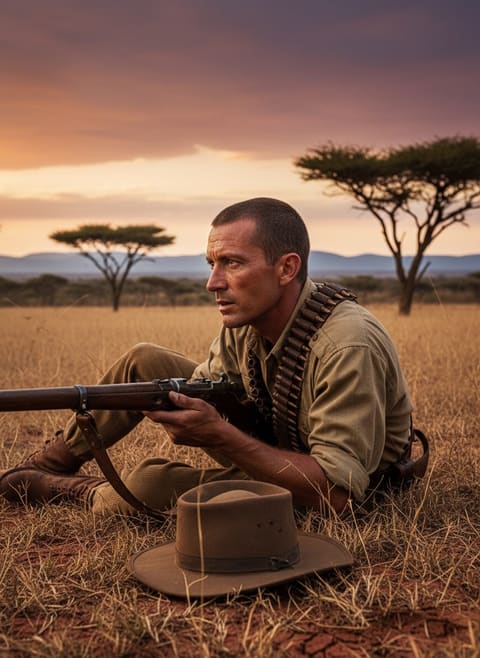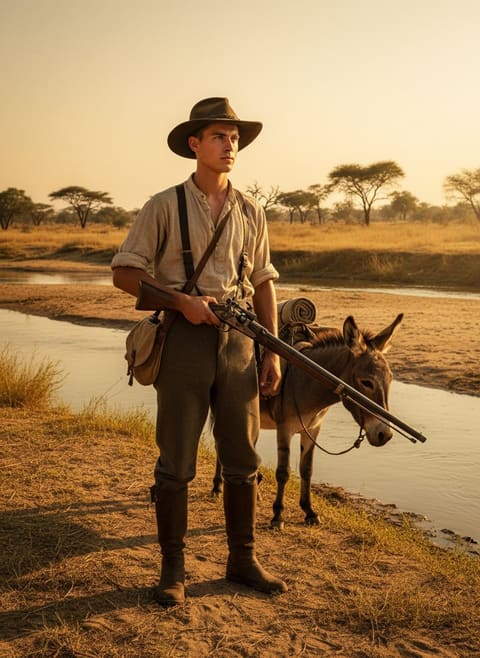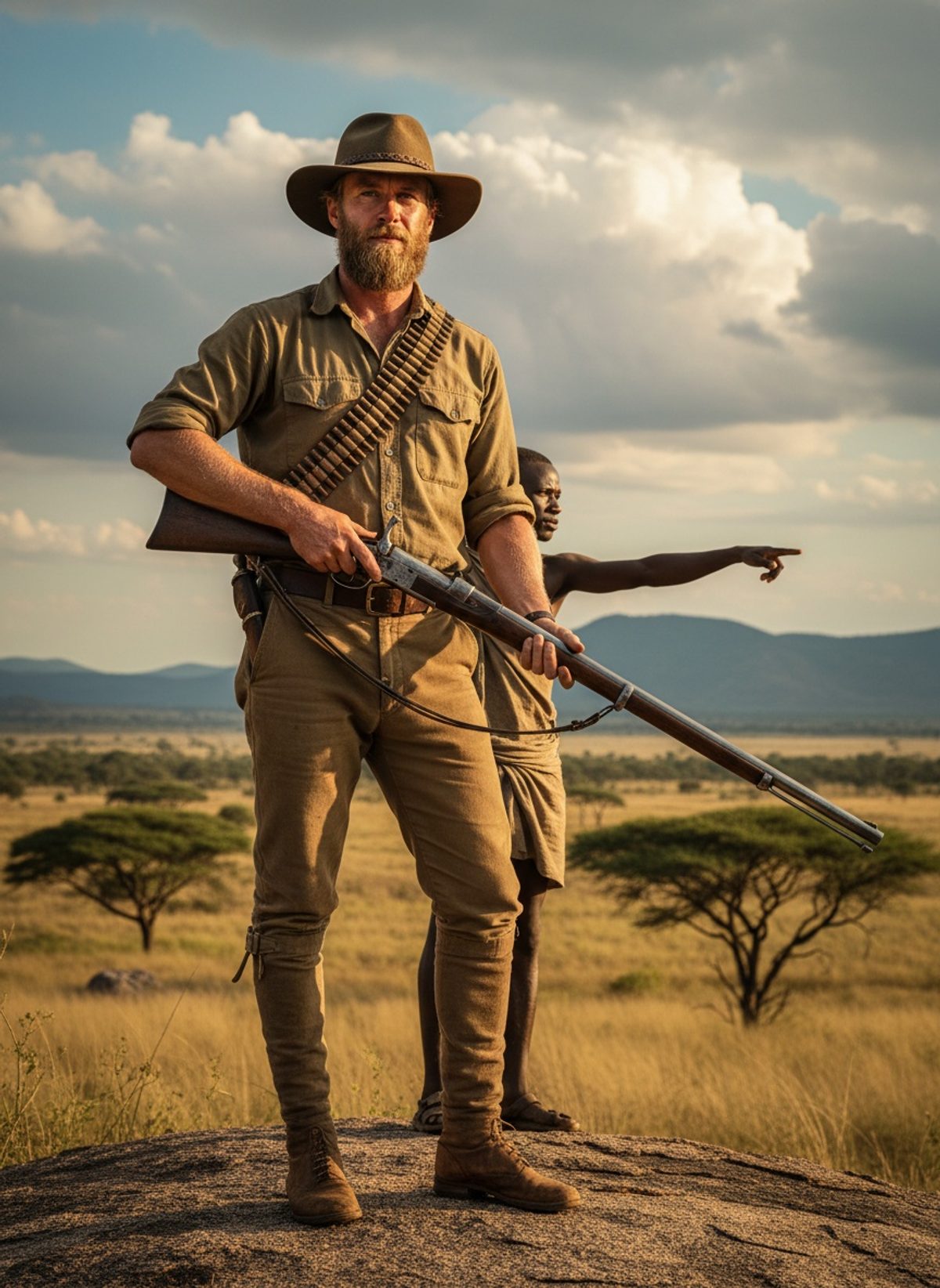
The grass whispered like a chorus of secrets as Frederick Courteney Selous moved silently through the savannah, the air thick with the scent of rain-soaked earth and hidden wonders. He paused, his keen eyes tracing the path of a herd that had recently passed, the signs decipherable only to one who had truly become part of the land. Here, in the untamed heart of Matabeleland, he was not just a man—he was an extension of the wilderness itself.
The Pathfinder's Promise
Frederick Selous was no ordinary explorer. While others sought fame and fortune beneath Africa’s relentless sun, Selous pursued something greater: knowledge and truth in its rawest form. At a time when European powers carved up Africa with greedy hands, this hunter turned pathfinder navigated terrains that swallowed lesser souls whole. He moved through the continent not with an army, but with an uncanny understanding of its rhythms.
Matabeleland bristled with tension. The Ndebele warriors, proud and fierce, stood sentinel over their lands. They were a people whose lives were interwoven with the land they called home. Yet it was through Selous’ rare blend of diplomacy and respect that he crossed their territory—a feat few Europeans could boast. He carried with him a promise as weighty as the rifle at his side: the British Empire would follow where he walked, but it would be his path alone that they trusted to light the way.
Through Uncharted Territory
Wading across rivers yet unnamed by the hands of conquest and tracing the shape of shadows in the moonlit savannah, Selous was both the author and the protagonist of his epic odyssey. No map detailed the ridges he memorized; no guidebook chronicled the paths he blazed through this vast, vibrant theater of life.
Read next: When Frederick Lugard Lit a Lamp in the Dark at Nikki, 1894
The landscapes of Matabeleland sang their wild songs, harmonizing the roars of lions with the whispers of ancient winds. In this place where horizons stretched into oblivion, Selous found home—a sanctuary of discovery that few would ever dare to claim. It was amid these vast frontiers that he squatted low, tracing his fingers through the rich dirt as though reading the stories of creation inscribed within.
Selous was not merely charting geographical landscapes; he was weaving between the delicate patterns of diplomacy and danger. The Ndebele, astute and observant, watched this lone European with a mix of caution and curiosity. To them, he was an enigma swathed in khaki and mystery, a man who could talk to the very nature surrounding them. A trust, however tenuous, was forged, not with promises of conquest but with respect that transcended the language of empires.
Blazing Trails for Empire
With each step, Selous was etching a path through time—one that would eventually be paved by forces far more imperial than his solitary figure could ever conjure. As Britain's interests grew hungrier for African soils, Selous’ reconnaissance would prove invaluable. His words, scribbled on aged parchments, became the blueprints from which the Empire's ambitions unfolded in Matabeleland.
The essence of Selous’ accomplishment lay not just in the paths he charted but in the relationships he nurtured. He stood as a bridge between two worlds—a channel through which British influence seeped into realms that were steadfastly their own. His accounts and observations opened an entire region to global consciousness, a blend of foresight and vision that few of his contemporaries possessed.
Read next: When Frederick Lugard Marched Into Buganda Alone, 1890
Yet, it was not military might or the weight of an empire-alone that forged the way, but rather the legacy of a man who wore the cloak of the hunter while wearing the heart of the adventurer. Frederick Selous laid down a map not only on canvas but in the minds of those who dared to follow—a guide for those who aimed to conquer not through might but through understanding.
The Echoes of the Untold
As history marched onward, swaths of Africa's ancient landscapes were transformed by the hands of time and colonization. Selous, too, would become a relic of a bygone era—a character so intricately linked to the soul of a continent that his legacy could not be neatly analogized or contained.
For the people of Matabeleland, the incursion of the British marked a seismic shift, an encounter that was both anticipated and feared. They witnessed the coming of industry and empire through paths etched by a single man, whose life was a tapestry of contradictions—hunter, pathfinder, bridge-builder, and conqueror.
The story of Frederick Courteney Selous in Matabeleland is a narrative whispered by winds that still blow through ancient baobabs and echo through endless savannahs—a tale of discovery and transformation, of boundaries and bridges. It beckons us to look beyond the textbooks, to find the legends they left out, and to reflect on how a solitary man's journey could pave the path for a nation.