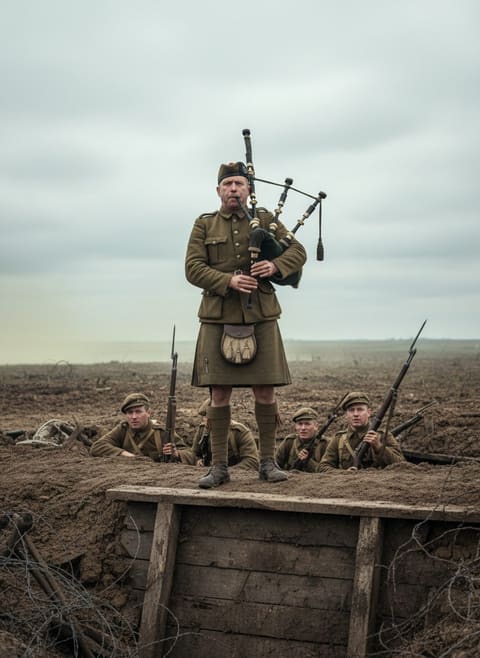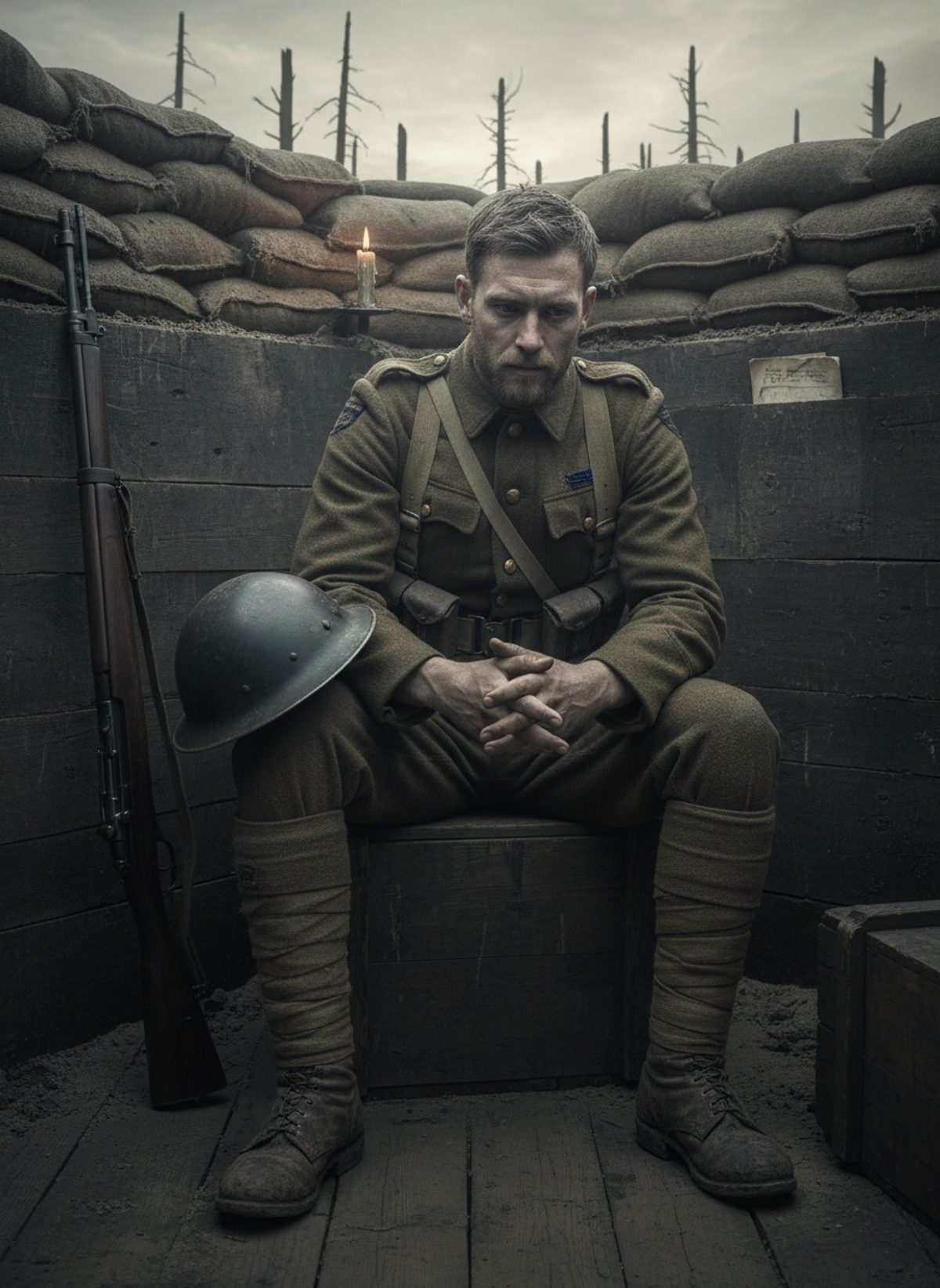
The British Army prided itself on discipline and loyalty. Yet, in 1917, it turned the rifles on its own men. During World War I, across the unforgiving trenches and no man's lands of the Western Front, the British soldiers faced trials not of their making, battles not of their choosing. They endured the brutalities of war that stripped layers of humanity from all who dared to march into its maw. The Battle of the Somme had already cemented itself in history as a monument to human endurance and tragedy, but as these soldiers waded through the mud, gas, and death, another battle awaited them—a battle against their own judgments, against the very structure that pervaded their sense of duty.
Shellshock—today recognized as post-traumatic stress disorder—was then little more than cowardice, at least in the official lexicon of the era. Those who faltered were said to lack the stomach for the fight, their shaking hands and haunted eyes dismissed by an unforgiving chain of command. The phrase “lions led by donkeys” has been used to describe the British infantry—brave men led by out-of-touch officers. Yet such simplification ignores the crushing complexity of war, the split-second decisions forced by artillery explosions and the omnipresent fear of gas, leaving little room for humanity.
The death sentences meted out by court-martials were chillingly swift, often conducted in mere minutes. Imagine a soldier who survived the Battle of the Somme, an ordeal that claimed thousands in a single day, now standing before a tribunal, accused of desertion or cowardice. The echoes of shells still resonated in his mind, but the grim judgment was handed down with dispassion: death by firing squad. What choice did he have but to claw at any possible explanation? His case left as a sad asterisk in the military archives, marked only by the conviction that he failed where others had succeeded.
No trial back then recognized the state of a mind unmoored by constant bombardment. The emptiness that follows an explosion was not just an absence of sound; it was the hollowing of the person. Those prosecuted could barely articulate what had broken inside them, let alone mount a defense against charges that demanded bravery against an invisible tormentor. Each life extinguished by the dawn's judgment was a decision enacted under the pretense of morale maintenance and operational efficiency—a grim calculus that sought to prevent the spread of fear or dissent but left a legacy of injustice.
Read next: He Was 58, Dying, and He Still Led the Charge
The British Army believed in the harsh lessons that firing squads were meant to teach. A row of soldiers, much like the accused, tasked to become the instrument of discipline, often found the burden almost unbearable. Told in whispered tones, it was rumored among the ranks that one of their rifles would hold a blank round, sparing the conscience of every soldier present—a measure of humanity in a ritual lacking any comfort. Perhaps an acknowledgment, however slight, of the heavy demands placed upon them.
In these trials, the facts were sometimes largely irrelevant. Accused deserters and those suffering shellshock shared destinies shaped not just by their actions but by a rigid system unbending to individual needs. While the war itself demanded innovation in warfare, from tanks to airplanes, the same adaptability failed to extend to army justice, still mired in outdated concepts of honor and shame. The steel and firepower of mechanized war had advanced, but the abstract walls of military doctrine remained stone.
Read next: He Stepped Forward in Lucknow and Offered His Life
One could wonder about the futures those soldiers never saw. Perhaps they might return to the fields and factories of Britain, forever keeping the secrets of their fear and pain. Perhaps they might contribute to a nation reshaping its identity in the post-war world. Yet, for these men, there would be no repatriation, no solace of homecoming parades. Their stories faded, their names uncarved on the grand routes of commemoration.
The echoes of their fates carried through decades, unaddressed until much later, when change finally came inspired by the retrospective realization of war's true legacy. The posthumous pardon sought by family members and advocates served to rectify these historical wrongs, a process that was as much about admitting error as it was about reclaiming dignity untimely lost. At last, official acknowledgment of the irreversible impact of war on the human psyche opened the door to considerations of forgiveness and healing.
In that final embrace of understanding, Britain extended not just an apology but a testament to the lessons learned from those haunting catacombs of history. It shone a light on the silent battlefield within, inviting reflections on all systems built on rigid perceptions, where the inability to adapt proves as deadly as any enemy's shell. In remembering those condemned to die by their own side, modernity confronts the uncomfortable truth that true honor does not come from stoic adherence to outdated doctrines but from the bravery to recognize our shared fragility.