The men who captured it were just regular infantry. But they unearthed an instrument that could topple the behemoths of war.
The Shattering Summer of 1918
With the relentless rumble of artillery overhead and the heavy clatter of infantry boots on churned earth, the summer of 1918 marked a turning point in the First World War. As part of the Hundred Days Offensive, a campaign designed to end the conflict, the New Zealand Division surged forward across the torn tapestry of the Western Front. This tumultuous drive saw these men traverse the scarred landscapes of northern France, where every patch of earth told tales of valor and devastation.
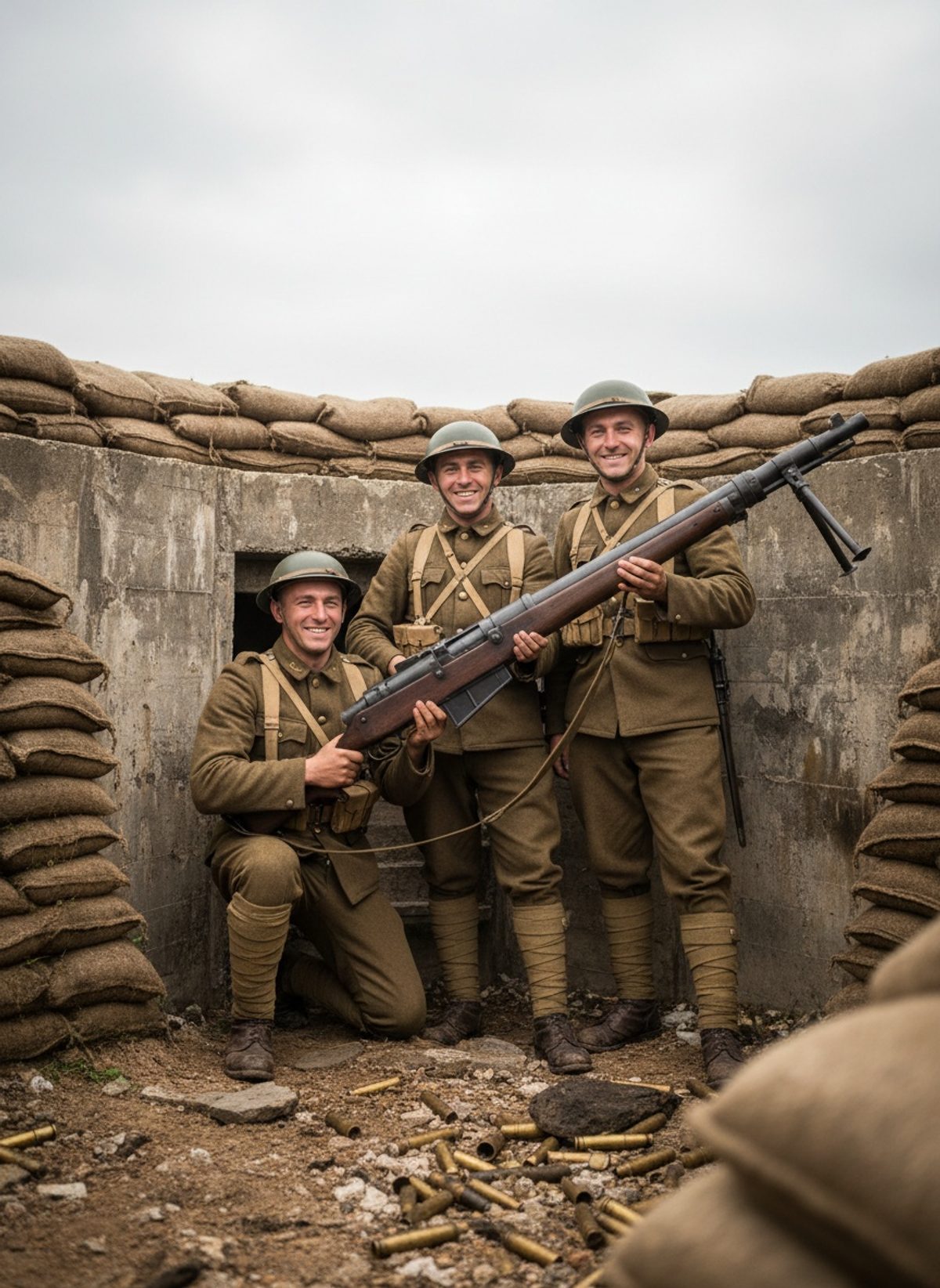
Within this chaos lay the village of Grévillers — a nondescript name for an otherwise ordinary location, yet one that stood on the cusp of becoming extraordinarily significant. As New Zealand troops advanced, leaving a trail of overcome defences in their wake, they stumbled upon a German position. Among the debris of victory and defeat lay a peculiar discovery: a Tankgewehr M1918, the world's first purpose-built anti-tank rifle.
This weapon, initially forged in the German industrial heartlands, represented the dawning of a new kind of warfare. In a world dominated by the might and menace of tanks, this rifle was a weapon that promised to change everything. Its capture in the latter days of August foreshadowed not only the added potency to the New Zealanders' arsenal but also symbolized the crumbling might of the German war machine.
Read next: He Was 58, Dying, and He Still Led the Charge
From the Drawing Board to the Battlefield
The Tankgewehr M1918 wasn't just a rifle; it was a herald to future warfare. Conceived in response to the Allies' burgeoning use of tanks, it was crafted to tear through the armor that shielded these mobile fortresses of war. Standing over six feet long and weighing nearly forty-one pounds, the weapon was unwieldy by design, fashioned to pierce the armor that tipped the scales of battlefield advantage.
The men of the New Zealand Division who seized this behemoth must have gazed upon it with a mix of wonder and wariness. None of them likely understood the precise engineering prowess that went into its creation. They only knew that it was a harbinger of the might that could be wielded when steel met ingenuity. When news of this capture reached the command, it wasn't just celebrated as a victory of arms but as a revelation of German desperation. For here was proof that German industry was straining under the demands of a prolonged conflict—pushing out innovations faster than they could be employed effectively.
Cameras and Cunning: Capturing the Moment
As soldiers raised the captured Tankgewehr and posed for a photograph—a moment forever frozen in time—they bore witness to the shifting tides of war. The camera, in this instance, became its own weapon, recording not just a trophy of war, but a symbol of resilience and ingenuity. The grins shared among those troops weren't merely ones of triumph; they silently declared that innovation need not only rest in the hands of one's enemy.
Read next: He Stepped Forward in Lucknow and Offered His Life
The click of the camera shutter flickered through the pages of history, momentarily the bearer of both the German industrial prowess and its ultimate futility. You could almost hear the murmurings spread among Allied forces—speculations and whispers of technological marvels and the hope they instilled. For in a single snap, these New Zealanders translated an abstract grasp of hope into tangible proof that the end of attrition was near, and an Allied victory inevitable.
The End of an Era
With the capture of Grévillers and its weaponry, the New Zealand Division and its fellow Allied forces continued to press forward. Just as August 1918 closed, these riflemen and artillerymen contributed to monumental shifts just as much with their spirit as with their strategy. The Tankgewehr M1918 stood as a testament to the past, a relic of German ambition, now juxtaposed against a future where its lethality would soon be overshadowed by the impending peace.
In the capture of a single weapon, the New Zealand gunners symbolized the disintegration of German power. The weapon itself, though fearsome, embodied a turning point, showing how the balance in warfare could change as rapidly as the tides of time. The men hefted their discovery with pride not only because it was a triumph over an enemy, but because it was a beacon of the impending relief from relentless combat. Yet, in that moment frozen on film, it represented far more: the inevitable dawn at the close of our most devastating twilight. As nations lay alliances and enmities to rest, the photograph serves as a stark reminder that war, however modernized, remains a deeply human affair.