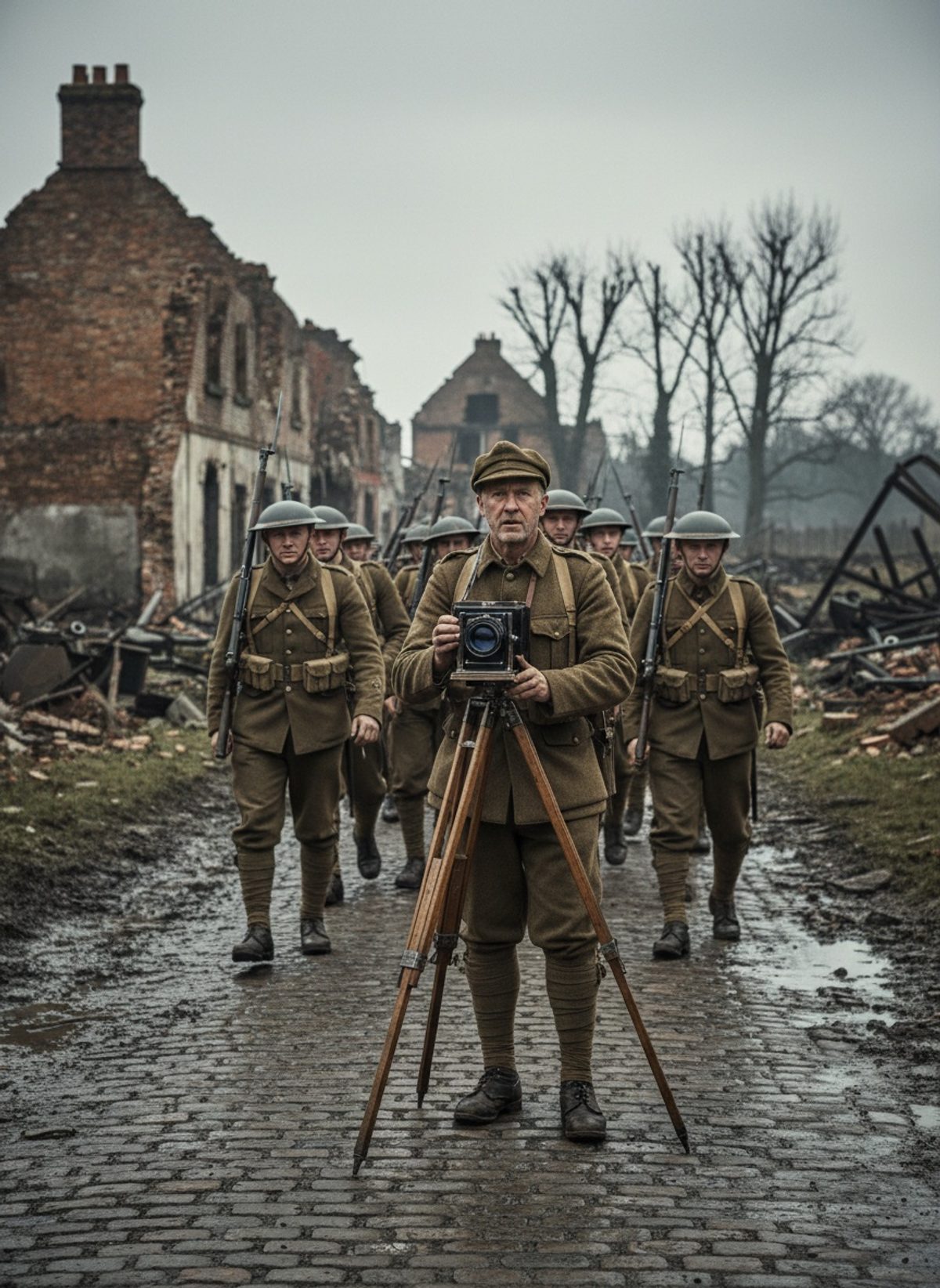
He was a soldier without a gun. David McLellan wielded a camera on the battle-scarred lands of the Western Front, capturing indelible images amidst the chaos of war.
The Silent Witnesses of Trench Warfare
In 1917, amidst the cacophony of gunfire and the somber drone of distant artillery, Britain sent only five men to photograph its Great War effort. In a world ravaged by conflict, images were a precious currency, a means to relate the grim tales that words could scarcely convey. David McLellan, a Second Lieutenant, found himself amid this select fraternity. Charged not with arms but with a camera, he documented the lives and sacrifices of soldiers whose faces told stories of perseverance and humanity under duress.
The Western Front stretched from the North Sea coast of Belgium through France, a tableau of devastation where the earth bore the scars of unrelenting warfare. Muddy trenches, lined with weary men, snaked across landscapes once idyllic. Here, McLellan's lens captured the raw essence of life on the front lines. Through his photographs, viewers at home were exposed to the same mud, the same steel-grey skies, and the haunting eyes of soldiers that even the most vivid prose struggled to portray.
At the Edge of Peril: The Photographer's Journey
Carrying a camera instead of a rifle was no safer a task. McLellan walked the bombed-out fields and shattered towns that had once been vibrant, navigating a world turned unrecognizable by conflict. Each click of the shutter was a defiant act of preservation, etching moments in time as surely as a historian records words. Though the camera could not shield him from danger, the images he captured provided a shield of sorts for the service he documented—a reminder of resilience in a war-torn world.
Read next: When the First Gurkha Regiment Marched Into a British War, 1815
The journey to the front was fraught with peril. It demanded a composure equal to any soldier's, wading through sodden trenches and breathing the air heavy with the scent of earth and cordite. For soldiers and photographers alike, it was a test of endurance. And yet, McLellan met these challenges with a focus that was as much about storytelling as survival. His photographs detailed the peculiar monotony of war—a line of soldiers resting against sandbags, moments of lull juxtaposed against the looming threat of violence.
The Images That Spoke Louder Than Guns
What McLellan captured was not just the torment of battle but also fleeting, intimate instants of humanity. The myriad expressions etched on the faces of soldiers—fatigue, camaraderie, defiance—spoke with a clarity that no written report could match. His work transcended mere documentation; it was an act of empathy, offering a window into the souls of those who endured unimaginable hardship.
Read next: When Sharkey Ward's Sea Harriers Held the Falklands Sky, 1982
Amidst the ruins, McLellan’s photographs chronicled not just the war's destruction, but its futile beauty. Nature’s quiet reclamation of battlefields, poppies swaying in silent defiance amidst mounds of disturbed earth, provided a sharp contrast to the stark reality of trench life. Some images emerged as iconic testaments of the time, etched into collective memory alongside the stories of valor and sacrifice they portrayed. His lens revealed fractured walls and hearths, but also friendships forged in foxholes, ensuring that the humanity of soldiers was carved into history alongside their heroism.
Why McLellan's Lens Matters More Than a Century Later
As bullets sliced through the air and men fell in droves, David McLellan’s camera cut through the chaos to focus on the humanity beneath the uniform. These snapshots of courage and camaraderie continue to resonate, teaching us about the cost of war without glorifying the act. The art of McLellan and his peers showcased not only the scale of the Great War but the depth of spirit required to endure it. Their work compels not simply remembrance, but reflection on the profound truths captured in each frame.
In a time when narrative control meant everything, the photographs taken by McLellan and the few others carry more weight than ink ever could. They remind us of the very human faces obscured by the broader strokes of history’s brush. Their legacy endures, as each photo speaks of stories untold, of lives unrecorded by victories or defeats. We look back not only to recall what was lost, but to grasp what remains eternal—those silent, staring faces now woven inextricably into the fabric of history. As long as we remember these images, the stories they tell remain preserved, unforgotten amid the annals of time.