July 15, 1815. The morning sun cast long shadows over the unruly waves of the Atlantic.
Aboard the Bellerophon: Napoleon's Last Hope
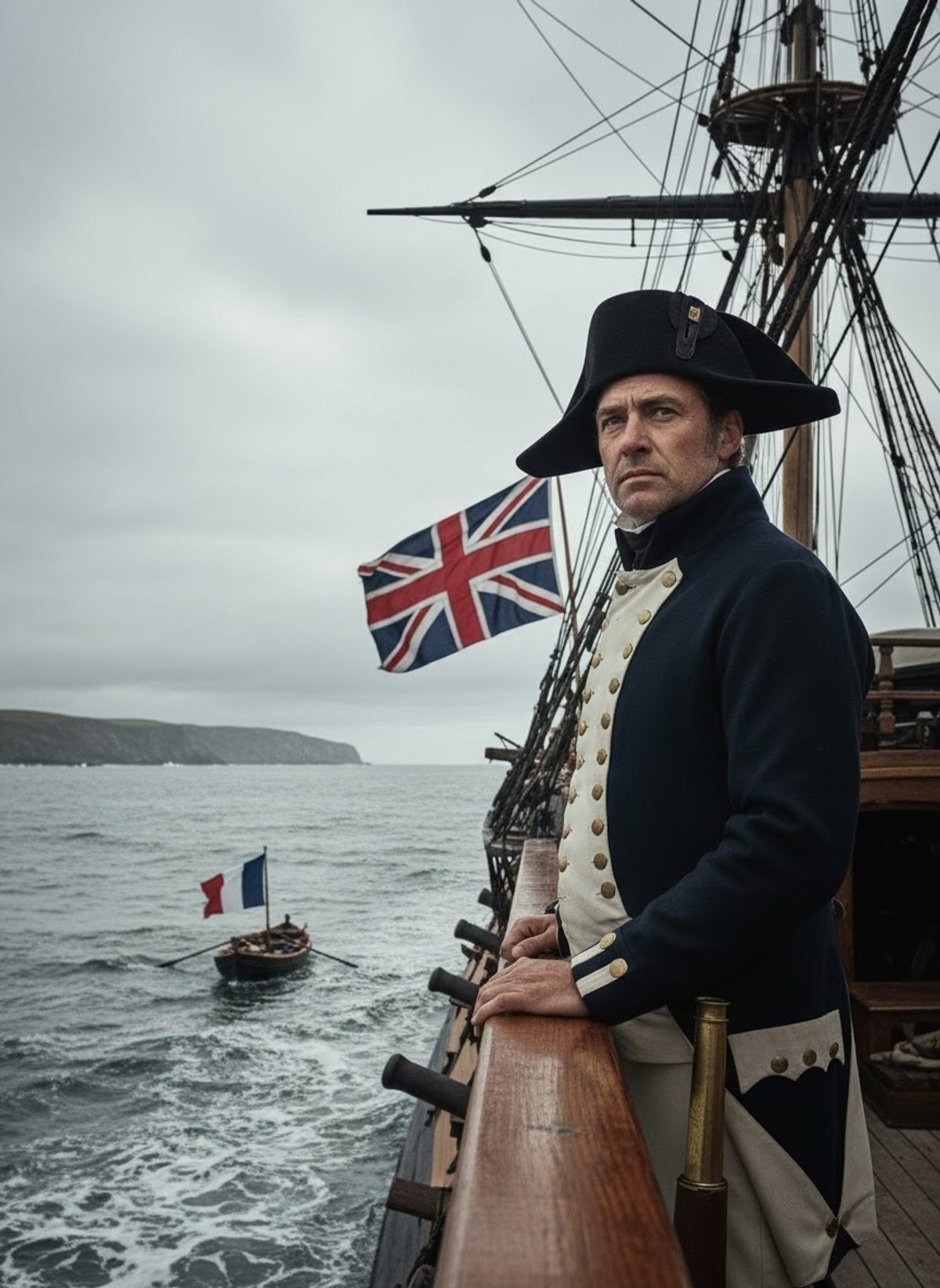
In the grey dawn off Rochefort, the HMS Bellerophon stood poised, a leviathan of British naval might. Its decks were bustling with mariners who likely exchanged whispers of both awe and anticipation. For it wasn't an admiral nor a nobleman set to board but the very specter of an era: Napoleon Bonaparte. The famed conqueror, who had once refashioned much of Europe to his vision, was hoping for clemency beneath the Union Jack.
With the creaking of ropes and the crisp sea air sharp as a blade, Napoleon approached the warship, cloaked in the pragmatic humility of a civilian coat. To the onlookers on the Bellerophon, the man stepping aboard might have seemed both larger than life and utterly mortal. Here mariners saw not the imperious Emperor of the French but a humbled leader seeking refuge.
He believed, perhaps naively, that British honor would afford him sanctuary rather than vengeance. Fleeing from the shifting sands of European politics, Napoleon seemed to cast the Britons as his unlikely saviors. Indeed, he proclaimed himself a “guest” of their nation, a term that carried more hope than juridical weight.
Read next: When the German Fleet Surrendered and Britain Ruled the Seas
The Bellerophon's captain, Frederick Maitland, received him formally, most likely aware of the gravity of the moment. This exchange, steeped in military protocol and noble courtesy, was arguably the most famed surrender in naval annals. Yet, underfoot, the decks were not paved with promise but with the cold plight of a diplomat's reality.
Napoleon's plight aboard was a dichotomy of fate and expectation, with destiny sketched out upon the wide canvas of the Atlantic Ocean. Despite the careful courtesies exchanged, the ship carried no bargaining position, nor diplomatic solace. Upon its stern, it carried only the inevitable will of an empire that saw no other end for him.
The Voyage to Obscurity: St. Helena's Grim Horizon
As the Bellerophon cut through the temperate English Channel, distantly visible was the very land Napoleon had both fear and admiration for. It was not on British soil but in the heart of the British sea that his fate would be determined. Whispers of future atrocities or trials were silenced by the rolling waves. In truth, even the seamen couldn't know what waited at the voyage's end.
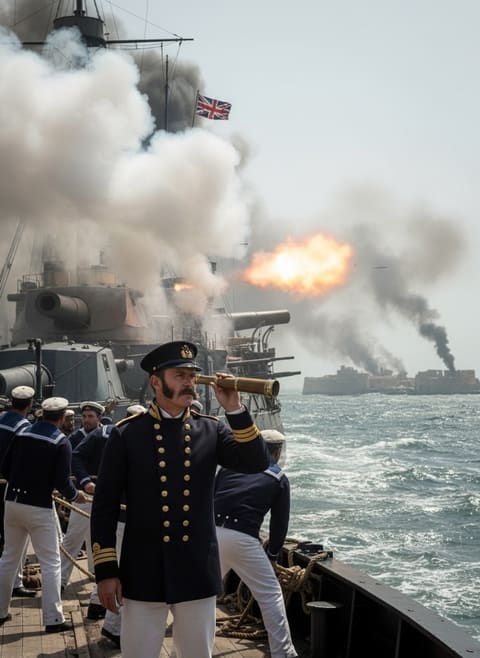
The ship, fortified with rows of cannons, was a far cry from Napoleon’s former armored throne. Yet its true power lay not in its artillery but in the resolve of the nation it served.
This warship was both a vessel and a verdict, sealing Napoleon’s fate with every maritime mile. For the erstwhile emperor, the journey across the waves must have resembled a passage through purgatory. Each dawn aboard the Bellerophon drew him further from the continents he'd once gripped in Napoleonic fervor.
Onlookers in the coastal ports were quick to catch sight of the famed prisoner, peering through spyglasses, wide-eyed at the fallen titan now resembled an oddity of his own legend. Britain, with its habitual gestures of both curiosity and confidence, witnessed it all from the safety of its azure borders.
As whispers carried, the geopolitical chessboard of Europe had altered forever, and Napoleon was no longer a player. His new dominion, St. Helena, awaited like the trump card nobody wished to play. The island was remote, an all-too-symbolic cage crafted by nature, positioned in defiance of escape and ambition. The Bellerophon was but the intermediary arbiter between the man and his last destination.
Read next: When Portsmouth Opened a Museum to HMS Victory, 1938
Onwards to Exile: The Loneliness of an Emperor
With the HMS Bellerophon's voyage concluded, Napoleon faced the inexpugnable reality of exile. The stark St. Helena loomed, casting shadows deeper than its cliffs. It was not simply a geographic end but the cessation of an era marked by wars that had reshaped destinies and lands. This barren rock in the mid-Atlantic, far removed from Europe’s bustling theatres of action, was to be his final stage.
Napoledont, the imposing captor himself had recognized the quiet efficiency with which England removed a figure internationally omnipresent just months ago. His exile was elegantly unceremonious, signifying a fate grimly fitting for one whose life had been spent on the precipice of fortune and decision.
Such was the final act of the man who once harbored visions that reshaped the map of Europe, now confined to a small, windswept island. His captains, lieutenants, and even enemies marveled at this metaphoric fall—a saga at sea concluding his vast terrestrial ambitions.
Years later, history titled the tumultuous winds of the Bellerophon's voyage as the veritable ending of a tumultuous epoch. The quiet whispers exchanged along its corridors are silenced, yet they echo as faint remembrances of history's inexorable march.
Napoleon taught the world much about power and ambition, but in his surrender, he equally taught of humility and the relentless tide of time. The Bellerophon offered him neither asylum nor betrayal; it was both an ending and a beginning of an eternal discourse.