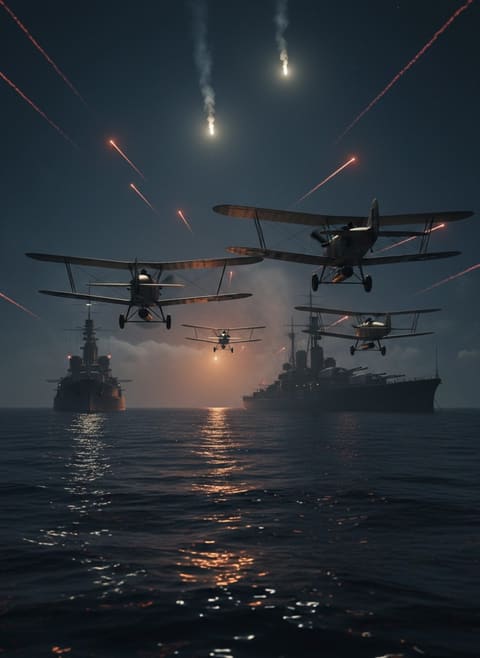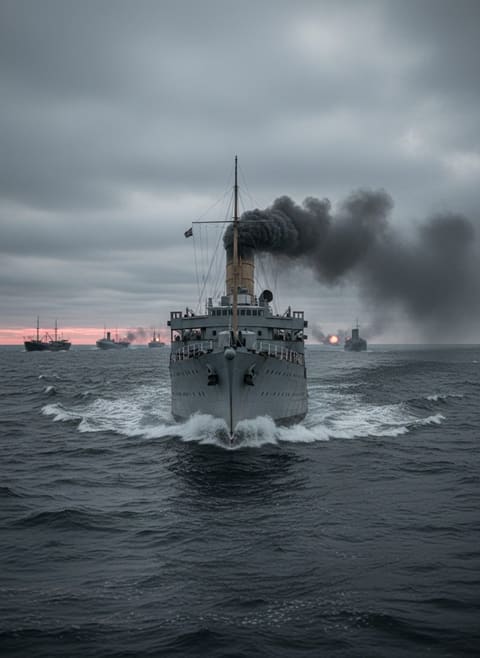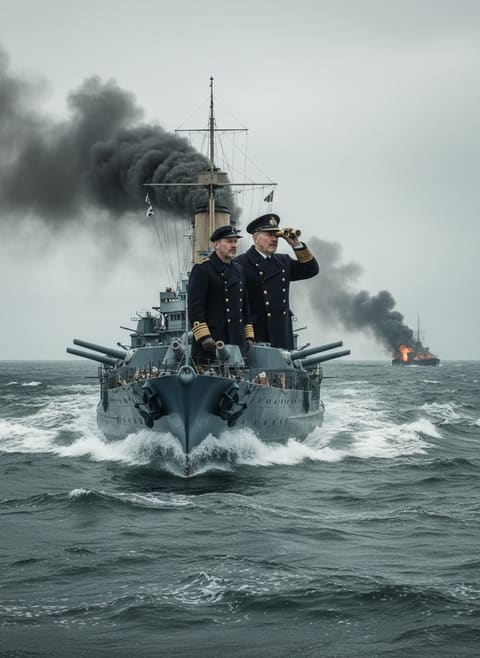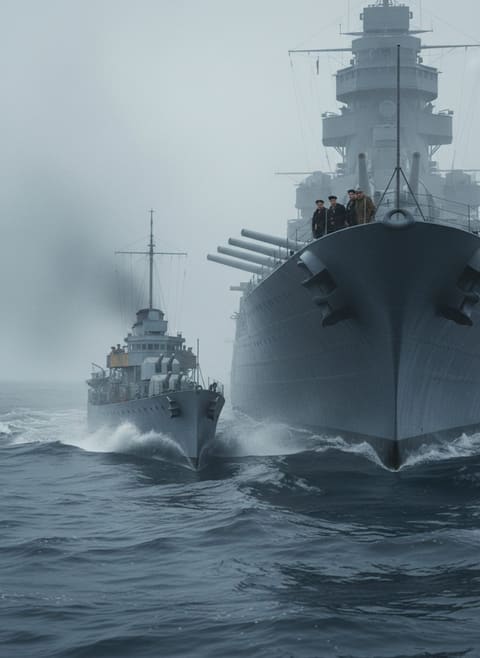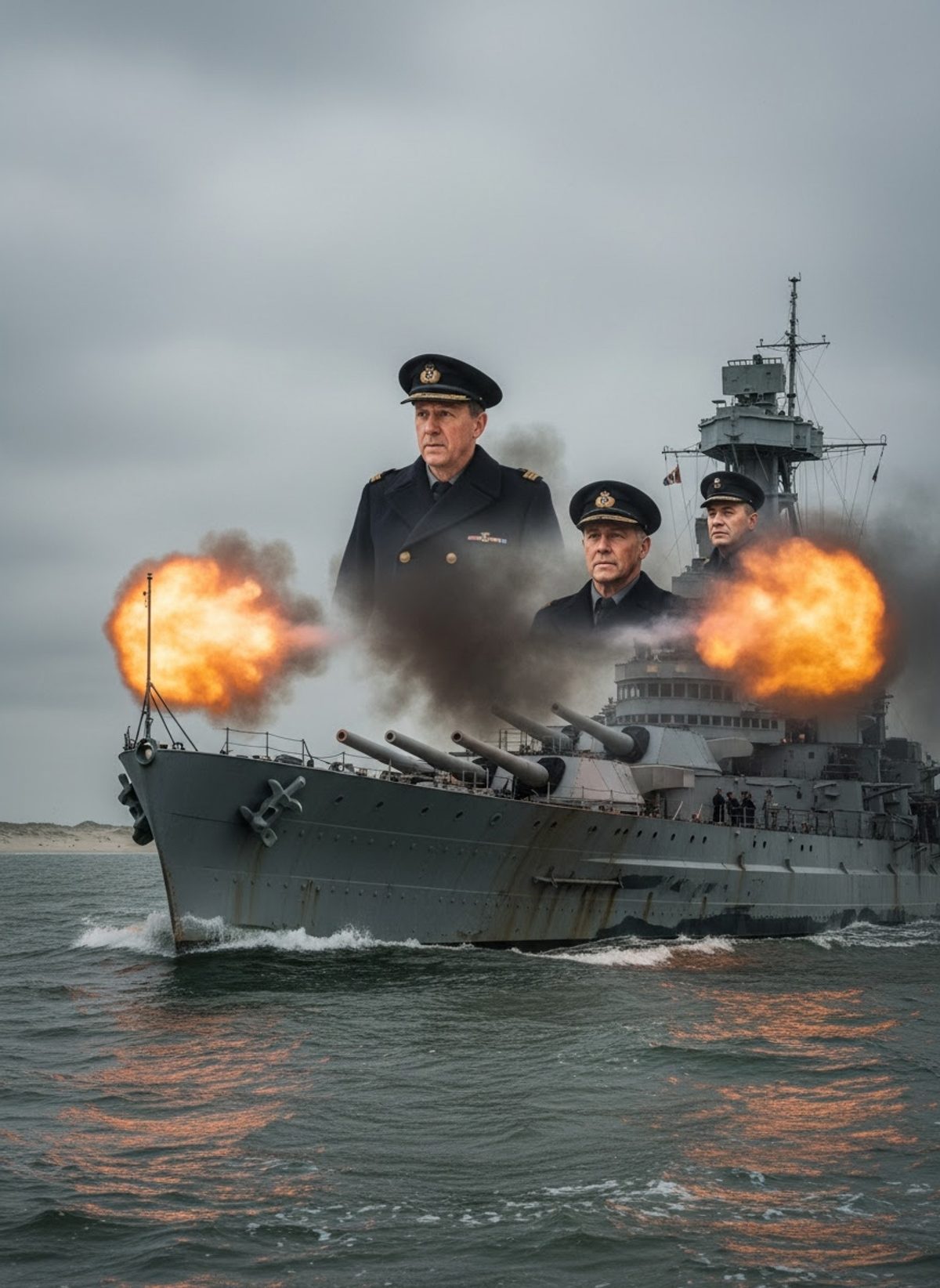
The thunderous roar of naval artillery split the sky as HMS Warspite unleashed her fury one last time. The scene was Walcheren Island, a fortified position along the Dutch coast held by the Germans in 1944.
Swollen and rusted from decades of battle, the venerable warship, her hull groaning with the strain, let loose a barrage aimed at silencing the enemy batteries entrenched here. Her guns—massive, seasoned cannons that had once thundered at Jutland in 1916—pounded the shore, oblivious to the saltwater whipping into the air like a storm of sharp needles.
The Relentless Journey Through War
HMS Warspite had long been a formidable force on the sea. Launched in 1913, she quickly earned a reputation for her tenacity and power. As part of the Grand Fleet at the Battle of Jutland, Warspite dodged death by a string’s breadth, taking hit after hit but continuing to fight. Those days in World War I set the stage for a legendary career, marked by both triumphs and scars.
Her fate was intertwined tightly with history. During World War II, she faced danger after danger, whether it was a torpedo strike off the coast of Crete in 1941 or enduring a punishing German glider bomb attack in Salerno in 1943. Time and again, Warspite absorbed the blows.
Read next: When the Admiralty Dug Up Brunel's Lost Warship, 1844
Each repair, each patch job, was a testament to the ship's resilience and the unwavering spirit of her crew. Even with her slowed engines and patched-up bulkheads, Warspite reflected a singular commitment—a refusal to sink under the weight of her illustrious history.
A Mission Against All Odds
By November 1944, HMS Warspite was a shadow of her formidable self. Her service throughout two world wars, along with her countless engagements, had left her barely seaworthy. The Admiralty's decision to send her to Walcheren was not made lightly. This endeavor demanded everything she had left.
Warspite, despite her age and condition, remained the Royal Navy's only option to support Operation Infatuate, the amphibious assault aimed at securing the Walcheren Causeway. The causeway was vital to the liberation of Antwerp, a strategic port needed for Allied logistics in the push deeper into occupied Europe.
The decision reflected more than mere tactical calculations—it encapsulated a powerful symbol of defiance against the odds. Each salvo Warspite fired was an echo from her storied past, a link between battles separated by decades but united by purpose. Her gunners worked tirelessly, knowing this fight could be both her final curtain and her greatest encore.
The Battle's Climax
In the midst of the bombardment, the historic ferocity of Warspite's guns emerged like a last great symphony. The island's German batteries were a formidable opponent, dug in with precision and fully aware of Warspite’s aged limitations. The ship maneuvered carefully, her hull creaking with protest, yet within range, she delivered devastating blows with precision artillery fire.
Read next: Three Gunboats That Ruled the Yangtze for Fifty Years
Echoes of each explosion cascaded across the waters as Warspite exchanged broadsides with the German defenses. Her gunners, seasoned and ready, seized every opportunity to maintain the pressure, laden with the sense of history they were writing with each shot. It was more than a military engagement—it was the ship's swan song, blending the stirring chords of past valor with the stark realities of present conflict.
The Last Resounding Echo
With the Walcheren batteries sufficiently quelled, Warspite's guns fell silent for the last time on that cold November day. The old battleship had fired her final rounds, marking the end of an era. Her mission at Walcheren exemplified the indomitable spirit of endurance, a statement of resilience that resonated well beyond the immediate tactical victory. She had completed her service, not through sheer grace but through sheer grit.
Sailing back, her role transformed from a fighting ship to a storied veteran, HMS Warspite carved her name into the annals of maritime legend. She demonstrated the timeless resilience of those who serve amidst the most dire circumstances.
Her service was an emblem of how even the mightiest institutions adapt, persevere, and emerge, influencing the future in ways that transcend the battles they fought. The old queen had proved she still had teeth—and, in doing so, she reminded the world that even weary ships can write new legends on the tides.