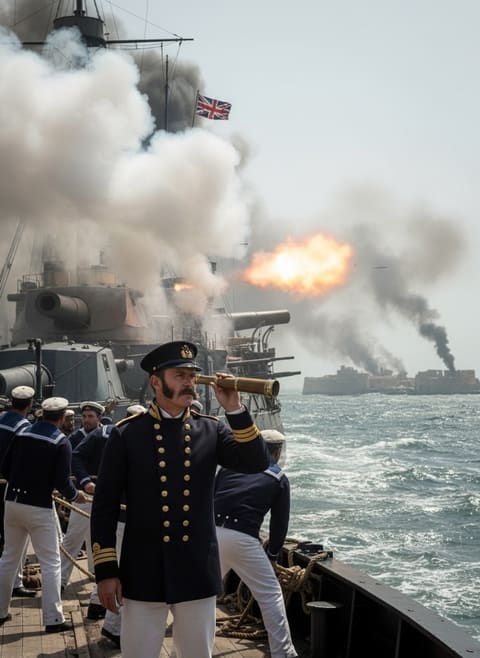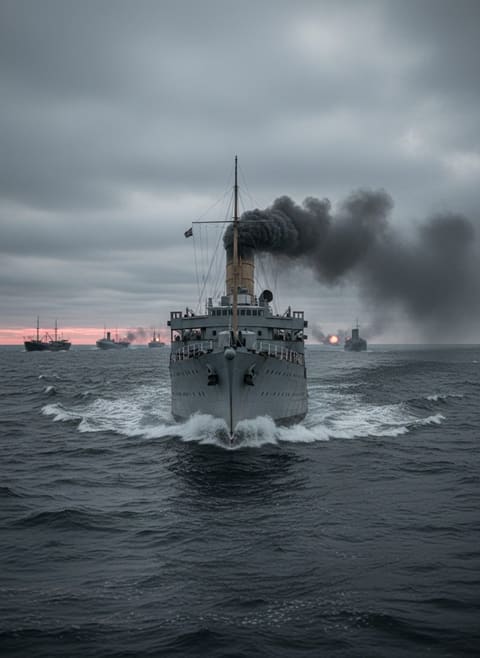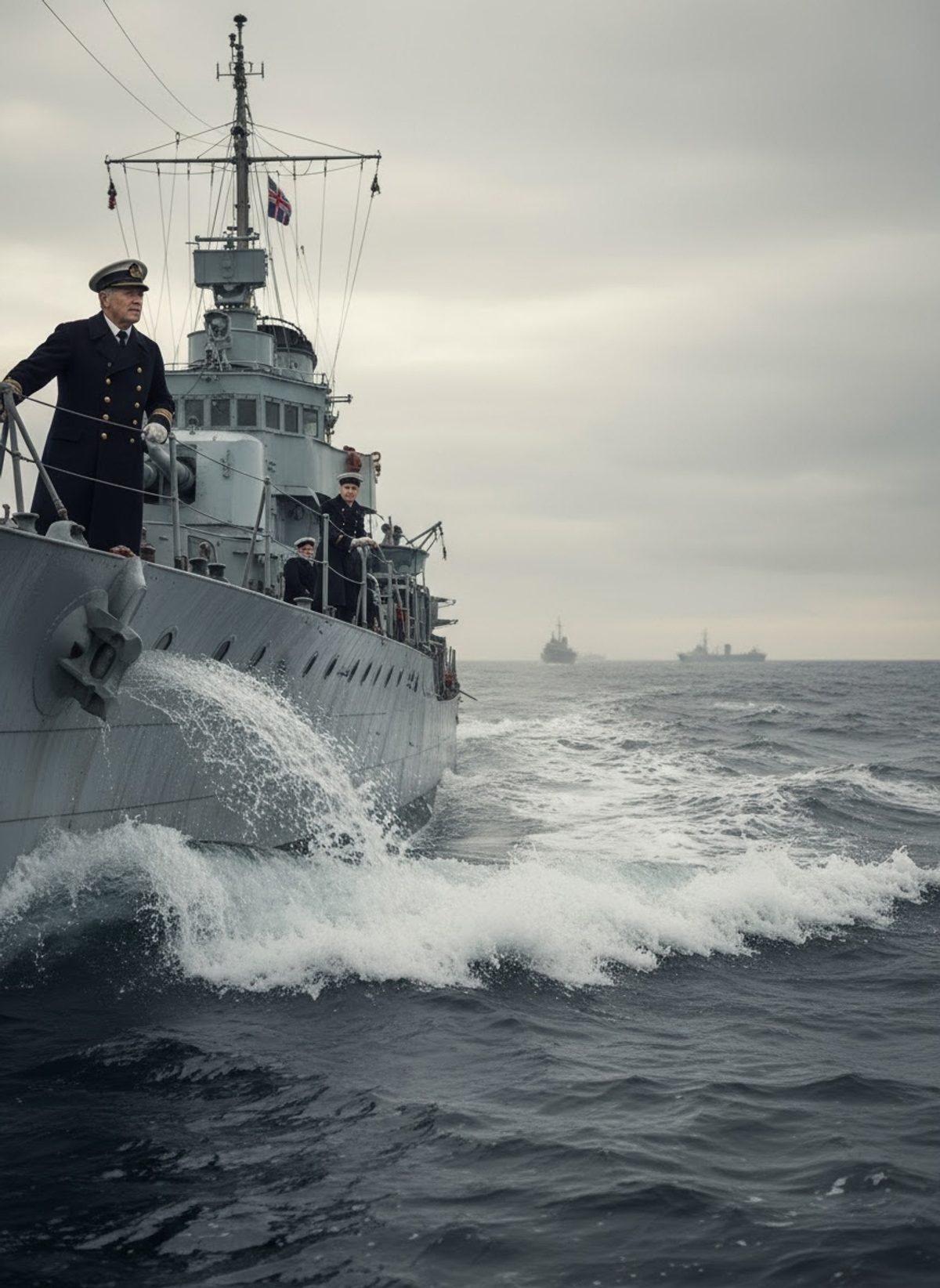
May 1945. The cold North Sea wind tousled the Union Jack as HMS Duncan approached the anchorage at Crombie, her metal hull creaking from the pressures of war. With the war over, the ship settled into the quietude of the Scottish coast, marking a poignant end to her tumultuous journey.
Steeled Through Conflict
The story of HMS Duncan is one etched in the harsh reality of war — forged under the pounding Atlantic waves and hardened against the chill of U-boat-infested waters. As one of the Royal Navy's hardest-working destroyer leaders, Duncan's role was pivotal in the North Atlantic convoy battles, where the risk lurked beneath every wave. Escorting convoys was more than just a mission; it was a lifeline to a nation embattled and isolated.
Dispatched into the treacherous waters of the North Atlantic, HMS Duncan defended ships against the relentless wolf packs that roamed the seas. Each day was a relentless fight, the sea itself feeling like an adversary at times.
Yet the destroyer persevered, her prow cutting through the icy spray as she shielded thousands of tons of vital goods from sinking to the ocean floor. Her crew, hardened by weeks without seeing land, became accustomed to the monotonous roar of the engines and the constant scrutiny for periscopes.
Read next: When Portsmouth Opened a Museum to HMS Victory, 1938
From Copenhagen To Calm
In early May 1945, news spread like wildfire through the ranks: the war in Europe was drawing to a close. Denmark was liberated, and with this victorious turn, HMS Duncan prepared to sail from Copenhagen, carrying with her the tangible weight of survival. There was no jubilant departure; rather, a contemplative pause as seasoned sailors reflected on friends lost and battles fought.
The journey from Copenhagen to Crombie was curiously uneventful, the sea now quiet, as if recognizing the cessation of conflict. For the crew, accustomed to anticipation and fear, the silence over the waves felt vaguely unsettling. It was during this journey that the camaraderie of shared hardship grew visible. Laughter, once a rare sound, punctuated their conversations. At times, the men paused to watch the sunset carve golden paths across the darkening sea, a privilege often denied during wartime.
A Scottish Welcome
On arrival at Crombie, HMS Duncan was met with neither fanfare nor celebration. Instead, a quiet acknowledgment from the steadfast hills that lined the Firth of Forth bore witness to her homecoming. Here, the ship would be decommissioned after years of relentless service. The serene Scottish coast was a stark contrast to the chaotic waters she'd traversed. The sounds of bustling dock workers now replaced the thunder of cannons and depth charges.
Read next: When HMS Warspite Fired Her Last Guns at Walcheren, 1944
Yet, for the crew, it was not about celebratory parades but a simple contentment in survival itself. Their arrival in Scotland marked a point of transition from wartime to peace, a symbolic shedding of the iron burden carried for so long. Memories would linger — of shadowy figures against the horizon on moonlit nights, of the smell of salt and oil mingling in the dank corridors of the ship.
The Lessons They Left Us
HMS Duncan's odyssey across the tempestuous seas was more than just a strategic assignment; it was a testament to resilience amidst adversity. In a war where the outcome often seemed uncertain, it demonstrated the indomitable spirit of the Royal Navy. This quiet return to Crombie reminds us of the unsung chapters of history, the narratives overshadowed by glory and fame.
For today's world, Duncan's story echoes a call to recognize the unyielding resolve required to face daunting challenges. It invites reflection on the quiet returns — the journeys that sought neither applause nor recognition but held an intrinsic value to the nation's spirit. In the annals of naval history, HMS Duncan stands as a reminder that peace, though hard-won, is a cherished voyage with its own unsung heroes.