November 10, 1938. The air carried the scent of smoke and broken glass.
As dawn broke over Breslau, echoes of chaos lingered in the streets, reminders of the horror that had unfolded during the night of Kristallnacht. The synagogue's charred skeleton loomed over shattered shopfronts, and the once-bustling Jewish neighborhoods had been silenced by fear. It was in this climate of dread that a determined Jewish doctor named Ludwig Guttmann steeled himself for a confrontation that would test his courage and cunning against the oppressive machinery of the Nazi state.
Dr. Ludwig Guttmann, well-respected in medical circles for his pioneering work in neurology, found himself standing against the Gestapo's might armed with nothing but his Hippocratic Oath and indomitable spirit. The Gestapo officers, fresh from orchestrating the arrests of countless Jewish men across Germany, descended upon the Jewish hospital where Guttmann served. They sought quick compliance, expecting little resistance. What they encountered instead was a man who would fight for every soul in his care, a battle that would echo far beyond the confines of that hospital ward.
The previous night, chaos had wrapped the city in a chilling embrace. Nazi paramilitaries and mobs had unleashed a wave of terror, targeting Jewish homes and businesses. As the Gestapo corralled Jewish men, dozens found their way to Guttmann's hospital. Whispered pleas and imminent fear filled the air as they begged for sanctuary. Guttmann knew harboring them flouted Nazi edicts, but compassion overruled caution. He admitted 64 men, knowing the price of failure.
Read next: When English Common Law Took Root in New Zealand, 1840
As the sun struggled to pierce the grim haze of the morning after, Guttmann stood prepared to face those who demanded explanations. Armed with medical records he had carefully doctored to reflect maladies severe enough to warrant hospitalization, he met the Gestapo's steely gaze. The tension crackled as he articulated each man's fabricated illness, navigating the treacherous line between life-saving deception and lethal exposure.
Guttmann's brilliance lay not solely in medical expertise but in an uncanny ability to read the human heart. As he argued for each man's condition, he did not falter, his voice steady, his resolve unyielding. Sixty of the 64 men walked free, a testament to his courage. This audacious act etched Guttmann in the annals of defiance, a flicker of light against the encroaching darkness.
Yet, for Guttmann, there was no respite. The Nazi regime's noose tightened, and escape became imperative. He grasped the lifeline of emigration to Britain, carrying with him a heart beat of resistance and a vision undisclosed even to him. In Britain, Guttmann found refuge not merely to rebuild but to reconceive the essence of possibility.
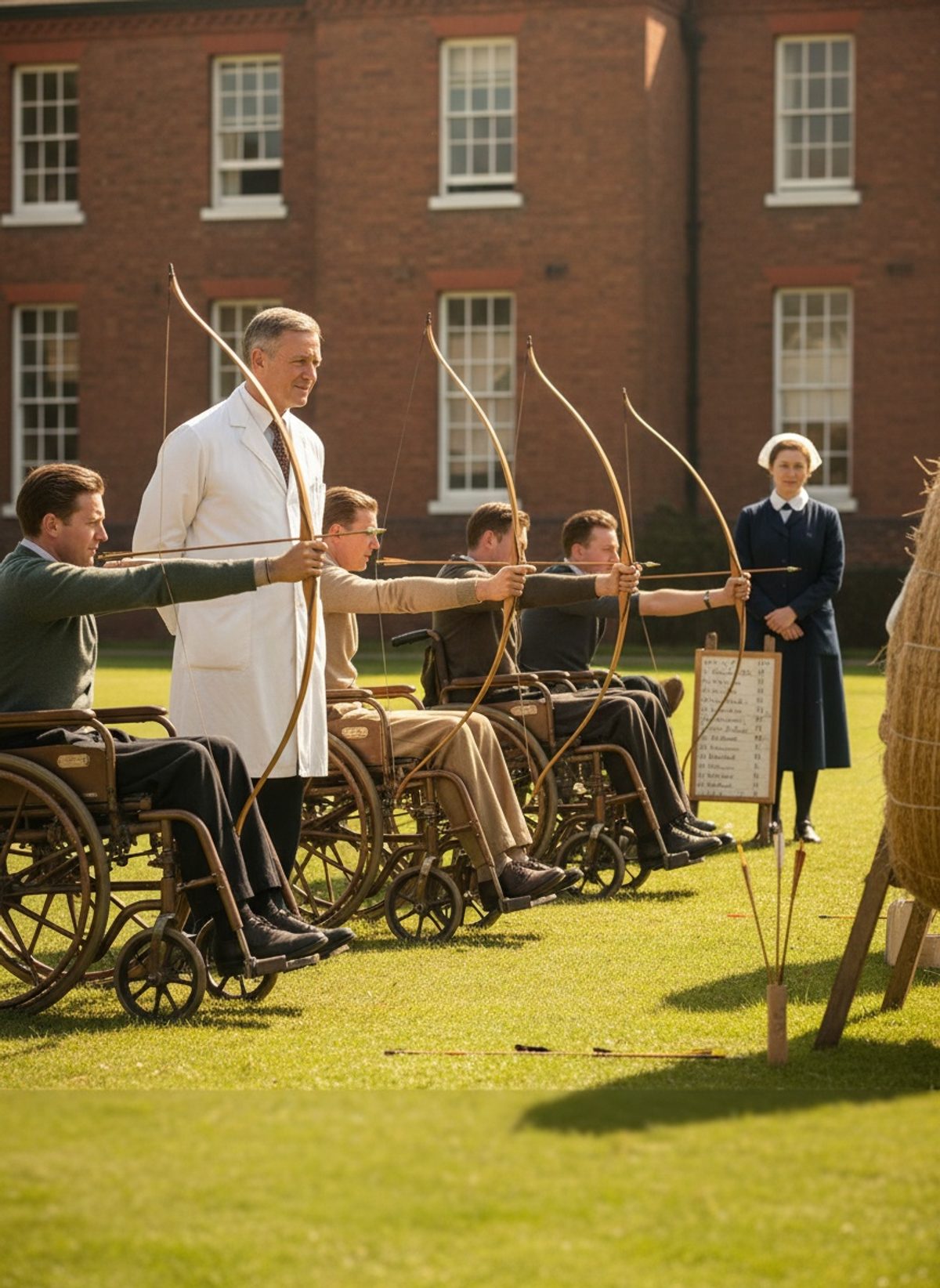
Arriving in the unfamiliar yet welcoming British shores, Guttmann faced a new challenge at Stoke Mandeville Hospital. There, amongst a ward of sixteen paralyzed war veterans, he saw the devastating aftermath of human conflict and neglect. Where others saw limitation, Guttmann saw potential — the potential for renewal through sport. The lawn outside the hospital became a canvas of transformation, where competition became therapy, and physical challenge became a beacon of hope.
Harnessing the spirit of sport, Guttmann ignited a revolution. These modest sporting events grew, drawing inspiration and continued courage from his earlier resistance. His passion and persistence blossomed from a hospital lawn into a global stage. The seeds he planted on Stoke Mandeville's turf were tended by his unwavering belief that sport could uplift and unify, giving rise to the Paralympic Games.
Guttmann's vision forged a new legacy where barriers crumbled, not with fiery resistance but with the courageous pursuit of inclusion and empowerment. The narrative of hopeful resurgence flourished from the trial by fire he faced on that dire November morning. The Paralympic movement echoes with Guttmann’s influence, a chorus of nations assembling, athletes competing not despite but because of their differences.
What began as a desperate act of defiance in a Berlin hospital became far more than Guttmann might have dreamed. It is the tale not of resignation but of reclamation, a story of human potential realized through courage and compassion. Ludwig Guttmann's defiance on that November morning woven with his pioneering spirit gave the world more than just a spectacle of triumph over adversity — it gifted a profound narrative of redemption and reconciliation, one where the boundaries of ability are forever redefined.