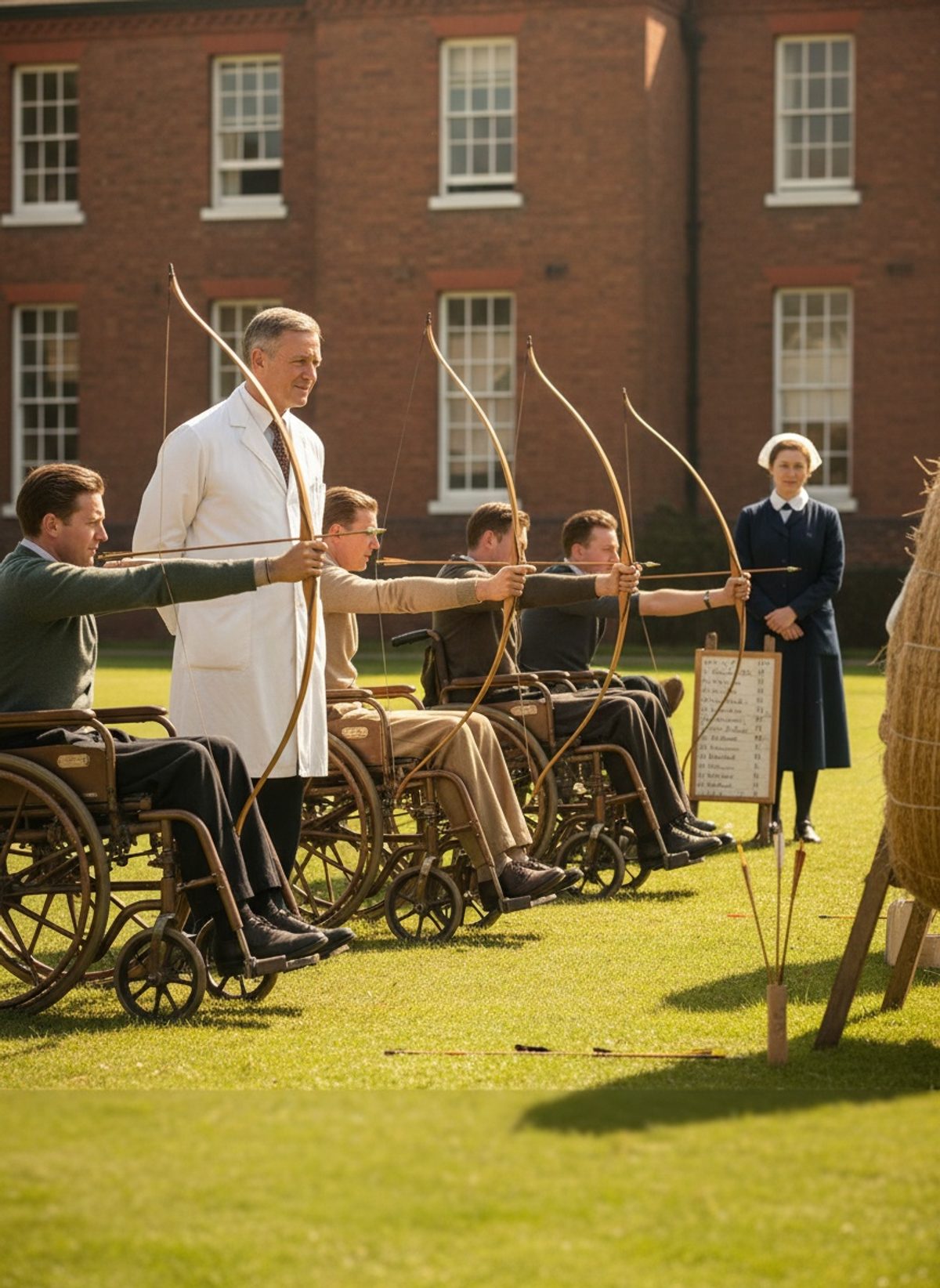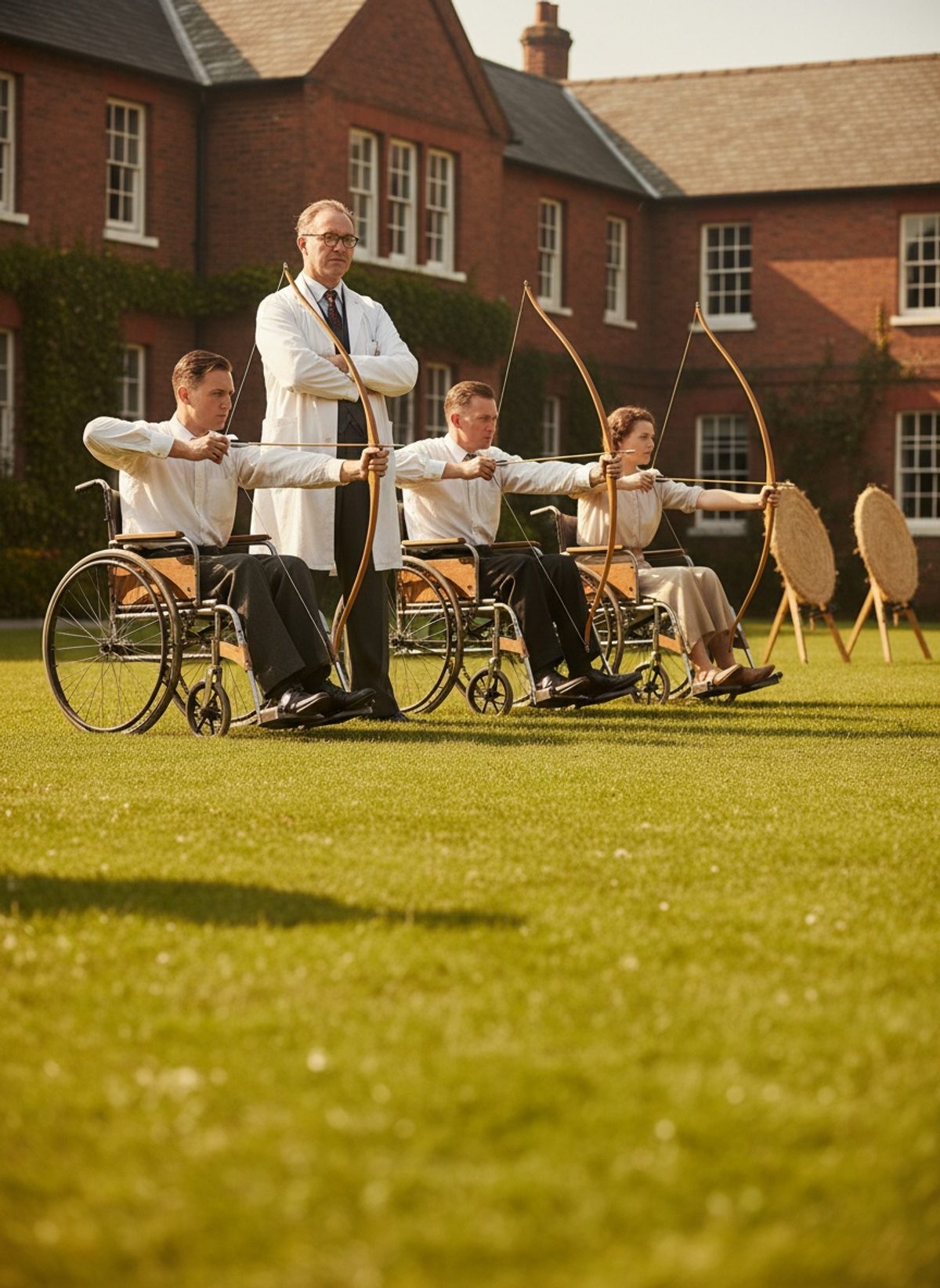
The grass beneath his feet was damp with morning dew as Ludwig Guttmann raised his eyes to the sky, feeling every fiber of uncertainty and hope collide within him. Around him, laughter and the sounds of whizzing projectiles filled the air, a symphony of newfound defiance and determination. Just four years before, they lay confined to hospital beds, but today on this hospital lawn, these men—once paralyzed by war—were hurtling toward an unexpected legacy. It was July 1948, and Stoke Mandeville had become the unlikely birthplace of a revolution in sport.
The Refugee Doctor Nobody Wanted
The journey that led to this defining moment began under much grimmer circumstances. Ludwig Guttmann, a Jewish neurosurgeon, had fled the oppressive grasp of Nazi Germany, leaving behind a realm where his expertise was overshadowed by blatant discrimination. When he arrived in Britain, his credentials meant little. Yet, he was given a lifeline, albeit one that was seen as a dead end by others: a ward filled with paralyzed servicemen at Stoke Mandeville Hospital. From 1944, these men, written off by the prevailing medical wisdom, became Guttmann's charge.
At the time, spinal injuries were practically a death sentence. Consensus held that these patients, war heroes now resigned to quiet despair, had no future. Most were expected to die within months. Guttmann, however, saw their potential where others noted only imminent decline. In his mind, they were not forsaken bodies but minds waiting to be reignited, souls yearning to take back control of their lives.
The Genesis of Determination
Guttmann’s approach was radical. He pioneered a holistic treatment philosophy, focusing not just on the body but on rebuilding the human spirit. Exercise was not merely therapeutic; it was transformative. Against the somber hospital backdrop, Guttmann introduced sports. At first, it was simple: ball-tossing and archery competitions designed to strengthen muscles and foster camaraderie. As summer warmed the air, the flat expanse of the hospital lawn began to symbolize an arena of rebirth.
Read next: When English Common Law Became the Voice of India, 1861
His methods were met with skepticism and resistance. Some colleagues sneered, others doubted, but Guttmann remained undeterred. He believed fervently that sport had the power to restore hope, purpose, and dignity. It wasn’t long before the games evolved, with Guttmann overseeing efforts from a humble wheelchair basketball contest to coordinated archery and javelin events. For the patients, whom society had relegated to the shadows, the games sparked a transformation. Laughter echoed where silence once reigned, and the patients' eyes shone with a fire that had almost been extinguished.
The Lawn Becomes a Battlefield
Guttmann’s vision took a monumental step forward on an unremarkable summer day in 1948, when the first Stoke Mandeville Games were held. Coinciding with the opening of the London Olympics, this fledgling competition for disabled athletes was revolutionary. There were just 16 participants competing in archery but the stakes were unprecedentedly high. For these men, victory wasn’t measured in medals but in the reclaiming of their self-worth and independence.
The hospital lawn was transformed into a battleground of resilience, with Guttmann orchestrating the event with a quiet fury bolstered by hope. Notable figures sipped tea while observing the unrelenting dedication in the eyes of men who had once been unable to even sit up in bed. Families and friends gathered, the air tinged with pride and awe. To outsiders, it was a mere spectacle; to those involved, it was a declaration—paralysis would not define them.
A Legacy Beyond Expectations
The Stoke Mandeville Games laid the cornerstone for what would become the Paralympic Games, a platform for athletes with disabilities from around the world. Guttmann’s belief that sport was a great equalizer reshaped how the world viewed disability. From that hospital lawn, an undeniable truth emerged: the mind and will can triumph over what is often deemed impossible by societal norms.
Reflecting on Guttmann's impact, it becomes clear that these games were not just about sport. They heralded a transformation in the approach to rehabilitation and set the stage for a broader movement toward inclusivity and recognition of ability in the face of adversity. His work taught the world that courage, tenacity, and the human spirit could defy the expectations placed by others. And it all started when one man stood on a hospital lawn and dared to believe.