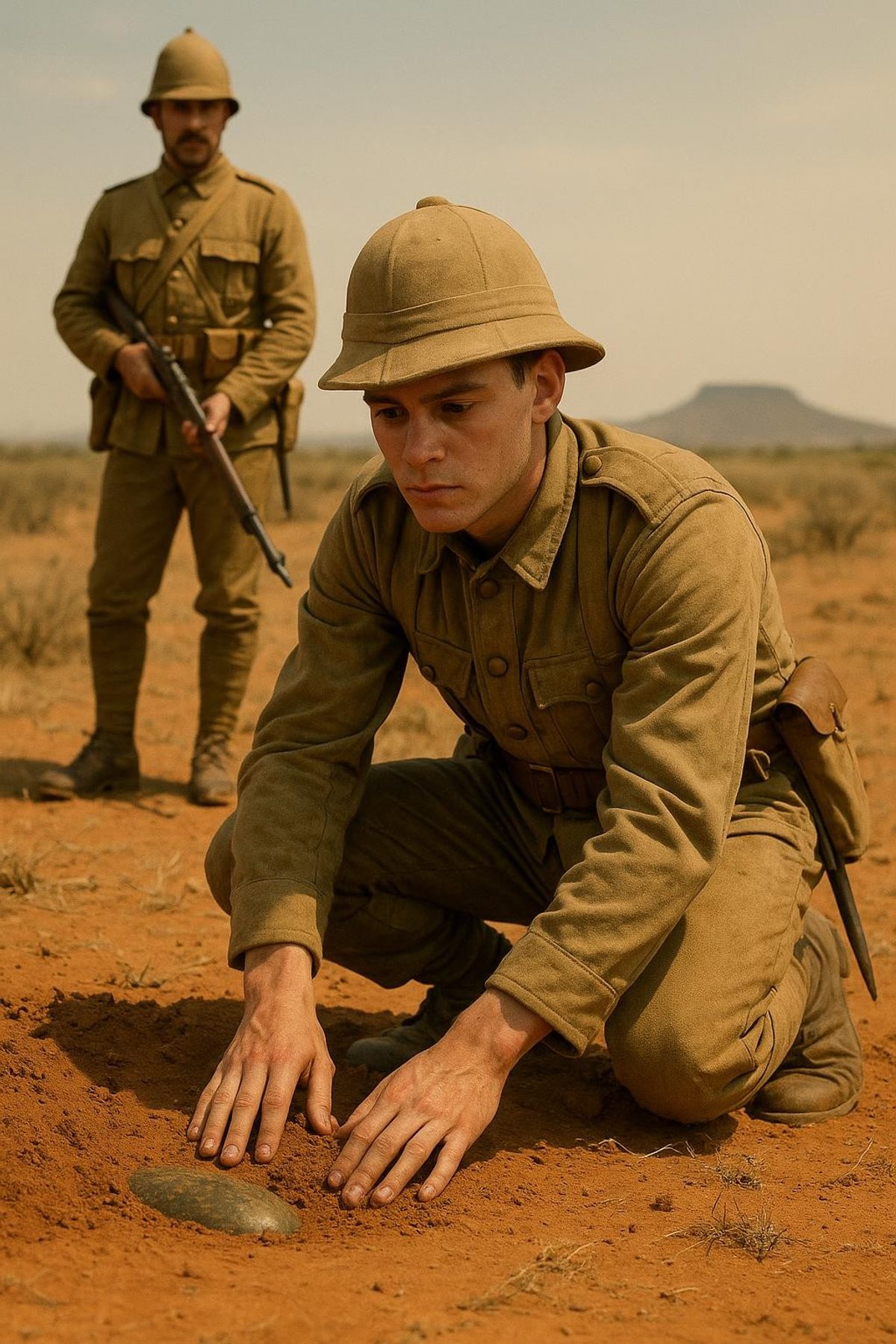
The South African dust clung to his sweat-drenched forehead, a grim reminder of the treacherous task at hand. Luke O'Connor's heart thrummed like a war drum, matching the tension coursing through his veins as he gingerly knelt on the barren field. The world around him seemed to blur, each blade of dry grass a potential siren to the deathly chorus that lay beneath. His hands, calloused yet steady, combed through the earth with an excruciating delicacy. One wrong move and the cracking boom of a mine could be the last sound he'd ever hear.
It was the Boer War, a bitter conflict sprawling across the rugged landscapes of South Africa. Sappers and engineers played a crucial, though often unsung, role in the brutal unfolding of warfare tactics. O'Connor, an extraordinary young member of the Royal Engineers, was tasked with a formidable challenge: to traverse the invisible minefield and clear a path for his comrades. The stakes were unfathomable. Lives hung in the balance of his dexterous hands, yet the 19-year-old had a steely resolve burning within him like an eternal flame.
The air was thick with the weight of anticipation and fear, though neither broke his concentration. The untamed expanse stretched before him, a deceptive beauty concealing lethal devices capable of shredding flesh and bone. Long days of training had culminated in this moment, an orchestrated dance between life and death where every step bore consequences. The ground was unmarked, leaving no hint of the perilous path laid out by enemy hands. Instinct, sharp as the edge of a blade, became his guide.
With unparalleled patience, O'Connor began the methodical process of unearthing the hidden deathtraps. His fingers acted as seekers, probing the soil to detect the slightest anomalies. Each successful disarming left him with a fleeting sense of triumph, rapidly overshadowed by the awareness of more mines lurking ahead. The sun beat down relentlessly, but the young engineer's resolve was as unyielding as the landscape around him. His task was not just to remove obstacles, but to carve a safe passage through danger for his fellow soldiers.
Read next: When Bravo November Became the Only Chinook Left, 1982
History had no shortage of tales about the heroism of those who faced mortal peril without flinching, but O'Connor's story, one largely marginalized by the annals of history, was exceptional. It was not merely the actions of a solitary young man but the embodiment of courage within the heart of a generation that lived and fought amidst the colonies of an empire. His actions encapsulated the unwavering perseverance of those who believed in their cause with an unshakeable fervor that transcended age and experience.
His triumph over the minefield was a meticulous act, as much a mental contest as it was a physical one. There was a serenity in his focus, a lucidity of thought that allowed him to move with improbable precision. As the last mine lay neutralized beneath his feet, O'Connor experienced an ephemeral moment of silence—a rare interlude from war's chaotic symphony. He rose from his knees, dusted off his trousers, and walked back to his men with a quiet assurance that belied the magnitude of his feat.
Read next: When Wideawake Became the Busiest Airport in the World, 1982
The sun began its descent, casting long shadows across the field where destruction had been silently averted. For his extraordinary bravery, Luke O'Connor was awarded the Victoria Cross, the British Empire's highest honor for gallantry in the face of the enemy. His valor in the heart of danger was immortalized through this coveted emblem, a testament not just to his survival but to his profound impact on those around him. His youth was an extraordinary paradox to the aged wisdom in his fearless actions.
O'Connor's story serves as a powerful exemplar of individual courage amidst imperial ambition. It reveals the story of an unsung hero ensconced within broader historical narratives of colonial conflicts. While textbooks might gloss over such anecdotes, the tale of a nineteenth-year-old standing defiant against the omnipresent specter of death in a minefield offers a narrative rich with both peril and promise. It is a reminder of the valiant souls who risk life and limb, driven by duty and devotion in lands far from home.
While the names and numbers of slain heroes and lost battles are etched into the fabric of history, it is the lesser-known exploits of individuals like O'Connor that paint a fuller picture of human resolve. His bravery is an inspiring testament to the spirit of sacrifice and serves as a humbling reflection on how such acts, no matter how much overlooked by the sweeping arcs of empire and conquest, continue to resonate through the ages not just as legend, but as an enduring cornerstone of human courage.