The fortress of Tobruk fell in under 24 hours. Yet, the echoes of its loss reverberated for much longer, shaping careers and military legacies beyond its sandy boundaries.
The Unforgiving Desert Host
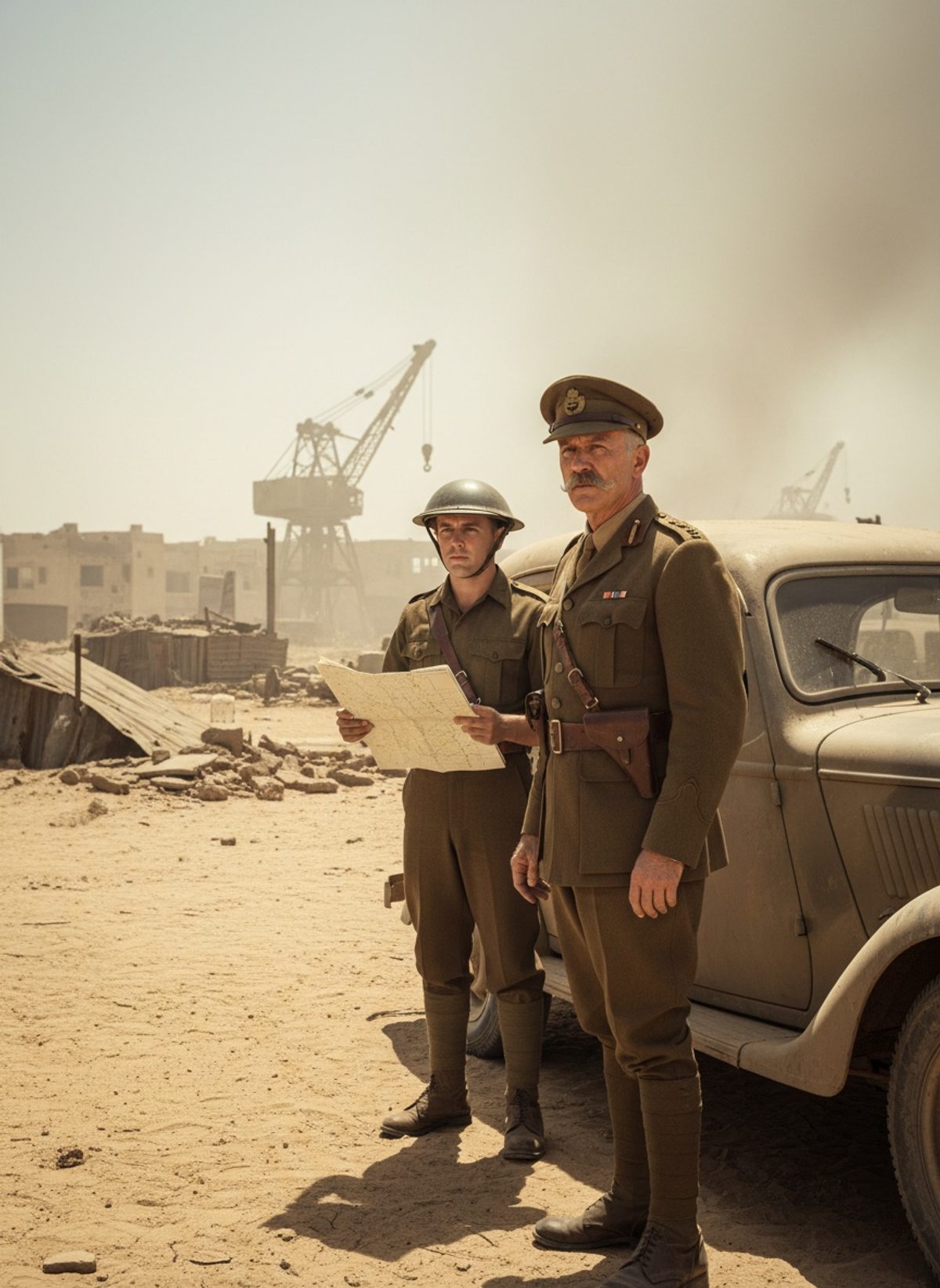
Vast and foreboding, the Libyan desert was as much an enemy as any Axis force. Endless dunes rolled like the waves of a beige sea, and unforgiving heat made every breath laborious. Tobruk—an important strategic port on the North African coast—became the stage for high drama in June 1942. Surrounded by seemingly impregnable defenses, its capture was both a tactical astonishment and a bitter pill for Allied forces.
The 33,000 British and Commonwealth troops stationed there had been the fort’s watchful guardians for many months. When they laid down their arms in surrender, an eerie quiet enveloped the area, soon filled with the German Afrika Korps—led by the cunning Field Marshal Erwin Rommel. This swift and decisive Axis victory was not merely another military loss; it carried ramifications that stretched all the way to the war rooms in London and Washington, D.C.
A Devastating Revelation
On the other side of the Atlantic, in the corridors of power within the White House, Prime Minister Winston Churchill received the dire report. The news of Tobruk's fall hit him with the force of a hurricane, coiling tension with every word. As disbelief gave way to frustration, Churchill labeled the event "a disgrace," a stark testament to his disappointment and the defeat's gravity.
Read next: When the War Detectives Named the Dead of Polygon Wood
This was not just a loss in terms of military strength; it cut through the morale of a nation already weary from relentless conflict. Tobruk had been considered a stronghold, a symbol akin to resilience and determination. Its overnight capitulation shook both government and civilian confidence. For the soldiers who became prisoners of war, it was the beginning of a long and uncertain ordeal. For the military leadership, it triggered immediate inquiries and consequential leadership reshuffles.
The General's Downfall
The man at the center of this debacle was General Sir Neil Ritchie. Working under the command of the iconic Field Marshal Claude Auchinleck, Ritchie was originally seen as a promising leader. But in the political chess match of military command, the fall of Tobruk became his undoing. His decisions during the swift campaign came under intense scrutiny. Critics claimed he had been outmaneuvered by Rommel, whose 'Desert Fox' moniker was earned through years of tactical ingenuity.
Ritchie’s strategy and execution in defending Tobruk faced severe criticism. The decision to allow Rommel to exploit the weaker southern defenses eventually led to his and Auchinleck’s removal from their positions. Here was a man whose career had been ambitious and, until then, largely respectable. Yet, the sands of Tobruk spelled his undoing, forever associating his name with one of Britain's gravest military defeats.
A New Era and Rising Star
While the shadow of disaster loomed over Ritchie, another figure was quietly moving into place—one whose name would become synonymous with British resolve. Lieutenant General Bernard Montgomery, known more famously as Monty, was appointed as the successor to Auchinleck. This was a turning point not just for the British military in North Africa but for Montgomery himself, marking the beginning of his ascendant path to legend.
Read next: When Bravo November Became the Only Chinook Left, 1982
Montgomery arrived with a reputation for discipline and a focus on morale, essential qualities at a time when both were in short supply. His arrival heralded a new era. Strategies changed, morale rejuvenated, and eventually, the tide of the North African Campaign turned. Not only did he rescue the faltering confidence in British command; he was instrumental in the subsequent victories, such as the Battle of El Alamein, which became pivotal in the Allies’ favor.
The Hidden Stakes of History's Dice
Tobruk’s rapid fall in June 1942 wasn't simply a military setback; it was a catalyst for change, a reshuffling of leadership that resonated through the corridors of global power. This story reveals the unpredictable nature of war, how a single day’s events can alter the course of history. It underscores the idea that every victory or defeat is layered with consequences, some evident, others hidden, waiting to influence the forgotten corners of a broader historical tapestry.
As we peer back into the sands of North Africa, the narrative of Tobruk serves as a reminder: leadership may rise and fall upon the fickle winds of fortune, yet within each turning point lies the potential for reinvention and resurgence. While Tobruk marked the end for some, it heralded the rise of others, shaping a war that, although distant in time, still offers lessons in strategy, resilience, and adaptability. It's a story they often leave out of textbooks, yet it’s one that indelibly imprints upon the chapters of history.