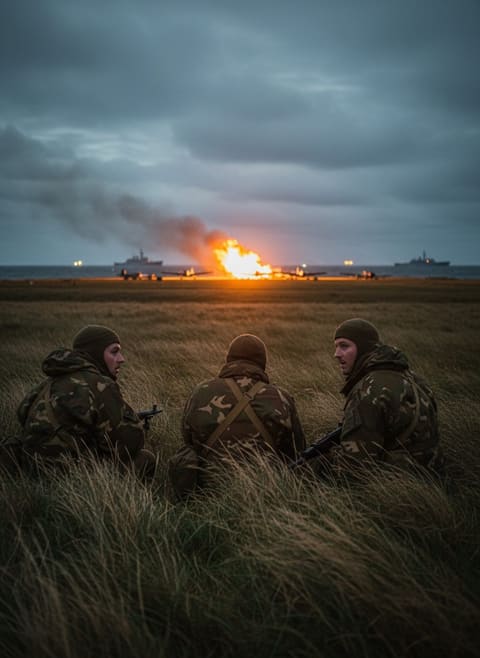
May 28, 1982. The wind howled relentlessly across the barren landscape of the Falklands, whipping through the skies of Ajax Bay with an unnerving fury. The island, bathed in the cold light of a faltering day, lay under the shadow of a war that would test the resolve of every soul daring enough to tread its treacherous ground. Here, amid the chaos and uncertainty of conflict, a remarkable act of courage unfolded in a most unlikely place.
Laying the Foundations: Ajax Bay Awakens
Only weeks earlier, peace had seemed distant as the Falklands War erupted. To the British forces, the recapture of the islands from Argentine occupation was imperative both strategically and symbolically. As part of this colossal endeavour, Surgeon-Captain Rick Jolly, a man born on October 29, 1946, found himself in a situation that would etch his name into the annals of military medical history.
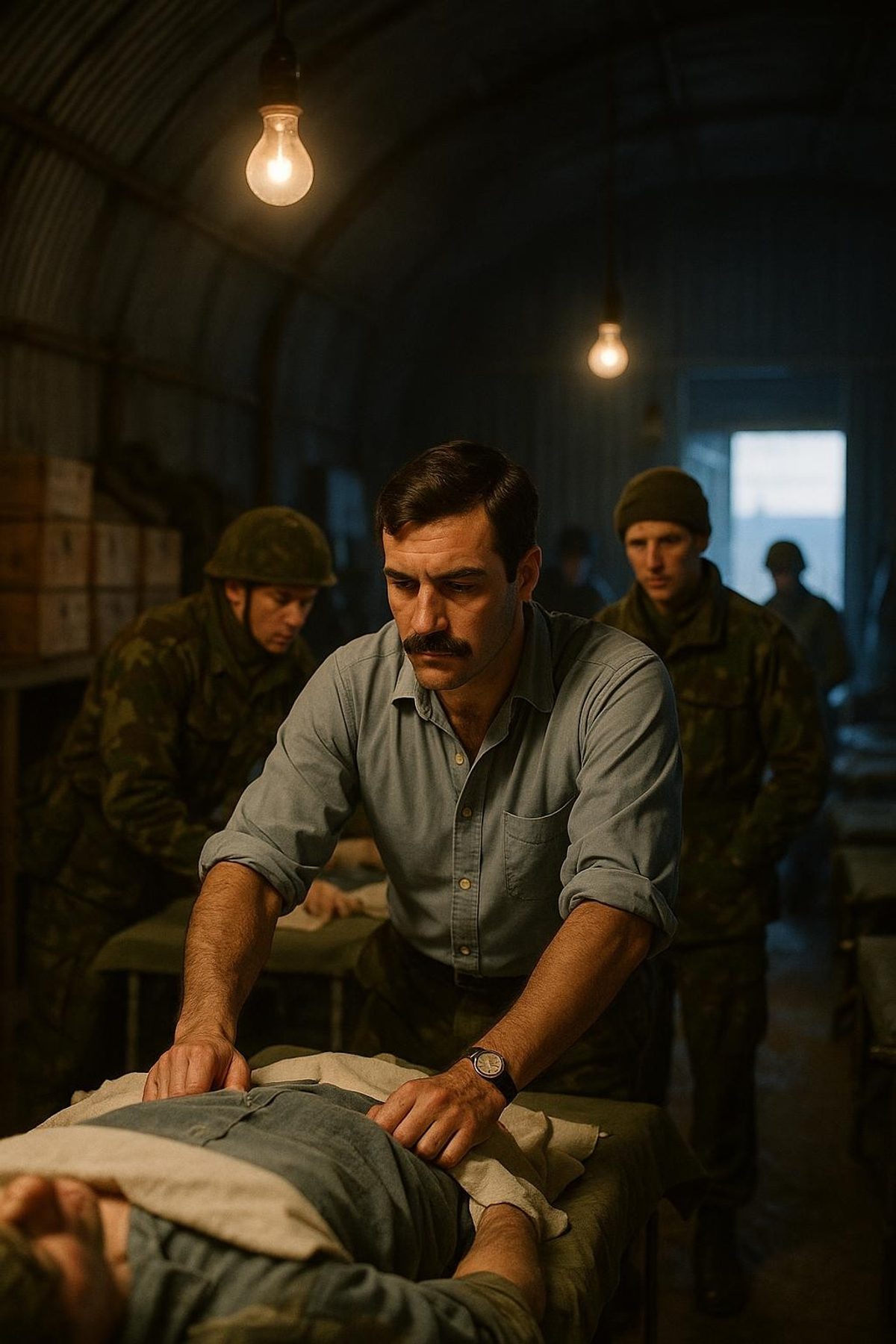
Upon the landings at San Carlos Water, Jolly was tasked with a formidable challenge: to set up a field hospital capable of saving lives in the midst of war. The location chosen was an old refrigeration plant at Ajax Bay, a utilitarian choice borne from necessity. Its close proximity to an ammunition dump posed an immediate peril, but it was the only space available of adequate size to house a medical facility.
Brigadier Julian Thompson, aware of the Geneva Convention's stipulations, issued a stern directive: no Red Cross was to grace the roof of Ajax Bay’s makeshift hospital. Its adjacency to military targets meant any such marking could inadvertently breach international law. Thus, the Red and Green Life Machine, as the hospital became known, operated in the full knowledge of the risks. Unprotected, it stood vulnerable to air attacks from above — a duty not for the faint of heart.
Read next: When Bravo November Became the Only Chinook Left, 1982
A Hospital Under Siege: The Shadow of the Bombs
Within these grim walls, Jolly and his devoted team went to work. Dust and dirt mingled in the cold, dimly lit environment, where they transformed humble quarters into a beacon of hope against the backdrop of war. But Ajax Bay harboured a sinister secret; nestled somewhere within its depths lay two unexploded bombs, a stark reminder of their precarious mortality.
Despite this imminent threat, the medics forged on, driven by an unyielding commitment to save lives. They treated a staggering 580 British soldiers and marines wounded in action with astonishing success: only three succumbed to their injuries, none of whom while under Jolly's watchful care.
Contrary to intuition and expectation, it was not just British soldiers who benefitted from the tireless efforts in Ajax Bay. Indeed, the same meticulous care and surgical skill extended to Argentine prisoners of war. Jolly scrupulously documented every treatment, unaware that these notes would later serve as an unexpected bridge to reconciliation.
An Unlikely Acknowledgement: Cross-Border Honours
Years after the guns fell silent, in 1998, the fruits of Jolly’s conscientious record-keeping offered an olive branch to an erstwhile enemy. Upon an invitation to Argentina, he provided the Argentine Foreign Ministry with a comprehensive list of their injured soldiers treated at Ajax Bay, seeking any information on their fates.
The ramifications of this gesture were profound. Recognising the humanity and compassion extended by the British medical personnel, Argentina honourably responded by conferring upon Jolly the Officer in the Order of May. He became a unique figure, the only person to earn decorations from both the British and Argentine governments following the Falklands conflict. The Argentine President, Carlos Menem, thus acknowledged the unprecedented gallantry and compassion that had transcended the borders of conflict.
Queen Elizabeth II sanctioned Jolly's right to wear the Order of May alongside his British honours, a personal testament on behalf of the entire medical cadre and a recognition of a service beyond the realm of duty.
Life Beyond the Battlefield: Jolly’s Continued Service
After the conflict, Rick Jolly neither sought renown nor rested on laurels. Instead, he continued his service in various capacities — as a Fleet Surgeon, an educator, and an advocate for veterans’ mental health. He became a pivotal voice for the recognition of post-traumatic stress disorder among Falklands veterans, aware that the battle within often outlasted the battle without.
In 1997, alongside Denzil Connick, Jolly co-founded the South Atlantic Medal Association, a group supporting those who had served in the war. His literary contributions, including The Red and Green Life Machine, chronicled not just the practicalities of warfare medicine but bore witness to the humanity threaded through the narrative of engagement.
Read next: When Wideawake Became the Busiest Airport in the World, 1982
When Rick Jolly passed away in January 2018, he left behind a legacy woven through acts of raw courage and profound compassion. His wife Susie, who stood by him through the tumult of war and peace, survived him, enduring the heartache of losing their son James years before.
The Imprint of Courage: Lasting Lessons
The story of Rick Jolly at Ajax Bay speaks to the profound capacity for humanity amidst the turbulence of war. In conditions that could easily obfuscate the moral compass, Jolly and his team chose to save lives irrespective of allegiance or uniform. The numbers alone — 580 wounded, 577 saved — capture a narrative of medical excellence, yet they fail to convey the full scale of courage that breathed life into the desolate confines of a refrigeration plant.
Beyond statistics, it is the spirit of Ajax Bay that lingers: a lesson that courage is not merely the absence of fear, but rather the determination to act in its presence. Jolly's story is instructive not only for its historical significance but as a timeless reminder that, even in the most dire circumstances, compassion can carve a pathway towards reconciliation and shared humanity.
Earlier this month, British paratroopers rehearsed a landing on the islands, where his hospital saved so many.
Part 14 of 24: One Falklands story a day until Remembrance Sunday