He was an astronomer by trade. Yet, he took command of a Royal Navy warship.
The Scientist at Sea
In 1698, the Englishman Edmund Halley stepped aboard the HMS Paramore and set sail under the flag of the Royal Navy. While naval command was typically reserved for men seasoned in strategy and combat, Halley's mission was of a different nature altogether. A learned astronomer and mathematician, Halley was not embarking on a campaign against a foreign enemy but rather against the invisible forces of the Earth itself. His voyage aimed to map the planet’s magnetic field, an endeavor that was revolutionary for its time.
The late 17th century was an era dominated by exploration, discovery, and the gradual embrace of scientific thought. Halley, fresh from his success in predicting the return of a comet that would come to bear his name, was determined to unravel another mystery of the universe. Magnetic navigation, while essential to seafaring, remained shrouded in inaccuracies, leading to misdirection and peril on the high seas. Halley was convinced there was a pattern to the magnetic variations he could chart, but this meant venturing further into the Atlantic than most would dare — particularly aboard a ship designed for war, not science.
Braving the Elements
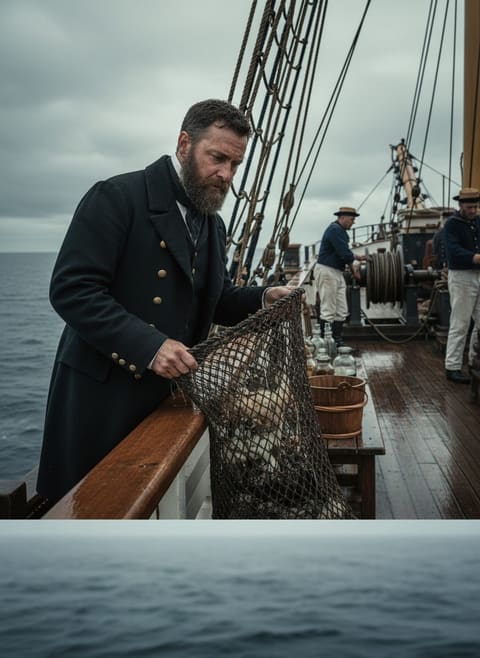
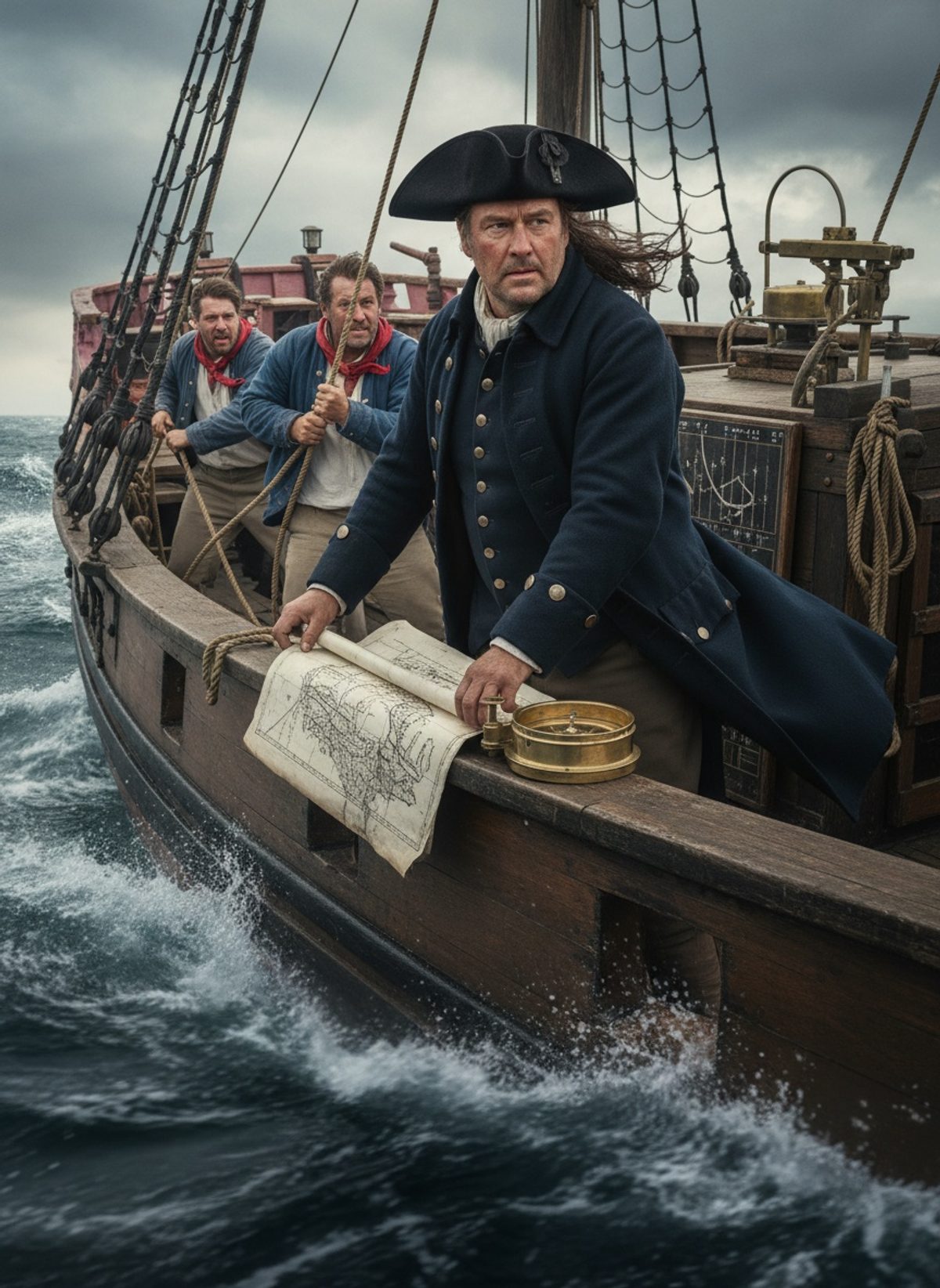
The Atlantic Ocean, vast and unpredictable, threw its full fury at Halley and his crew. Atlantic storms, notorious for their sudden onset and ferocity, pounded the HMS Paramore. Salt spray whipped across the decks, and towering waves threatened to swallow the ship whole. Yet, for Halley, these were not merely obstacles but opportunities to test and refine his measurements. With each fresh gale, he meticulously gathered data, adjusting his navigational instruments to compensate for the ship’s shifting magnetism.
Read next: When Shackleton Knocked on the Door at Stromness, 1916
Edmund Halley's determination was as relentless as the storms he faced. Near the icy shores of Newfoundland, he encountered such fierce conditions that his charts almost washed away. Accounts describe how he meticulously recorded variations in magnetic declination, even as freezing winds numbed his fingers. Yet, what unfolded during this time was not just a battle against nature but also against human nature itself.
The Invisible Army
Navigating not only magnetic fields but also the will of his crew proved to be one of Halley’s greatest challenges. Accustomed to the activities of war, the crew found Halley’s scientific endeavor alien and sometimes exasperating. Tensions simmered beneath deck; dissent was a storm brewing in the human microcosm of the ship. Reports of a mutiny off the ice-bound coasts of Newfoundland highlight the frailty of command when traditional naval discipline was pitted against scholarly pursuit.
Read next: When James Barry Kept a Secret Beneath an Army Uniform, 1815
Halley's resolve in the face of near-mutiny was as remarkable as his charts themselves. With a blend of authority and the respect his intellectual pursuits commanded, he navigated this human tempest much like he did the Atlantic's. His leadership, resistant to mutiny’s undercurrents, kept the mission afloat and, ultimately, headed for home with invaluable findings. Each line and curve on his map marked a step closer to revolutionizing naval navigation, stretching the confines of what was deemed possible from the deck of a Royal Navy ship.
A Legacy of Precision
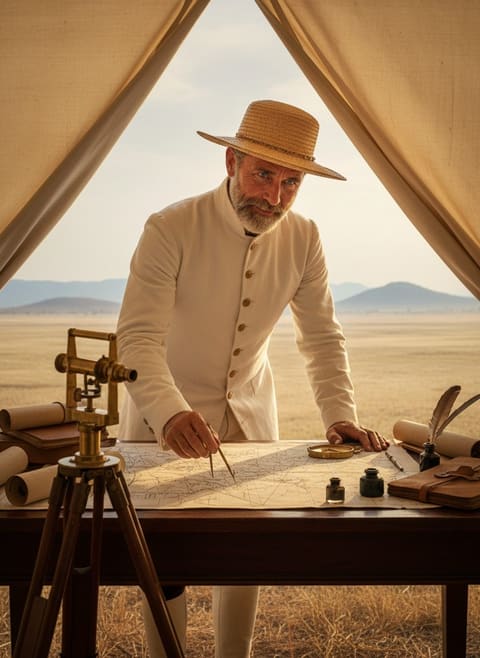
On his return in 1700, Halley presented the world with its first magnetic chart, a detailed composition revealing the erratic swings of the Earth’s magnetic force. This achievement laid the groundwork for future explorers, providing them with the means to traverse the oceans with unprecedented accuracy. By identifying the lines of magnetic declination, sailors could correct their compasses and find their bearings with far greater precision than ever before. The implications of Halley's work reached far beyond the boundaries of navigation, influencing maritime trade, military strategy, and subsequent scientific inquiry.
Edmund Halley’s journey into the tempestuous Atlantic was not merely an exploration of magnetism but a testament to human inquiry and resilience. His voyage navigated storms both literal and metaphorical and emerged as a pioneering force that shifted the course of history. Halley's story stands as a reminder that the greatest explorations often require an unyielding spirit and the courage to sail into the unknown, ensuring that the legends of the sea are never just tales left adrift. His charts continue to echo across centuries, guiding those who dare to venture where maps have yet to tread, a compass needle pointing not just north but forward into the uncertain seas of knowledge.