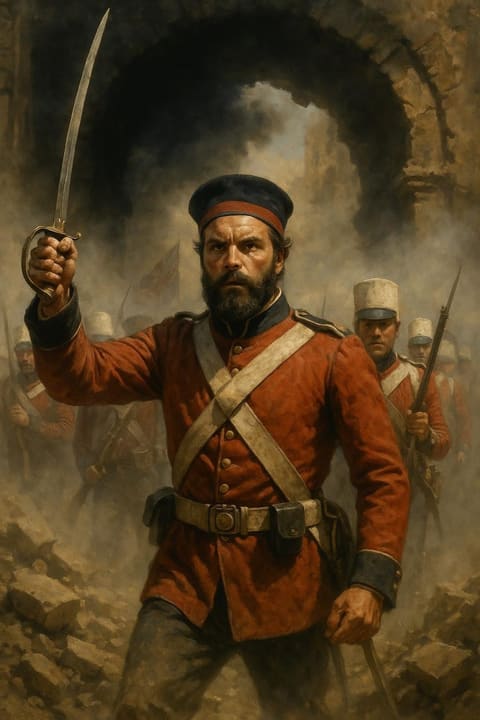
Dr. James Barry was a celebrated figure in British military medicine. Beneath that formidable veneer, a secret lay hidden for decades.
The Doctor Who Defied Convention
In the early 19th century, the world of medicine was as rigid and hierarchical as any military order. Enter Dr. James Barry, a medical practitioner whose fiery temperament and unyielding dedication to improving soldier’s health swept through the British Empire like a hurricane. Stationed across far-flung corners of the Empire—from the sweltering Cape Colony to the sprawling landscapes of Canada—Barry championed improvements in hygiene, nutrition, and hospital conditions that were seen as revolutionary for the time.
Barry's career was glittering: an unwavering advocate for sanitation whose reforms led to safer surgeries, reduced death tolls, and healthier soldiers. But Barry was more than just a reformer; Barry was a fighter, challenging hostile military leaders and indifferent bureaucrats alike. With a scalpel at the ready and pen sharper than a sword, Barry carved a niche in a time when the importance of hygiene and diet were often overlooked.
Rigorous Reforms and Resilience
James Barry’s contributions were as remarkable as they were numerous. Barry's tenure was marked by a relentless pursuit of change in an era resistant to transformation. Clean water was more exception than rule, and nutritional value a missing chapter in army logistics. Yet Barry, undeterred by the proverbial battling uphill both ways, sought to replace neglect with nurture.
Read next: When William Speirs Bruce Planted a Flag on No Man's Ice
Imagine the scene: An army barracks, stewing in the heat, its quarters cramped and air stifling. Barry storms in, scrutinizing every corner, from the muddy pathways that served as hospital corridors to the men shoeless, their hollows for cheeks betraying meager rations. “Cleanliness before rank,” Barry would command, insisting on practices that dramatically reduced infection rates and saved countless lives. In Barry's world, a soldier mattered beyond the marching orders he followed—his health was paramount.
Barry’s reforms spread diseases underfoot with the tenacity of a detective hunting a conspiracy. The initiatives spurred a sea-change: clean wards, balanced diets, and the advancement of compulsory vaccinations. Challenges met, Barry’s achievements spoke for themselves; they improved not only immediate health outcomes but also the course of military medicine, making Barry a touchstone in the eyes of many peers.
The Unyielding Persona
James Barry was known for an indomitable spirit, earning both acclaim and animosity in equal measure. Once, after heated disputes over the treatment of enslaved people in Trinidad, Barry dueled with a fellow officer, unharmed and steadfast. Barry's tenacity knew no bounds—it was said that in pursuit of soldiers’ well-being, Barry would storm a general’s tent mid-meal to demand action.
The fiery exchanges had a purpose beyond mere words. In advocating for the marginalized, Barry’s vision extended beyond the battlefield to local communities, whose medical care was often as dire as the soldiers’. Never content with the status quo, nor afraid of authority, Barry embodied the notion of a true reformer: they could not just speak about change but force its hand.
Read next: When George Everest Measured the Roof of the World, 1856
The Discovered Secret
For five decades, Barry's figure had been one of towering resolve. It wasn’t until Barry's death, 50 years into a storied career, that the public discovered a hidden truth. James Barry, the indomitable Inspector General, had been assigned female at birth. Hidden under layers of garments and a formidable persona lay the secret that Barry guarded fiercely: Margaret Ann Bulkley had reshaped her identity for an opportunity denied to her gender.
This revelation astonished the Empire. The acknowledgment that such sterility in gender norms could be defied so effectively prompted reconsiderations across society. How Barry had managed such resurgence in medical lands bulldozing these expectations remains a matter of fascination.
A Legacy Beyond Medicine
Through this extraordinary life, Barry challenged not just professional orders but societal ones, reframing the conversation about who could serve and lead in such roles. Barry showed the capacity for empathy beyond traditional lines of gendered expectation, pushing boundaries and insisting on life-saving innovations long overdue.
The story of James Barry raises perennial discussions on courage and identity, on how steadfast determination can rewrite rules meant to bind, rather than free. Barry serves as a testament to an era limited by norms, only to find them surpassed by those with vision broad enough to know that healing begins beyond the scalpel. As we reflect on Barry's life, we find inspiration in the knowledge that even the most rigid constructs can be reshaped by bold acts hidden beneath layers—a secret by intention, a legacy by consequence.