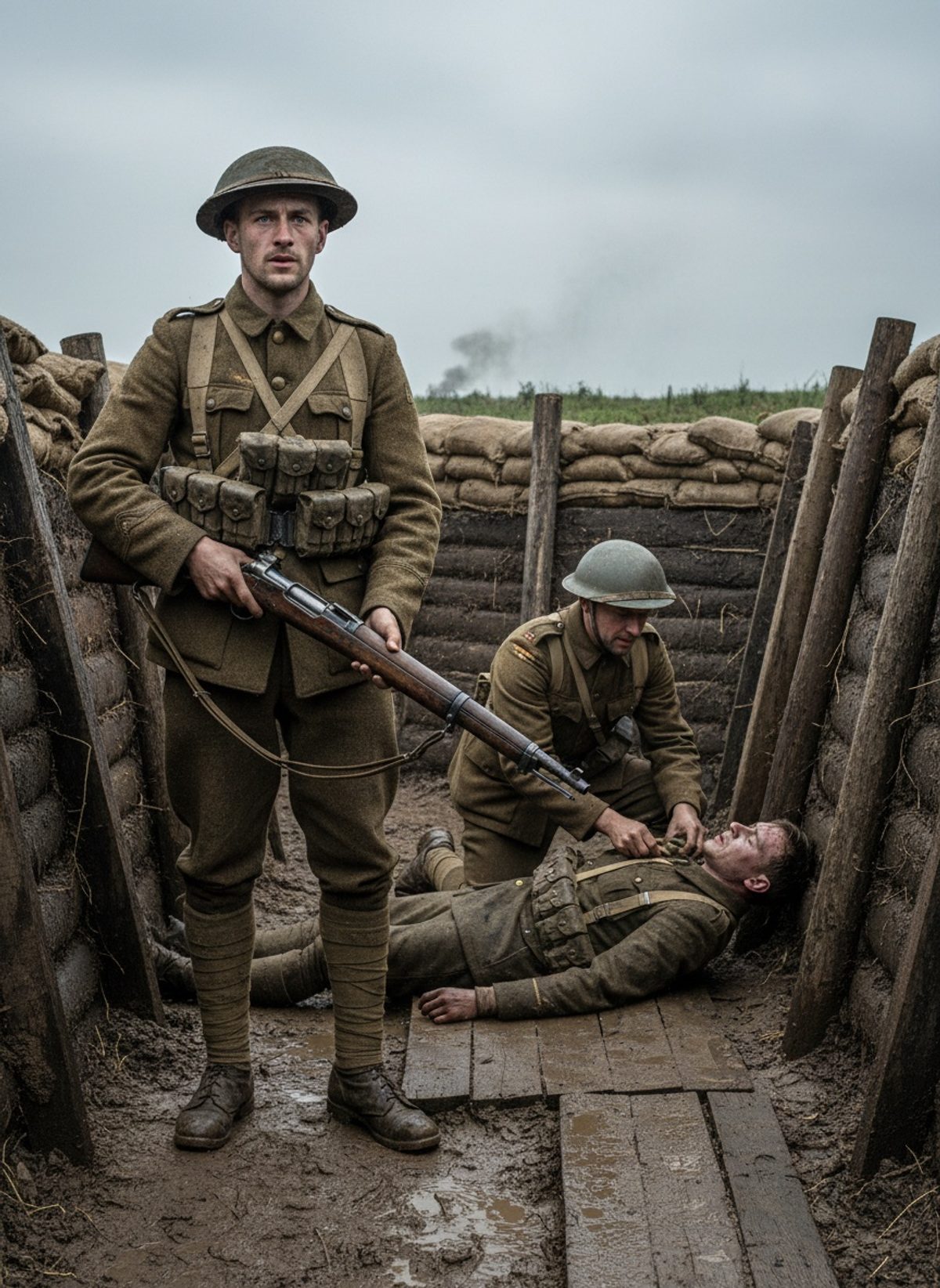
June 15, 1915. A steel-gray dawn cast its cold light over the trenches of the Western Front.
In the eerie quiet just before a fresh barrage, a new sight was spreading among the men of the British Expeditionary Force. Resting heavily on their brows were newly issued Brodie helmets, their reflective surfaces adding a strange gleam to the grim landscape. As these men sat beneath the pallor of early morning, they carried not only their rifles but a gleaming hope for survival strapped over their heads. A hope forged in steel.
The Iron Dawn of Modern Warfare
The brutality of World War I erupted with a ferocity the world had never known. It raged with an intensity that shattered the illusions of battles past, pitting men against the colossal machinery of warfare. Amidst this chaos, artillery became the undisputed monarch of the battlefield, reigning down death in unrelenting cascades of shrapnel and debris. Each shell that landed carved its signature on the flesh of soldiers, reducing lives to tragic statistics at a rate faster than any could bear.
In the thrumming heart of this tempest, the death toll mounted. The commanders watching from the embattled remnants of the generals' staff rooms quickly realized that the epicenter of mortality was centered around head injuries. Soldiers were perishing at breathtaking speeds, often before they could be ushered to medical aid. The whistle of metal slicing the air, the damp thud as it met human resistance—these sounds heralded a silent agony as undeniable as it was inevitable.
Read next: When Adrian Carton de Wiart Was Shot Seven Times and Laughed
Enter the Brodie helmet. Conceived as an answer to this grim arithmetic, it was a simple yet profound innovation. A dome of steel sitting low over the forehead, it extended its modest protection over the critical juncture of scalp and skull. Its introduction marked an era—the first major attempt to shield soldiers from the waist-high sweep of mortal peril that artillery unleashed.
As the helmets were distributed, a cloak of cautious optimism settled over the trenches. Commanders and foot soldiers alike held a breath hitched with expectation—the hope that their numbers, the count of fallen, would begin to dwindle. It was a gamble played amidst the mud and mire, with policymakers watching the dice of survival tumble across the broken plains of Flanders.
The Panic of Statistics
Yet, as weeks turned to months, the anticipated reduction in casualties took an unexpected turn. Reports flooded in from field hospitals with a paradoxical message: head injuries were on the rise. Alarm rippled through the medical ranks, a tremor that shook the steady hand of progress. The statistical surge was undeniable, and the anvil of doubt was poised to crash upon any hubris-laden claims of success.
The tension in officer's messes was palpable, where whispers questioned the efficacy of the helmets and their worth in a war where every penny spent and every life saved or lost bore scrutiny. The idea that a tool so heralded could falter under the unforgiving tide of artillery was a specter few had anticipated. But as the stiff upper lip of the British command remained steadfast, inquiries delved deeper into the records piling at base camps and medical units.
And then, the revelation—the profound truth lurking amidst the ink on pages and the cries in hospital wards. The helmets had indeed increased the count of head injuries, but with it came a hidden victory. Though wounds were more frequently categorized, they were inexorably less lethal. The same intensity of blows that would once have crumpled a soldier's life into nothingness now met resistance. What was logged as injury rather than death marked the quiet triumph of metal against metal.
The apparent enigma resolved itself in the statistics; a soldier's survival rendered visible by the very equations that had sown disquiet. Medical halls once filled with silent burdens now buzzed with the peculiar vibrancy of recovery, the sound of men who had cheated death welcoming a second life.
Resilience Wrought in Steel
The adoption of the Brodie helmet, in the face of misguided early skepticism, underscored a powerful evolution not only in military technology but in the comprehension of warfare itself. The rise in head injuries was no longer a bitter tally of doom but a testament to newfound resilience, and a story of human ingenuity meeting the challenges of a brutal era head-on. One can only imagine the pall of relief suffusing the trenches as this realization spread; as men touched metal and recognized the tangible line that now stood between life and the abyss.
This narrative, sourced from the shell-shocked soil of Flanders, illustrates a larger truth about the war. Innovation and progress, misunderstood in their infancy, often grow into pillars of resilience and survival. It reflects the unsung heroism not only of the men who wore those helmets but of those who had the foresight to issue them, soldiers of ingenuity against the great artillery clockwork.
What lies in this tale is a stark reminder that progress is rarely linear or immediate—but it is relentless. The muddy trenches, overhung with low clouds and the anxious anticipation of bombardment, witnessed the birth of modern wartime protection that would save countless lives in conflicts yet to come. As the echoes of cannons faded into silence, the lesson was clear—sometimes victory lies not in doing less, but surviving more.